
JBL Partybox 130: https://geni.us/GC-JBLPartybox130
JBL Partybox 330: https://geni.us/GC-JBLPartybox330
JBL Easy Sing Mics: https://geni.us/GC-JBLEasySingMics
JBL Partybox Mics: https://geni.us/GC-JBLPartyboxMic
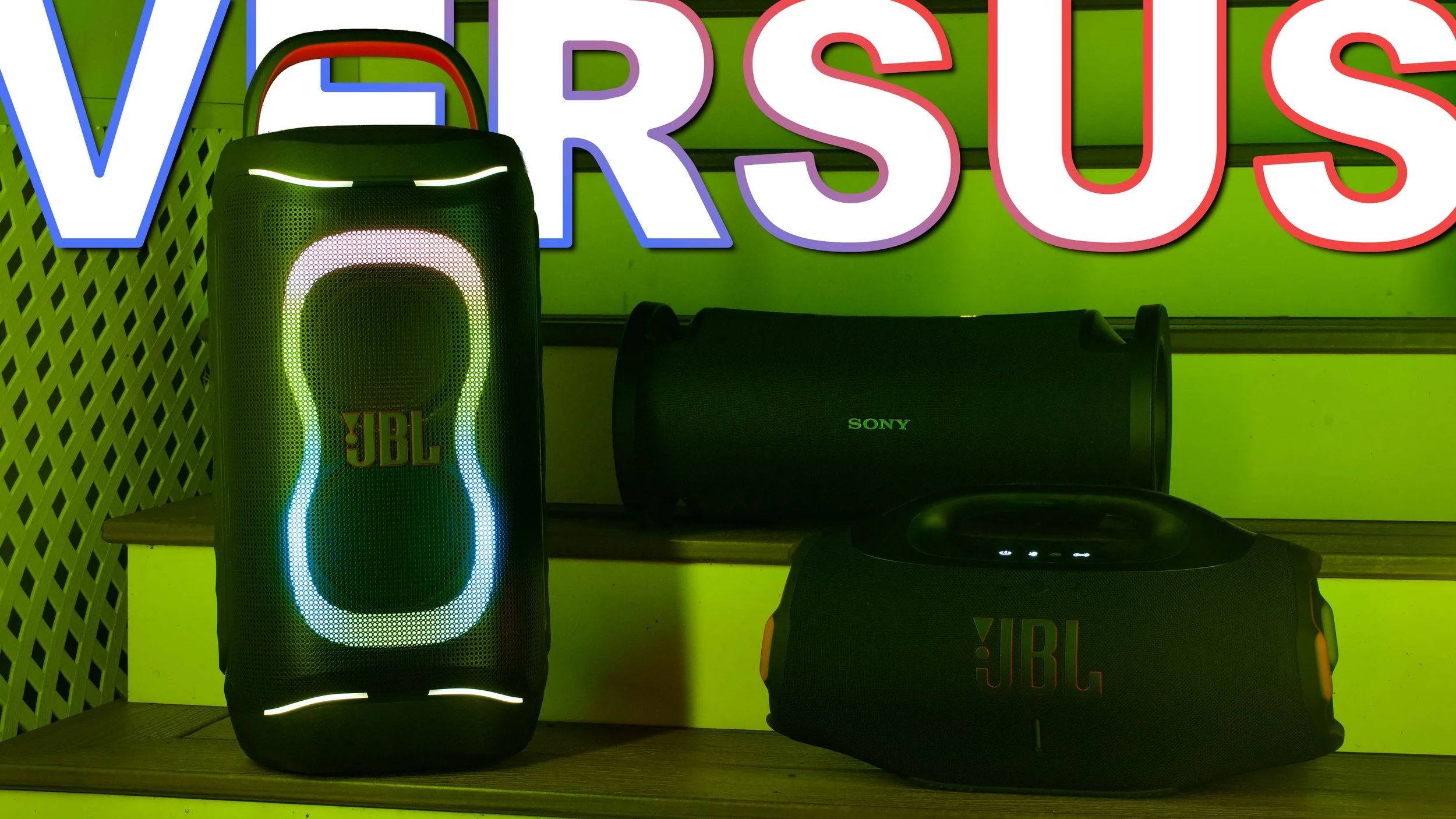
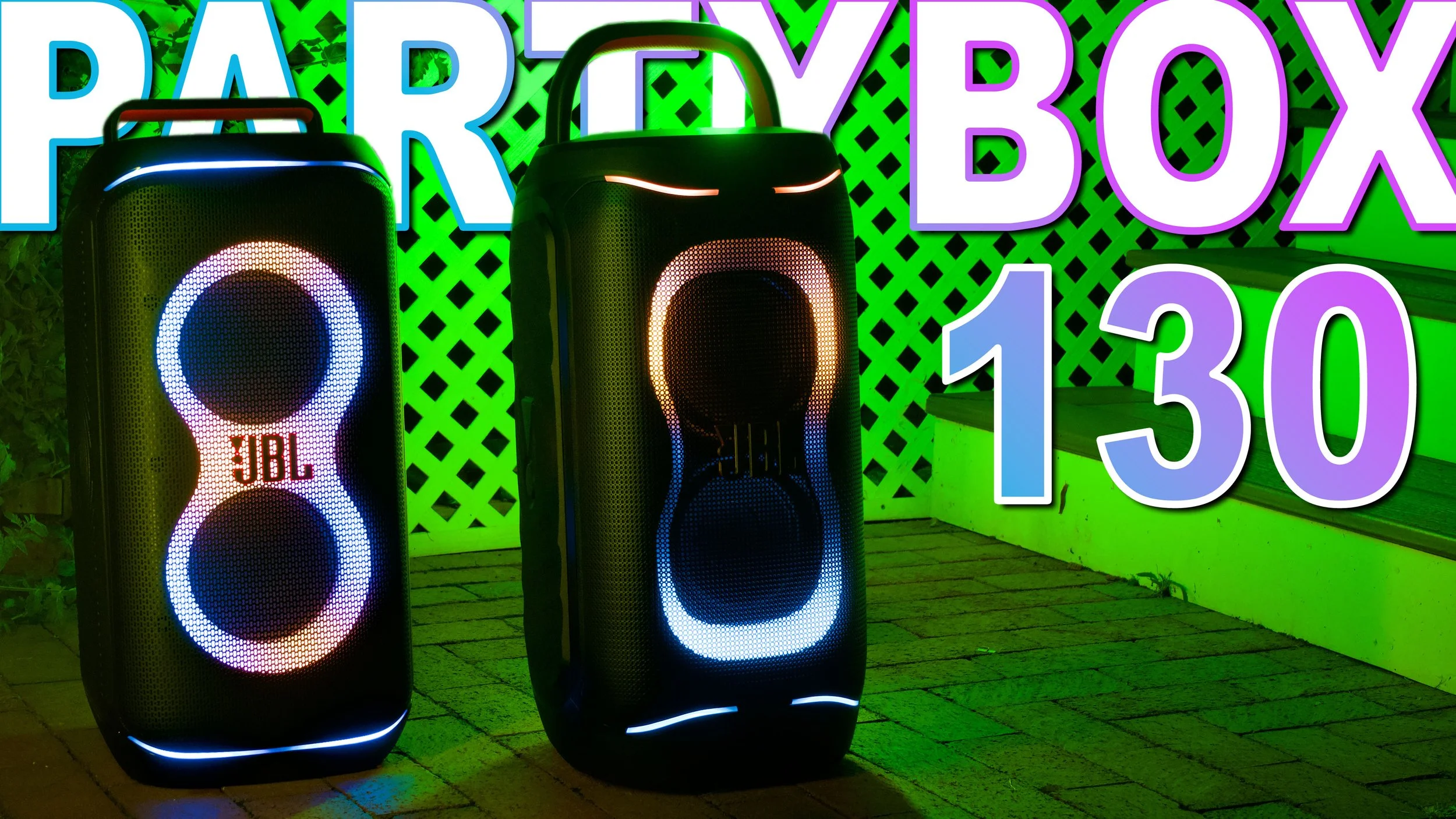
JBL PartyBox 330 vs JBL PartyBox 130: Which New 2026 Speaker Is Right For You?
The JBL PartyBox 330 and JBL PartyBox 130 hit the market much sooner than expected. Both models introduce notable connectivity upgrades, but they also bring a few design changes that feel like a step backward from previous generations.
Despite these flaws, both models are among the absolute best party box speakers you can buy in 2026. However, if you already own a JBL PartyBox 320 or a JBL PartyBox 120, you shouldn't feel any FOMO about upgrading.
If you are buying fresh and torn between the two, this head-to-head comparison will break down the differences in price, size, battery ecosystems, and features to help you pick the right one.
Price and Budget
Retail pricing will be the ultimate deciding factor for many buyers, and both models see a price increase over their predecessors:
JBL PartyBox 130: Retails at $450.
JBL PartyBox 330: Retails at $630.
While these sticker prices are higher than before, JBL speakers are known to go on sale on a regular retail basis. If you want to pick either of these up, use the links or the shopping button below to check current deals.
Size and Portability: Handles vs. Wheels
Both speakers are built with portability in mind, but they cater to entirely different weight classes.
JBL PartyBox 130: Weighs in at 25 pounds. It is significantly smaller and lighter than the 330. It features a built-in top carrying handle for effortless transport, though the redesigned handle looks a bit bulky and ridiculous compared to older models.
JBL PartyBox 330: Weighs in at a much heavier 38 pounds. Because of the extra heft, it relies on a built-in telescopic luggage handle and heavy-duty, chunky wheels. These wheels roll smoothly over asphalt, grass, and thick carpets.
Portability Verdict: The PartyBox 130 is much easier to carry by hand. However, the PartyBox 330 is remarkably easy to transport on flat ground thanks to its wheel design—a feature that would be a welcome addition to the mid-sized 130 line in the future.
Shared Durability Specs
Outside of physical scale, the overall ruggedness of these two enclosures is identical:
Body Shell: Soft plastic frames that scratch fairly easily.
Front Grille: Thin metal front mesh that can dent if bumped too hard.
Weathering: Both carry an IPX4 splash-proof rating. They can handle a light outdoor drizzle as long as you keep the rear port panels firmly sealed.
Mounting: Both include a standard pole stand mount on the bottom if you need to elevate your audio at a venue.
The New Control Panel: A Frustrating Shift
The most controversial update across the 2026 JBL lineup is the new top control layout. Both speakers feature a digital dial with an embedded screen that sacrifices quick, tactile usability.
Menu Bottlenecks: You press the center screen to play or pause, and rotate the outer dial for master volume. However, changing your light modes or adjusting microphone parameters forces you to scroll through digital menus on the screen.
No More Physical Knobs: The PartyBox 330 completely removes the dedicated mic dials (bass, treble, echo) found on the 320. Worse yet, JBL removed the physical microphone gain knobs from the rear port panels on both the 130 and 330. All fine-tuning now requires opening the JBL mobile app.
Fragility Concerns: Adding digital screens to rugged, portable party gear introduces an unnecessary failure point that could crack during transport or short out if water pools on top.
The Only Win: Both speakers feature handy new physical latch points on the chassis to securely snap in and carry JBL's Easy Sing wireless microphones.
Light Shows: Vibrant, But Less Premium
JBL still delivers some of the most dynamic, vibrant lighting profiles on the market, and both speakers feature Bluetooth Auracast to wirelessly daisy-chain and sync with external JBL Partylight Sticks.
However, the layout choices feel stripped down compared to older models:
JBL PartyBox 130: Features a standard centered light ring.
JBL PartyBox 330: Features a more built-out layout, adding an extra outer light bar ring to create a wider visual presence.
Unfortunately, both models completely removed the star accent lights found on the 320 and 520 lines. It would have been a cleaner choice for JBL to keep the premium faceplate designs of the previous generation and simply add ground-projecting floor lights like the premium PartyBox Ultimate.
Battery Stamina and the Swappable Ecosystem
While the larger PartyBox 330 has slightly more total stamina, both speakers offer a full day of casual listening depending on your output levels.
Crucially, both speakers feature a hot-swappable battery design. If the battery dies mid-event, you can pop it out and slide a fresh one in. This also doubles the lifespan of your speaker investment; when the battery inevitably degrades over the years, you only need to buy a replacement cell rather than an entirely new speaker.
The catch is that you cannot share batteries between these two models because they utilize entirely different power cell platforms:
The PartyBox 130 uses the smaller JBL 200 Battery. It can only be mixed and matched with the PartyBox 120, Encore 2 Premium, or On-The-Go 2.
The PartyBox 330 uses the larger JBL 400 Battery. It is fully interchangeable with the PartyBox 320, Xtreme 4, and Xtreme 5.
Missed Opportunity: It would have been a massive upgrade if JBL had engineered the PartyBox 130 to take the larger 400 battery pack. It would have effectively doubled the 130's battery life and created seamless cross-compatibility between the mid and large speaker tiers.
Matching Rear Port Upgrades
When it comes to inputs and outputs, the rear panels on both speakers are identical, completely illuminated for visibility in the dark, and feature significant upgrades for versatility:
The AC Power Boost: Both units charge via a double-barrel AC port and include a dedicated power cable in the box (a relief, given JBL's recent trend of omitting cables in certain global regions). Bypassing the battery by plugging them into a wall outlet gives both speakers a noticeable performance boost, unlocking louder volume and punchier bass response. Note: The batteries must remain installed even when running on wall power.
Modern USB-C: Both models trade old USB-A ports for a modern USB-C connection, allowing you to charge external devices or stream wired audio.
The Brand-New Optical Port: For the first time, JBL has added an optical input to these models. This lets you connect either speaker to your television to use as a high-powered home theater soundbar. (Note: You will need to provide your own optical audio cable).
Karaoke Inputs: Both speakers feature dual 1/4" mic or guitar inputs for karaoke. However, as noted before, adjusting mic tone requires jumping into the smartphone app.
Daisy Chaining: Both units feature a standard 3.5mm Aux input and a dedicated Audio Out jack, letting you link multiple speakers together via a standard audio cable regardless of their brand or size.
Final Verdict: Which One Should You Buy?
Choose the JBL PartyBox 130 if you want a lighter, highly portable speaker that you can easily lift with one hand, prefer a smaller footprint for storage, and want to keep your budget under $500 while still enjoying modern USB-C and TV optical connections.
Choose the JBL PartyBox 330 if you need maximum loudness, deeper bass response for open outdoor spaces, prefer a rolling wheel setup over carrying your gear, and want a larger battery capacity that shares cells with the JBL Xtreme lineup.
Both the JBL PartyBox 330 and the JBL PartyBox 130 are here much sooner than I expected. And both the JBL PartyBox 330 and JBL PartyBox 130 have some important upgrades, but they also have some changes that I don’t like. But regardless, both the JBL PartyBox 330 and 130 are some of the best box speakers that you can go with in 2026. But you shouldn’t feel fomo about upgrading if you already have the 320 or the 120. But nonetheless, today we’re going to compare the JBL PartyBox 330 to the JBL PartyBox 130, and lets see which one is right for you.
Now when it comes to price, this is going to be a deciding factor for some people. The JBL PartyBox 330 has a retail price of $630 and the 130 has a retail price of $450, and both of these are price increases from their predesscors. But regardless I do expect both of these speakers to go on sale on a regular basis, its the natural order of the universe. Nonetheless, if you want to pick either of these two speakers up they’ll be linked down below, or you can always press on the YouTube shopping button, and if you want to further support the channel then you can always watch some of the related videos in the description below.
So first theres the design of these speakers. Now both of these box speakers are meant to be portable but obviously the JBL PartyBox 330 is noticeably larger and heavier than the 130. The JBL PartyBox 330 weighs in at 38 pounds where as the 130 weighs in at 25 pounds. So with the JBL PartyBox 130, you can easily carry thing speaker around cause its smaller and lighter, plus this speaker has a built in carrying handle. But design wise, I think this carrying handle looks ridiculous. But then there’s the 330 which is also very portable for its size thanks to its built in wheels, so you can easily roll this speaker around and since these wheels are fairly chunky, these wheels are still very usable even on asphalt, grass or on carpet. And honestly, I wouldn’t mind is JBL also added wheels to their Partybox 130, or the future Partybox 140.
Now when it comes to durability, both of these speakers are the same, they both have soft plastic bodies which can get scratched fairly easily, they both have thin metal grills on the front which can get dented very easily as well… and both of these speakers are rocking an IPX4 rating so a little bit of water or rain will be just fine, just make sure that the port panel on the back is closed… and both of these speakers have a speaker stand mount on the bottom if you want.
Now one big change on both of these speakers for 2026 are the control panels up top. And personally I don’t like these control panels. Both of these speakers have a digital dial up top, you can press on this dial to play and pause your music and you can rotate this dial to adjust your volume. But I don’t like this dial cause its not as easy to use as the physical dials found on both the 120 and 320… and with the 320, 520, 720 and ultimate, you also have dedicated knob for your mic audio so that you can adjust your bass, treble and echo. Where as with both the 130 and 330, if you want to adjust your music audio you have to open JBL’s app, if you want to change your light feature you have to switch between menus, and even if you want to adjust the gain of your mic, you have to deal with this dial cause JBL even got rid of the gain knobs in the port panel which is also causing a different set of problems. And I don’t like the new dial on these speakers cause I fear that they are not as durable as the analog dials as before. The only design change that I do like is that both of these speakers now have latch points so that you can attach and carry around your easy sing mics if you choose to get them.
But then there’s the light feature on these speakers… now the light features on both of these speakers are very dynamic, they’re very vibrant and through JBL’s app you can go in and choose from a few different lighting mode. And since both of these speakers are using aura cast, you can always build out their light features with JBL’s Partylight sticks. Now the 330’s light feature is a little more built out than the 130 cause it has an addiaitonl light bar on the outside of the main light ring… but personally I think the light feature on both the 330 and 130 is a down grade when compared to both the 320 and 120, I think these light features just look more premium, plus both the 330 and 130 got rid of their stars which I do feel is a big deal. Like I’ve said in their full reviews, I think the 330 and 130 should have just kept the previous light features and instead just added some floor lights like with the JBL PartyBox Ultimate.
Now when it comes to battery life, both of these speakers have decent battery life for their size and both of these speakers are going to be able to keep up with you with a whole day of listening, however battery life on both of these speakers really varies depending on how you use them, but the 330 does have a little more stamina.
But more importantly, with both of these speakers you can quickly and easily swap out the batteries, so if you want you can get multiple batteries and keep the party going, or if you ever get to a point where you battery can no longer hold a charge, instead of having to buy a new speaker, you just need to get a new battery. Which is great for the overall life of your investment.
However, with the partybox 130, this speaker is using the JBL 200 battery, so you can only mix and match batteries with lets say a 120, or with and on the go 2 or with an encore 2 if you can find the more premium version. Where as the 330 is using the 400 battery and you can mix and match batteries between the 330 and the 320 or with the JBL Xtreme 5 and JBL Xtreme 4 cause all of these speakers are using the same battery. And personally I think it would have been amazing if JBL upgraded the 130 to the 400 battery cause it would have doubled your battery and you could mix and match with the 130 and 330.
But in order to charge these speakers they both charge via a double barrel AC port and they both come included with charging cables, which I knows sounds very basic, but I do have to pint this out cause a lot of JBL’s newer speakers arent coming with chargning cables, which I think is wild… and with both of these speakers, if you were to use them while they are plugged in, you are going to get a performance boost out of them, they are going to get louder and they are going to have more bass… however even if you’re going to use these speakers while they are plugged in, the batteries have to be installed.
Now when it comes to ports, these speakers are exactly the same, they both have an audio just so you can use them with a wired connection. And They both have an audio out jack so you can daisy chain them up to any other speaker, regardless of size or brand and you can get them to play in sync. You just need a spare audio cable… and neither of these two speakers come with audio cables. But both of these speakers have important upgrades, they both not have a USB C port which you can use as a wired connection and you can use them to charge your own devices, which I feel is super useful and both of these speakers also now have an optical port which is brand new for JBL. So if you want you can always connect these speakers with your TV and use them as a soundbar. Now I wouldn’t use these speakers are my main home theater set up, but it does help make these speakers more versatile… however you do have to use your own optical cable.
And with both of these speakers you have dual 3 quarter inch inputs so you can plug in 2 wired mics for kakroke, or you can plug in a guitar. But like I mentioned earlier, with both of these speakers, if you want to adjust the sound of your mic then you do have to open up JBL’s app, which is a down grade for the 330 spreifficlly cause with the 320 you could adjust your sound directly from the speaker it self.
Now with both of these speakers you can also use them with a wireless mic like with JBL’s Partybox mic which plug in via your 3 quarter inch input, or you can use JBL’s easy sing mics which plug in via your USB C port. Now for those curious, yes you can use both mic systems at the same time, so you can have 4 wireless mics going.
However these mics are a little different. Now with the easy sing mic you’re going to get an AI vocal removal tool which is great for kakroke, but you can’t turn on aura cast and you can’t turn on bass boost. Where as with the Partybox mic’s you can turn on aura cast and connect your speaker to other speakers. However your mic audio will only come out of the speaker where your mic is connected. Your mic audio will not be broadcasted to the other speakers. However there is a hack, with the easy sing mics, if you daisy chain your speaker to another speaker, then your mic audio will come out of both speakers.
But with all of that out of the way, lets talk about sound. When it comes to speaker set up, both of these speakers have dual front ward firing woofer with an exhaust port that shoots out the back and they both have dual frontward firing tweeters… except with the 330, it is larger. And with both of these speakers you have your bass boost… personally I like deep cause with punchy I think there’s too much resonance and it ruins the rest of your music. And you can also adjust your EQ to your liking. But now we’re going to jump into the sound test. Both of these speakers are playing at 75% volume and we’re going to use them while they’re are plugged in and unplugged.
Sound test
So when it comes to sound signature, these two speaker sound very similar to one another, which is to be expected. They both aim for a dynamic sound signature with well defined mids so that vocals are well pronounced and they both have lot of bass that kicks in when it has to. And if you want you can always amplify your bass by simply placing these speakers up against a wall. But the main performance difference between these speakers is the max. Now with the JBL PartyBox 130, I feel that this speaker is good for lets say a 10 to 15 person get together and you’re going to have a lot of kick in your bass, so your sound is going to be more rounded than lets say the JBL Boombox 4. But with the JBL PartyBox 330, I think this speaker is good for a 20 to 30 person party, and it can also be good for hosting small events or maybe some commercial work, maybe you need something for your food truck. But with both of these speakers if you use them while they are plugged in, you are going to get a performance boost out of them, they are going to get louder and they are going to have more bass. And with theb130 while its plugged, its almost like the 330 when its playing off of its internal battery.
But finally lets talk about paring these speakers up with other speakers, with both of these speakers, if you have two of the exact same speakers, then you can wirelessly pair them up and get them to play in left and right stero mode. But they have to be two the exact same speakers. You can’t get a partybox 330 and 320 and get them to play in stero mode and you can’t get a 130 and a 120 to play in stereo mode.
But both of these speakers do have aura cast, so you can pair them up with other JBL speakers that are also using aura cast like a JBL PartyBox on the go 2 or JBL PartyBox encore 2, 120, 130, 320, 330, 520, 720 or ultimate and you can get them to all play in sync… or you can also pair them up with any of JBL’s smaller speakers that are also using aura cast like lets say a JBL Boombox 4, Xtreme 5, Xtreme 4, Charge 6, flip 7, clip 5, a grip or Go 5 and get them to play in sync as well.
And unfortunately, with both the Partybox 130 and 330, you can not pair them up to any of JBL’s older partybox speakers that are using TWS like lets say a Partybox encore or a 110, 310 or 710. And you can not pair up your 130 or 330 up to any of JBL’s older speakers that are using partyboost. but like I mentioned earlier, both of these speakers still have that audio out jack so you can always daisy chain them up with any other speaker and get them to play in sync if you have a spare audio cable.
So with all of that being said, there are some changes that I don’t like about both the JBL Partybox 330 and 130. I think these speakers look worse then their predesscors, and I really dislike their new control panels. But they both have some important upgrades like a USB C port, and an optical port. And they really nice thing is that both of these speakers have all of the same features, there’s now gate keeping between these two speakers. The main difference between these speakers is just their size and max volume… and as you’d expect, the 330 gets louder and has more bass than the 130. And if you’re planning on using your speaker for house parties on the regular or if you want to use it for work, then you do want to go with the 330. But regardless, if you already have either the JBL PartyBox 320 or 120, there’s no need to feel any fomo and rush out and upgrade.