
⚡️🔋 Anker Prime Base: https://geni.us/GC-AnkerPrimeBase
Sony ULT Tower 5: https://geni.us/GC-SonyULTTower5
JBL Partybox 130: https://geni.us/GC-JBLPartybox130
JBL Partybox 120: https://geni.us/GC-JBLPartybox120
JBL Easy Sing Mics: https://geni.us/GC-JBLEasySingMics
JBL Partybox Mics: https://geni.us/GC-JBLPartyboxMic
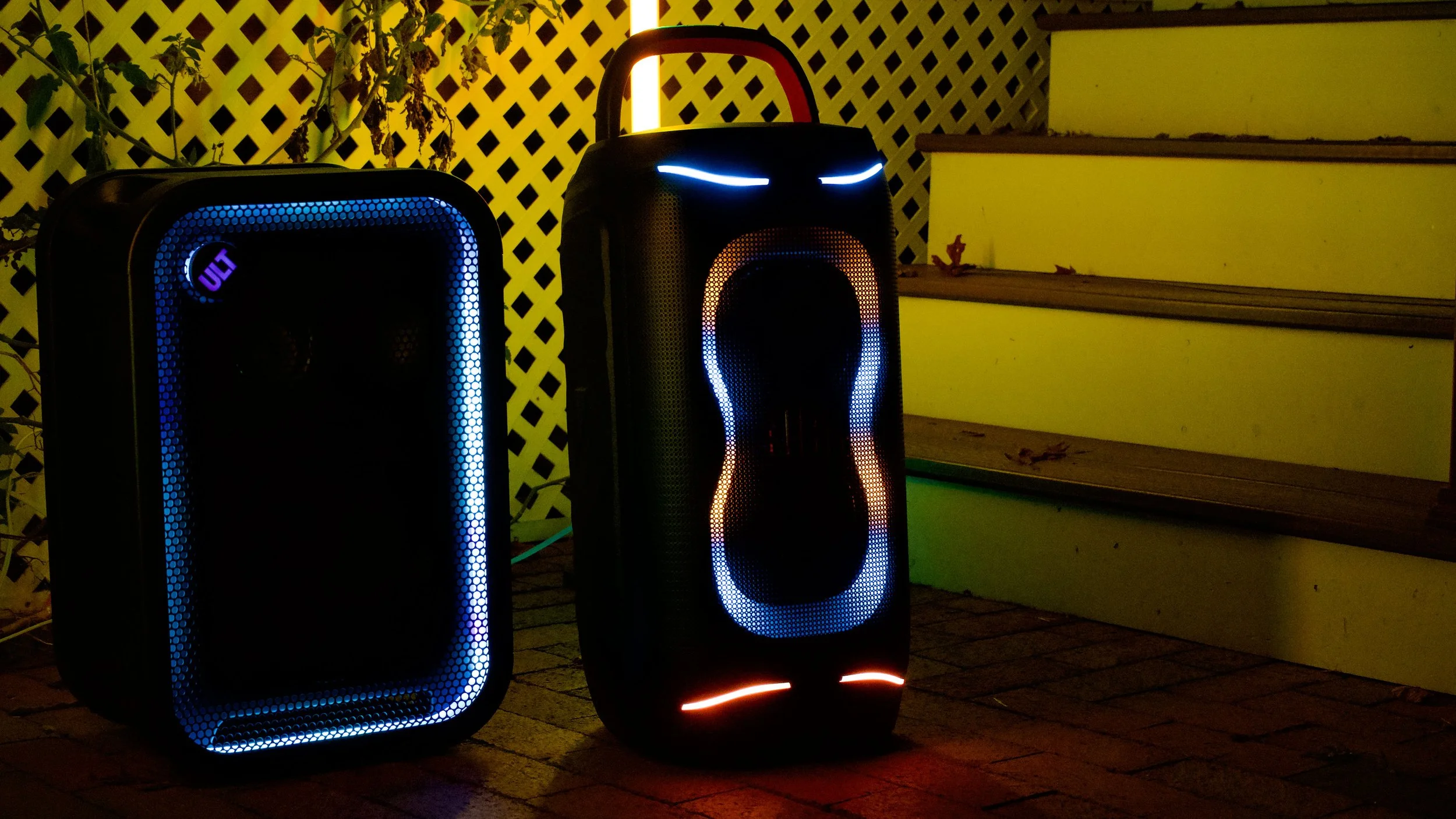
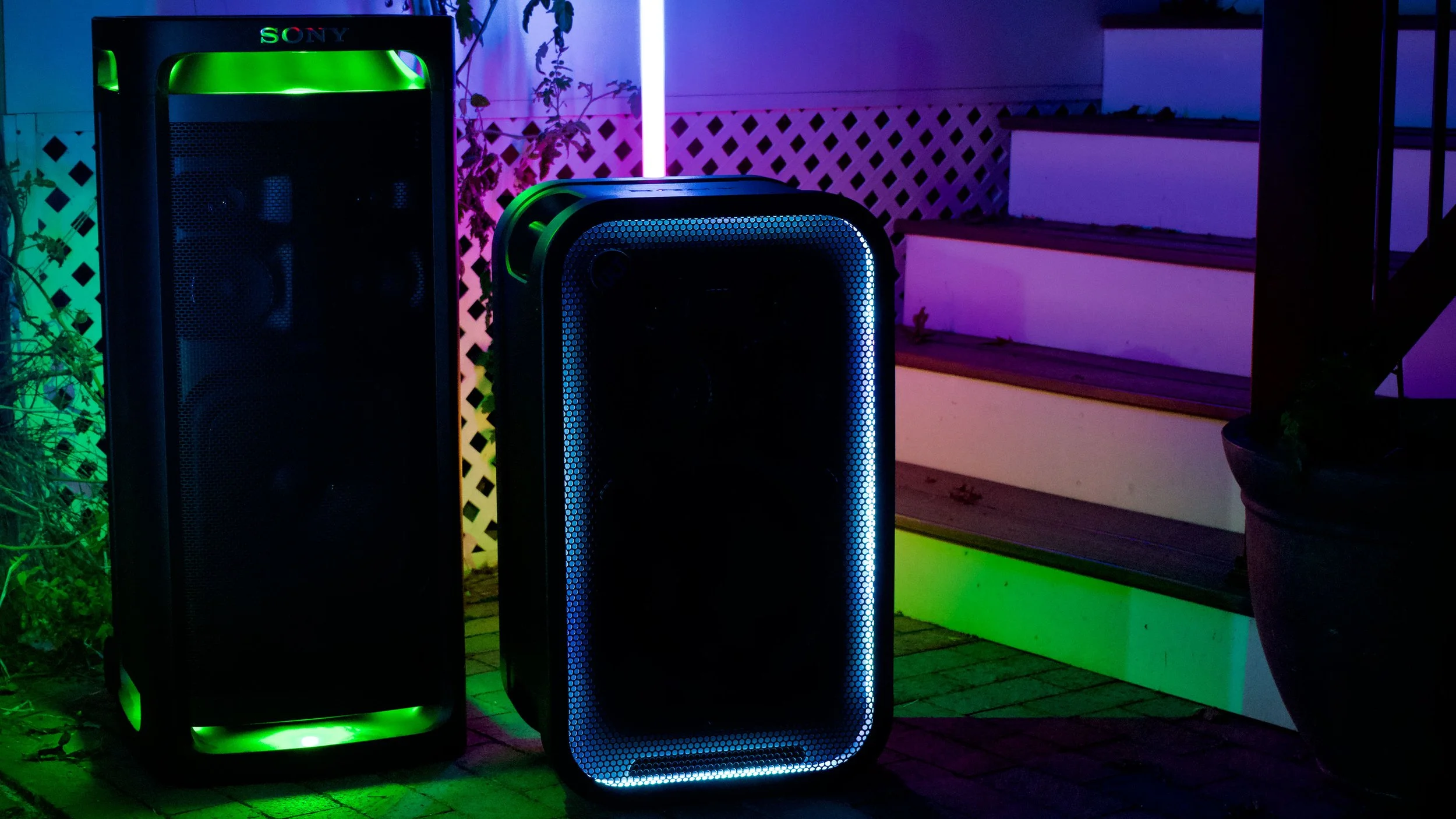
Compact Party Speaker Showdown: Sony ULT Tower 5 vs. JBL PartyBox 130 vs. JBL PartyBox 120
The Sony ULT Tower 5 is a massive generational leap over its predecessor, the Sony SRS-XV500—playing significantly louder on battery power while delivering a much fuller, cleaner sound signature. However, if you are shopping for a mid-sized, grab-and-go party box speaker, you aren't comparing the Sony ULT Tower 5 to last year's Sony. You are comparing it directly against JBL's dominant compact heavyweights: the JBL PartyBox 130 and the JBL PartyBox 120 (which remains an exceptional value throughout 2026 and 2027).
While all three speakers target the same 15-to-20-person party sweet spot, Sony and JBL took completely different approaches to cabinet durability, control layouts, rear connectivity, and bass engineering. We pitted the Sony ULT Tower 5 directly against both the JBL PartyBox 130 and JBL PartyBox 120 to see which portable party speaker actually deserves your money.
Quick Specs & Pricing Overview
Sony ULT Tower 5 ($450): The rugged, pro-oriented acoustic leader. Weighs 28 lbs and features a single front-firing woofer with a downward-firing bass exhaust port, dual front tweeters, up to 20 hours of battery life (with an affordable DIY swappable battery), physical top controls, USB-C, and pro-grade XLR and RCA inputs/outputs.
JBL PartyBox 130 ($450): The louder, feature-packed consumer favorite. Weighs 25 lbs with a redesigned carrying handle, dual front woofers, dual tweeters, a tool-free swappable JBL Battery 200 (advertised up to 15 hours), a top display control panel, full-cabinet RGB lights, dual mic inputs, USB-C charging, and an optical TV input.
JBL PartyBox 120 (Frequently on Sale): The smart budget contender. Shares the same 25-lb footprint, dual-woofer/dual-tweeter setup, and swappable JBL Battery 200 (advertised up to 12 hours) as the 130, but retains classic physical control buttons and a cleaner carrying handle at a lower street price.
1. Design, Portability, and Durability
All three speakers are compact enough to pick up and carry with one hand and feature IPX4 splash resistance (as long as the rear port flap is sealed shut). Side by side, however, their physical builds and everyday usability differ noticeably:
Size, Weight, and Handles: The Sony ULT Tower 5 is visibly larger and heavier at 28 pounds, whereas both the JBL PartyBox 130 and 120 weigh in at 25 pounds. While all three feature built-in carrying handles, the redesigned top handle on the JBL PartyBox 130 looks awkward and out of place compared to the clean integrated handle on the older PartyBox 120 and the Sony.
Cabinet Durability: That extra three pounds on the Sony ULT Tower 5 goes straight into structural toughness. The Sony's denser plastic shell and thicker metal grille can take far more of a beating than either JBL speaker, both of which use noticeably softer plastic and thinner front grilles.
Top Panel Controls: Both the Sony ULT Tower 5 and the JBL PartyBox 120 use reliable, tactile physical buttons on the top panel. The newer JBL PartyBox 130 switches to a top screen control panel that feels less intuitive to navigate and raises long-term durability concerns if bumped during transport.
Party Lighting: While Sony upgraded the lighting on the ULT Tower 5 compared to older Sony models, JBL easily wins the visual battle. The RGB light shows on the PartyBox 130 and 120 are brighter, far more dynamic, and can be expanded within JBL's lighting ecosystem—though keeping the lights on will drain your battery faster on all three speakers.
2. Battery Life, Swappable Packs, and AC Power
On paper, battery ratings vary across these three models, but real-world party testing shows they are remarkably close in actual endurance:
Advertised vs. Real-World Playtime: Sony rates the ULT Tower 5 for up to 20 hours at 30% volume (ULT bass on, lights off), 12 hours with the lights turned on, and roughly 2 hours at 100% max volume. Meanwhile, JBL advertises the PartyBox 130 for 15 hours and the PartyBox 120 for 12 hours, even though both JBL speakers use the exact same battery pack. In real-world use—playing at a party-ready 65% volume with both the lights and Bass Boost turned on—the JBL speakers deliver roughly 6 to 7 hours of playback, putting all three speakers on very similar footing.
Swappable Battery Ecosystem: Every speaker in this trio features a replaceable battery to protect your long-term investment. JBL wins on pure speed: both the 130 and 120 use the snap-in JBL Battery 200, which swaps out in seconds without tools and can be mixed and matched with the JBL PartyBox Encore 2 and JBL PartyBox On-The-Go 2. However, JBL charges a steep premium for official branded batteries. With the Sony ULT Tower 5, you need a screwdriver to open the battery door, but it uses a single standard, off-the-shelf battery (the exact same cell used as a dual-pack in the larger ULT Tower 7) that you can buy online for a fraction of the price.
AC Wall Power & Cables: Plugging any of these three speakers into an AC wall outlet unlocks an immediate performance boost, pushing higher peak volume and deeper bass. Both JBL speakers use a common double-barrel AC power cable that you likely already have lying around the house, whereas the Sony ULT Tower 5 uses a proprietary square power connector that you will want to keep track of.
3. Ports, Microphones, and Pro vs. Consumer I/O
All three speakers support Bluetooth multipoint (allowing two phones to stay connected as DJs simultaneously) with zero noticeable video latency when watching content on your phone. Look at the rear input panels, however, and you will see a clear divide between consumer convenience and pro DJ hardware:
JBL PartyBox 120 & 130 (Consumer-Friendly I/O): Both JBL models include a 3.5mm Aux-In jack and a 3.5mm Aux-Out jack, making it effortless to hardwire audio devices or daisy-chain multiple speakers together regardless of brand or size. Stepping up to the PartyBox 130 adds a USB-C port for charging your phone and an optical audio input, letting you hook the speaker directly up to your TV to double as a living room soundbar.
Sony ULT Tower 5 (DJ & Pro Audio I/O): Sony stripped out the optical TV input (ironic, since JBL copied that feature from older Sony speakers) along with standard 3.5mm Aux-In and Aux-Out jacks. While the Tower 5 does include USB-C and USB-A ports, its main attraction is stereo RCA Line-In alongside dedicated XLR In and XLR Out ports. This makes the ULT Tower 5 ideal for DJs and gigging pros who want to plug straight into a mixer and daisy-chain active speakers via XLR. (Note: The XLR ports do not supply bus/phantom power for microphones, and if you need a 3.5mm Aux connection, you will need a cheap RCA adapter).
Microphones & Vocal Removal: For plug-and-play karaoke, JBL is much easier to set up. Both the 130 and 120 feature two quarter-inch inputs for dual wired microphones (or up to six wireless microphones) without needing a mixer. JBL also offers two wireless mic options: universal quarter-inch PartyBox mics, or proprietary JBL EasySing wireless mics that unlock a powerful AI vocal-removal tool. By contrast, the Sony ULT Tower 5 only has a single quarter-inch mic input (requiring an external mixer or dual wireless mic system if you want two mics). Sony does include a built-in vocal-removal tool inside its smartphone app for free, though it isn't quite as potent as JBL's EasySing hardware or a dedicated laptop-and-mixer setup.
4. Acoustic Architecture & Head-to-Head Sound Test
Tested side-by-side unplugged at 75% volume, the internal driver layouts reveal why the Sony ULT Tower 5 takes the acoustic crown:
Driver Layout & Bass Exhaust: Both the JBL PartyBox 130 and 120 use a traditional setup: dual front-firing woofers, dual front-firing tweeters, and a rear-firing bass exhaust port (paired with JBL's Bass Boost button, where Deep sounds full while Punchy tends to muddle the mix). The Sony ULT Tower 5 uses a single front-firing woofer,dual front-firing tweeters, and a downward-firing bass exhaust port that couples directly with the floor—backed by Sony's ULT 1 (deep bass) and ULT 2 (maximum bass and sound pressure) modes.
Soundstage, Balance, and Bass Kick: While the JBL PartyBox 130 and 120 share very similar instrument separation and bass characteristics, both push vocals and upper mids forward quite aggressively. The Sony ULT Tower 5 sounds noticeably wider, more open, and far more balanced because it doesn't artificially over-emphasize the vocals. Even better, thanks to its downward-firing exhaust port, the ULT Tower 5 delivers significantly more physical kick in the bass than either JBL speaker—all while keeping the low end tight and clean so it never muddies the rest of your music.
Max Volume Output: All three speakers are well-suited for a 15-to-20-person party. Among the three, the JBL PartyBox 120 is the quietest, while the JBL PartyBox 130 is perceptually the loudest—Noticeably more potent than the 120, largely because it leans heavily into a brighter, treble-forward tuning. The Sony ULT Tower 5 sits just a hair below the 130 in peak perceived loudness simply because it keeps the highs smooth and balanced rather than harsh.
5. Multi-Speaker Pairing & Auracast Ecosystems
If you buy two identical units (two 130s, two 120s, or two Tower 5s), you can wirelessly link them for true Left/Right stereo separation. You cannot stereo-pair a PartyBox 130 with a 120, though they will link together in mono sync.
JBL Auracast Ecosystem: Both the PartyBox 130 and 120 use Auracast to wirelessly sync with a massive lineup of newer JBL speakers—including the PartyBox Encore 2, 320, 330, 520, 720, and Ultimate, as well as portable models like the Boombox 4, Xtreme 5, Xtreme 4, Charge 6, Flip 7, Clip 5, Grip, and Go 5. However, they cannot pair with older JBL PartyBoost or older TWS PartyBox models, nor will they connect to Sony's Auracast speakers.
Sony Auracast Pairing: The Sony ULT Tower 5 uses Auracast to pair with the Sony ULT Tower 7 and ULT Tower Max, establishing a connection that is noticeably faster and more stable than JBL's Auracast implementation. While Sony claims backward compatibility with older Party Connect speakers, they failed to link during testing and likely require a future firmware update.
Which Compact Party Speaker Should You Buy?
Buy the Sony ULT Tower 5 ($450) if sound quality, deep floor-coupling bass, and structural durability are your top priorities, or if you are a DJ who wants XLR and RCA connectivity for a mixer. It is slightly heavier and its light show is tamer, but its balanced midrange and hard-hitting, clean bass outperform both JBL models.
Buy the JBL PartyBox 130 ($450) if you want the loudest, most versatile plug-and-play consumer party speaker. It is lighter, puts on a show-stopping RGB light display, supports dual microphones out of the box, pairs with dozens of JBL Auracast speakers, and includes an optical port to double as a TV soundbar.
Buy the JBL PartyBox 120 (On Sale) if you want the best budget value in the JBL ecosystem. While it doesn't get quite as loud as the 130 and lacks the optical TV input and USB-C port, it gives you the exact same sound signature,battery life, and dual-mic karaoke versatility while keeping superior physical control buttons and a much cleaner carrying handle.
Frequently Asked Questions (FAQ)
Does the Sony ULT Tower 5 sound better than the JBL PartyBox 130 and 120? Yes. The Sony ULT Tower 5 sounds more open and balanced because it doesn't artificially push the upper vocals like the JBL models do. Furthermore, Sony's downward-firing bass exhaust port generates noticeably harder-hitting, cleaner bass that never muddies the midrange.
What is the difference between the JBL PartyBox 130 and JBL PartyBox 120? The JBL PartyBox 130 gets noticeably louder than the 120 and adds a USB-C charging port, an optical audio input for TV connections, a top screen control panel, and a redesigned handle. The older PartyBox 120 costs less on sale, uses the exact same swappable JBL Battery 200, and retains more durable physical control buttons.
Which speaker gets the loudest: Sony ULT Tower 5, JBL PartyBox 130, or PartyBox 120? The JBL PartyBox 130 is the loudest at max volume (partly due to its brighter treble tuning), followed very closely by the Sony ULT Tower 5,which maintains a warmer, more balanced profile at high volumes. The JBL PartyBox 120 is the quietest of the three,though all three easily handle a 15-to-20-person party.
Can you pair the Sony ULT Tower 5 with a JBL PartyBox 130 using Auracast? No. Even though both Sony and JBL use Auracast wireless technology, their ecosystems are walled off from one another. The Sony ULT Tower 5 will only pair with compatible Sony speakers (like the ULT Tower 7 and Tower Max), while the JBL PartyBox 130 and 120 only pair with Auracast-enabled JBL speakers.
Which speaker has the easiest battery to replace? The JBL PartyBox 130 and 120 are the easiest to swap on the fly because their JBL Battery 200 packs pop in and out without tools (and also fit the PartyBox Encore 2 and On-The-Go 2),though JBL charges a high price for replacements. The Sony ULT Tower 5 requires a screwdriver to open the battery compartment, but it uses a standard off-the-shelf battery that is much cheaper to buy online.
The Sony ULT Tower 5 is a very big upgrade over its predecessor the Sony XV500, its gets louder and it sound better as well. However if you’re looking for a portable small sized box speaker, the Sony ULT Tower 5 is a little big and heavy, but its surprisingly durable as well. But realistically speaking, you’re probably going to compare the Sony ULT Tower 5 to the JBL Partybox 130 and maybe even the JBL Partybox 120… cause I think this is still a great speaker in 2026 and 2027. So lets see which one is right for you cause these speakers are very different from one another.
Regarding pricing, regarding pricing, both the Sony ULT Tower 5 and the JBL partybox 130 have a retail price of $450, where as the JBL Partybox 120 can be found on sale on a regular basis now… and expect both the Sony Tower 5 and JBL Partybox 130 to go on sale on a regular basis as well. Nonetheless if you want to pick any of these speakers up they’ll be linked down below, or you can always press on the YouTube shopping button. And if you want to further support the channel then you can always watch some of the related videos in the description down below.
So first we have to talk about design, cause these speakers are very different from one another. The Sony ULT Tower 5 is noticeably larger and heavier than both the JBL Partybox 130 and the JBL partybox 120. The Sony ULT Tower 5 weighs in at 28 pounds where as JBL’s speakers weigh in at 25 pounds. Now you can carry all of these speakers around cause they all have built in carrying handles, but like I said in the full review, I think the JBL Partybox 130 looks ridiculous with its new carrying handle. Now all of these speakers are rocking an IPX4 rating meaning that some water isn’t going to be an issue for these speaker as long as you keep the port panel on the back closed… however I do feel that the Sony ULT Tower 5 is more durable and can take more of a beating than both of the JBL’s speakers cause their plastic feels very soft and their metal grills are slightly thinner.
But then there are the media controls on these speakers, personally I dont like the new control panel on the Partybox 130, its not as easy to use and I fear that it can break easily, I still prefer the physical buttons on the Partybox 120. And the Sony ULT Tower 5 is also only using physical buttons.
But then there are the light features on these speakers… and well, I do think Sony’s light feature looks better here compared to what they had before… but clearly you can see that this light feature isn’t as impressive or as dynamic as the light feature found on JBL’s speakers. Plus with these JBL speakers you can also build out their light features if you want. However, if you do decide to use the light feature on any of these speakers, that is going to take it toll on the battery life.
Now when it comes to battery life, The Sony ULT Tower 5 has an advertised battery life of 20 hours and that’s with this speaker playing at 30% volume which is a decent volume for when you’re around the house, but that with the light feature turned off but with the ULT Feature turned on, which is good. And if you were to use this speaker with the lights turned on then its going to have an advertised battery life of 12 hours. And at max volume is good for around 2 hours of playback time.
Where as with the JBL Partybox 130 and Partybox 120, the 130 has an advertised battery life of 15 hours, and the 120 has an advertised battery life of 12 hours… but these two speakers are using the same batteries. But real world use with both of these speakers playing at 65% volume, which I feel is decent for when you’re with friends, with the light feature turned on and with the bass boost feature turned on, its good for about 6 to 7 hours of playback time… so overall, battery life on all of these speakers is fairly similar.
Now with all of these speakers you can swap out the battery if you want or need to. However with JBL’s speakers it is very easy to take these batteries out and you can mix and match batteries between your 130 and 120, or JBL Partybox Encore 2 or on the go two cause they are also using the same JBL 200 battery. Where as with the Sony, in order to get to its battery you are going to have to use a screw driver. But the important thing here is, you can replace this battery with any battery that you can easily find online and they’re much more affordable. And the Sony ULT Tower 7 is also using the same battery, just two instead of one. Where as with JBL’s speakers, if you want to replace their batteries, then JBL will try to sell you their branded batteries… and if you were to use Non JBL batteries, then JBL is going to be very sad.
But overall, with both of JBL’s speakers, it very easy to swap out your batteries if you want or need to, where as with Sony’s speaker, you can swap them out if you need to but it does require more work. But the important thing is, being able to swap out your batteries is great for the life of your investment… but with the JBL you are paying a premium for convince.
Now with all of these speakers if you were to use them while they are plugged in you are going to get a performance boost out of them, they’re all going to get louder and they are all going to have more bass. However with both of JBL’s speakers they are both using the more common double barrel AC port, and this cable comes included with a lot of other products. Where as with the Tower 7, Sony changed over to their square port… so with the Sony you are going to have to be mindful of this cable.
But now lets talk about connectivity cause there is a lot going on here. Now with all of these speakers they can be connected to 2 devices at the same time so you and a friend can both be DJ. And latency is not an issue for these speakers so you can use them to watch videos with on your phone.
But when it comes to the ports on these speakers, therye all different. Now both of JBL’s ports are very consumer friendly. They both have an audio jack so you can use them with a wired connection that way and they both have an audio out jack, so you can always daisy chain either of these two speakers up to any other speaker and get them to play in sync regardless of size or brand. But the upgrade than 130 has over the 120 as that this speaker also has a USB C port so you can charge your own devices and it also has an optical port, so you can easily connect this speaker up to your TV and use it as a soundbar.
Where as with the Sony ULT Tower 5, this speaker doesn’t have an optical port, which is ironic cause this is something that JBL copied from Sony… but now sony removed it. The Tower 7 also doesn’t have an audio jack or an audio out jack… but it does have a USB C port like the 130 and it also has a USB A port… which I don’t think is super useful in 2026. However the Tower 5 is aimed more towards pros that might want to DJ with their speaker cause the Tower 5 has both an RCA line in and an XLR line in and out. So you can easily connect the tower 5 up to a mixer and you can also daisy chain other speakers via the XLR line out. However, do keep in mind that these XLR ports don’t have bus power, so you can’t plug in a mic, you’re going to need a mixer. And if you really need to use an audio jack connection with this speakers then you can always get an RCA adaptor.
But then theres the microphone on these speakers… the Sony ULT Tower 5 has a single 3 quarter inch input so you can plug in a wired mic, where as both of JBL’s speakers you can plug in 2 wired mics without needing a mixer like you’ll need with the Sony if you want to use it with 2 or more wired mics. Or you can always use these speakers with wireless microphones.
Now JBL has 2 wireless microphones to choose from. You have your universal partybox mics which plug in via your three water inch input and they’ll work with any speaker or mixer out there… or you can also get JBL’s easy sing mics, but these mics will only work with select JBL speakers. However, the Easy sing mics also get you an AI vocal removal tool, which is great tif you plan on doing lots of kakroke.
Now, Sony’s ULT Tower 5 does come included with a Vocal removal tool if you open up the app, however, Sony’s included vocal removal tool isn’t as potent as JBL’s easy sing mic system. However, unless you get JBL’s easy sing mics, then your Partybox 130 or 120 does not have a built in vocal removal tool like the Sony. But overall, JBL’s port panel on both the 130 and 120 is more more consumer friendly. You can plug in 2 wired mics or you can get up to a total of 6 wireless microphones working with either JBL speaker, you can daisy chain them up and with the 130 you can connect it to your tv. Where as with the Sony Tower 7… this speaker is better geared towards as pro that is going to use those XLR ports and they are going to use the Tower 5 with a mixer. And if you have a laptop and a mixer, you’re going to have a better vocal removal tool.
But with all of that out of the way, lets talk about sound. When it comes to speaker sets ups, both the JBL partybox 120 and JBL Partybox 130 have dual frontward firing woofers with an exhaust port shooting out the back and they both have dual frontward firing tweeters. And this is a fairly standard speaker set up. Where as with the Sony ULT Tower 5, this speaker has a single frontward firing woofer with an exhaust port that shoots out the bottom, and it has dual frontward firing tweeters. Now the tower 5 also has its ULT button, ULT 1 gets you more bass and ULT 2 gets you more bass and more sound pressure. Where as with the Partyboxes, you have bass boost. And I think deep is best cause punchy muddles the rest of your music. But now we’re going to jump into the soundtest. All of these speakers are playing at 75% volume while unplugged.
Soundtest
So when it comes to sound quality’s do think that the JBL Partybox 130 is noticeably more potent than the JBL partybox 120, it does get noticeably louder. But besides that, the JBL Partybox 130 and 120 sound similar in the sense that they both have the same instrument seperation, they both put an emphasis on the vocals and they both have the same type of bass. Where as with the Sony ULT Tower 5, this speaker does sound more open than both of JBL’s speakers, the mids and vocals aren’t as overly emphasized as JBL making it sound more balanced, and most importantly there’s the bass. The ULT Tower 5 has noticeably more kick in its bass than both of JBL’s speakers, however the bass is cleaner and doesn’t interfere with the rest of your music.
And when it comes to max volume performance, I think all of these speakers are good for a 15 to 20 person party, however the JBL Partybox 120 is the quietest speaker here. Where as the JBL Partybox 130 is the loudest speaker, and that’s cause this speaker does like to lean towards that brighter sound signature. But then there’s the Sony ULT Tower 5 who’s max volume sits slightly below the JBL Partybox 130… but remember the Sony doesn’t over emphasize the highs, so in reality these two speakers are very similar. But with all of these speakers they are all going to get you a performance boost if you were to use them while they are plugged in, they are all going to get louder and they are all going to have more bass. But overall, when it comes to sound quality, I do feel the Sony ULT Tower 5 sounds and performs better than both of JBL’s speakers.
But finally lets talk about pairing these speakers up with other speakers. Now with all of these speakers, if you have two of the exact same speakers then you can wirelessly pair them up and get them to play in left and right stereo mode, but with they have to be two of the exact same speakers. You can not get a 130 and 120 and get them to play in stereo mode, they’ll only play in sync.
now both of these speakers are using aura cast, however these Sony speakers won’t pair up to JBL’s speakers. However with the Partybox 130 and 120, you can pair them up to other JBL speakers that are also using aurcast like lets say a JBL Partybox encore 2, or to a Partybox 120, 130, 320, 330, 520, 720 or to an ultimate and get them to all play in sync… or you can also pair them up to any of JBL’s smaller more portable speakers that are also using aura cast like lets say a JBL Boombox 4, Xtreme 5, Xtreme 4, Charge 6, flip 7, clip 5, a grip or Go 5 and get them to play in sync as well.
However you can not pair up your Partybox 130 or 120 up to any of JBL’s older speakers that are using Partyboost, and you can not pair up your 130 up to any of JBL’s older Partyboxes that are sing TWS. But regardless, JBL has a large ecosystem of Speakers to choose from.
Where as with the Sony Tower 5, you can pair it up to either a tower 7 or a Tower Max, and they actual pair up surprisingly fast… and the connection is also a lot more stable than compared to JBL’s aura cast connection. Now Sony says that you can pair your Tower 5 up to Sony’s older speakers that are using Partyconnect, however I haven’t been able to get them to work… so maybe we’re waiting for a firmware update.
But with all of that being said, both the JBL partybox 130 and Sony ULT Tower 5 are great speakers, however they are very different. I think the JBL Partybox 130 is the better speaker for the consumer… this speaker is smaller and lighter, the light feature is more impressive, and the port panel is very versatile. Where as the Sony ULT Tower 5 is better suited for the Pro, someone that actually going to use it with a mixer. But more importantly, the Sony ULT Tower 5 sounds better and more open than JBL’s speakers. The Sony ULT Tower 5 sounds more balanced and the bass hits harder without muddying the rest of your music. I still think the JBL Partybox 130 is going to be the default option for a lot of people, but I simply prefer the Sony ULT Tower 5.