
⚡️🔋 Anker Prime Base: https://geni.us/GC-AnkerPrimeBase
Sony ULT Tower 7: https://geni.us/GC-SonyULTTower7
Sony ULT Tower 9: https://geni.us/GC-SonyULTTower9
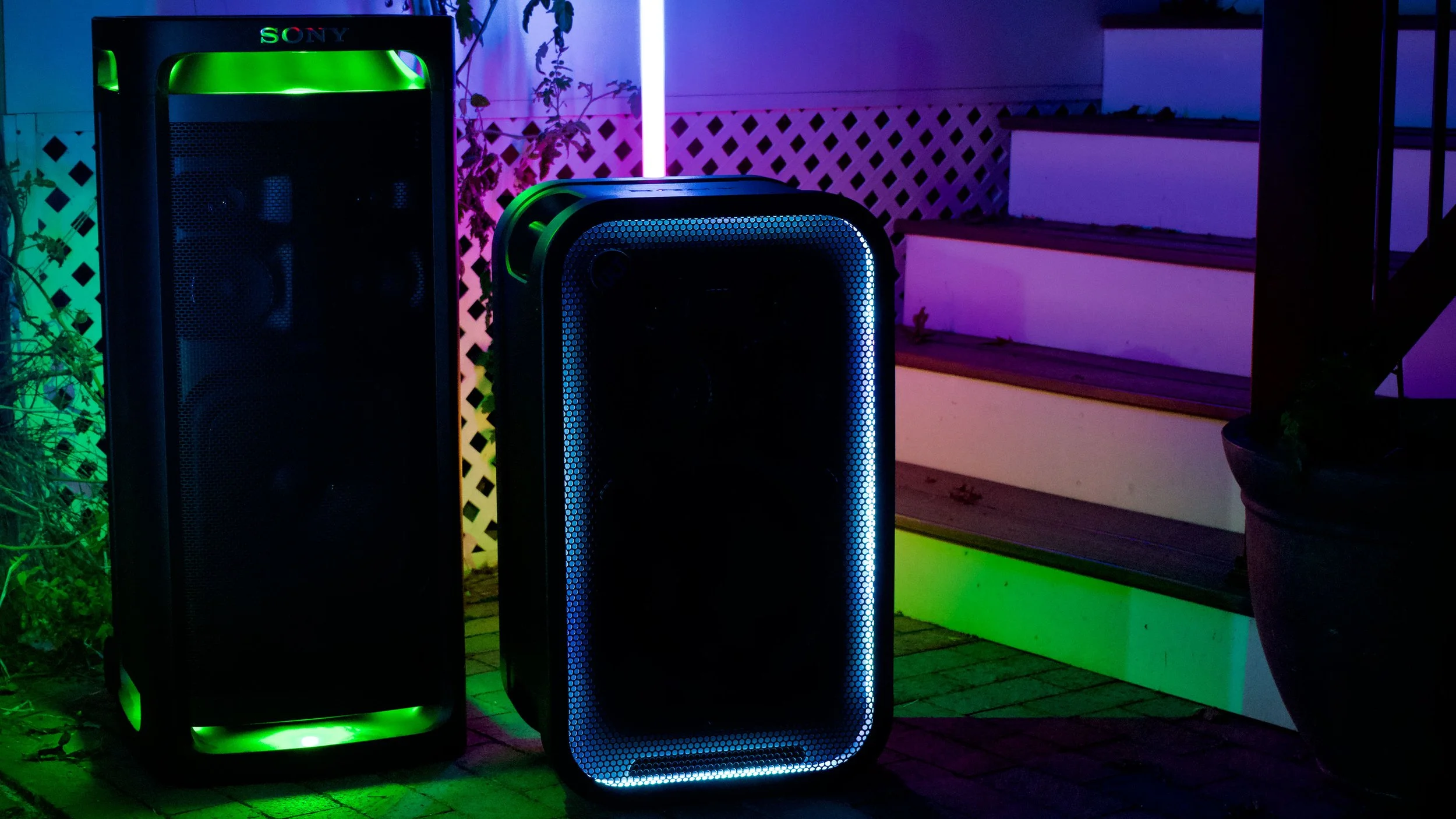
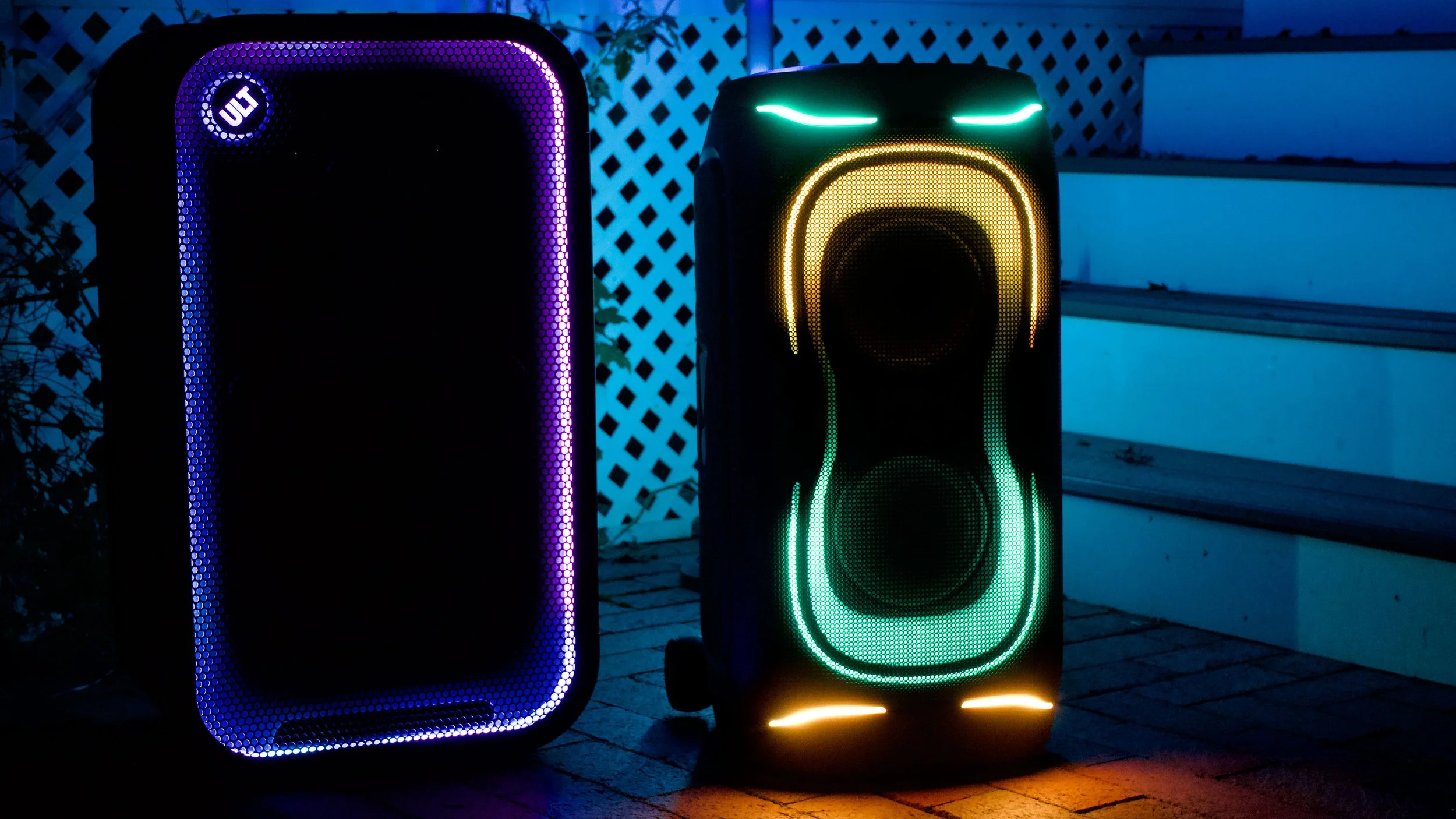
Mini Powerhouse or Full-Size Beast? Sony ULT Tower 7 vs. Sony ULT Tower 9
For anyone who prioritizes pure audio fidelity in a party speaker, the Sony ULT Tower 9 and ULT Tower 10 have long stood at the top of the mountain. Thanks to their dedicated mid-range drivers and quad-tweeter arrays, they deliver a level of vocal clarity and instrument separation that traditional 2-way party speakers simply cannot match. The only catch? Both the Tower 9 and Tower 10 are massive.
Enter the Sony ULT Tower 7. Designed essentially as a scaled-down, more manageable version of the Tower 9 and Tower 10—complete with a built-in rechargeable battery—the Tower 7 brings Sony's flagship 3-way acoustic engineering into a more compact footprint.
Since the battery-powered Sony ULT Tower 9 and the new Sony ULT Tower 7 share the same core DNA, choosing between them comes down to key differences in portability, weatherproofing, pro-versus-consumer connectivity, and sheer volume output. We tested both speakers head-to-head to help you decide which one belongs at your next gathering.
Quick Specs & Pricing Overview
Sony ULT Tower 7 ($650): The more compact, pro-oriented sibling. Features a 3-way acoustic architecture (1 front woofer with a downward-firing bass exhaust, dual mid-range drivers, and 4 tweeters—2 front, 2 rear), an IPX4 splash-proof rating, tactile physical buttons, USB-C audio/charging, pro-grade XLR and RCA inputs/outputs, and Auracast wireless pairing.
Sony ULT Tower 9 ($900): The larger, louder, consumer-focused powerhouse. Shares the same 3-way driver layout (front woofer with downward exhaust, dual mids, and 4 tweeters) in a taller, heavier cabinet. Includes 360-degree floor projection lighting, capacitive touch controls, a 3.5mm Aux input, an optical TV input, and a bundled wireless karaoke microphone.
1. Design, Portability, and Durability
While the Sony ULT Tower 7 is larger and heavier than direct rivals like the JBL PartyBox 330 and 320, it is noticeably smaller and lighter than the Sony ULT Tower 9. However, moving them around and using them outdoors reveals several surprising trade-offs:
Wheels & Fixed Handles: Both speakers include built-in bottom wheels for rolling transport, and frustratingly, both lack a luggage-style telescopic handle—relying instead on fixed built-in handles. Because the ULT Tower 9 is significantly taller, tilting and rolling it is actually much more comfortable in practice. On the shorter ULT Tower 7, the fixed handle sits too low for comfortable rolling if you are average height, and is practically unusable if you are six feet or taller. For stairs or loading either speaker into a car trunk, you will want a second person to help.
Build Quality & Weatherproofing: Both cabinets use a mostly plastic body paired with a thin metal front grille, though the denser plastic on the newer ULT Tower 7 feels noticeably sturdier and more durable than the Tower 9. More importantly, the ULT Tower 7 carries an IPX4 splash-resistance rating thanks to its sealed rear port cover. The ULT Tower 9 has no water-resistance rating because its AC charging port remains exposed.
Top Panel Controls: The ULT Tower 7 uses tactile physical buttons across the top panel, which are reliable and easy to press even if your hands are wet. The ULT Tower 9 relies on capacitive touch buttons; while sleek-looking, they are far more finicky to operate around pools or damp environments.
Party Lighting: While neither speaker matches the full-cabinet light shows of JBL's lineup, Sony updated the lighting strips on the ULT Tower 7 to look more dynamic than the upper lights on the Tower 9. However, the ULT Tower 9 still holds a major visual edge thanks to its dedicated floor lights, which cast a wide glow onto the ground and give the speaker a massive stage presence.
2. Battery Life, Swappable Packs, and AC Power
Both speakers are engineered to survive an entire night of partying off the grid, running all night at 50% volume even with the lighting effects turned on:
Battery Endurance: Because it pushes a slightly smaller cabinet to a slightly lower peak volume, the Sony ULT Tower 7 edges out the ULT Tower 9 in total battery longevity.
DIY Swappable Batteries: In a massive win for long-term ownership, both the ULT Tower 7 and ULT Tower 9 use the exact same dual 5,000mAh off-the-shelf battery configuration. If the batteries ever degrade years down the road, you don't need to replace the speaker or buy overpriced proprietary packs—you can open the compartment and swap in affordable replacements.
AC Wall Power & Cables: Plugging either speaker into a wall outlet unlocks a major performance boost, noticeably increasing both maximum volume and low-end punch. Keep in mind that the ULT Tower 9 uses a standard, universal double-barrel AC power cord that is easy to replace, whereas the ULT Tower 7 switches to a proprietary square power connector—so make sure you don't misplace the Tower 7's power cable.
3. Ports, Microphones, and Pro vs. Consumer I/O
Both speakers support Bluetooth multipoint (allowing two devices to stay connected simultaneously), low-latency video playback, and Sony's high-resolution LDAC Bluetooth codec (though enabling LDAC will drain the battery faster). Look at the rear port panels, however, and these two speakers target completely different buyers:
Sony ULT Tower 9 (Consumer & Home Entertainment I/O): The Tower 9 is built for effortless home and backyard use. It includes a standard 3.5mm Aux-In jack for wired devices and an optical audio input, allowing you to hook it directly up to your television and use it as a massive living room soundbar.
Sony ULT Tower 7 (DJ & Pro Audio I/O): Sony stripped away both the 3.5mm Aux jack and the optical TV input on the Tower 7, pivoting heavily toward gigging pros and DJs. In their place, the Tower 7 features a USB-C port(supporting both wired digital audio from your phone and reverse device charging), stereo RCA Line-In, and dedicated XLR In and XLR Out ports. This allows you to plug the Tower 7 straight into a DJ mixer and daisy-chain multiple active speakers via XLR. (Note: The XLR ports do not provide phantom/bus power, so XLR microphones still require an external mixer).
Microphones & Karaoke: Both speakers feature a quarter-inch input for plugging in a wired microphone. However, the ULT Tower 9 comes bundled with a wireless microphone right in the box, making it ready for karaoke out of the gate. With the ULT Tower 7, wireless microphones must be purchased separately.
4. Acoustic Architecture & Head-to-Head Sound Test
Tested side-by-side at 75% volume—comparing the Tower 7 both unplugged and plugged in against the Tower 9—shows why Sony's acoustic layout stands above the competition:
Identical 3-Way Driver Layout: Both speakers share the exact same internal driver philosophy, just scaled slightly to match their cabinet sizes: a front-firing woofer paired with a downward-firing bass exhaust port, dual front-firing mid-range drivers, and four tweeters (two firing forward, two firing out the back). Both also feature Sony's signature ULT button, offering ULT 1 for deeper sub-bass extension and ULT 2 for maximum sound pressure and punch.
Instrument Separation & Tonal Balance: Thanks to those dedicated mid-range drivers and quad tweeters, both the Tower 7 and Tower 9 deliver vastly superior vocal clarity and instrument separation compared to standard 2-way party speakers. Surprisingly, in back-to-back listening, the Sony ULT Tower 7 actually sounds slightly more balanced than the ULT Tower 9. The Tower 9 places heavier emphasis on the upper treble, whereas the Tower 7 pulls the highs back into a smoother, more relaxed, and natural presentation.
Bass Performance: Because both speakers fire their bass exhaust ports straight down into the floor, both deliver massive, chest-thumping low-end kick that never muddies or bleeds into the midrange vocals.
Max Volume & Party Size: Unplugged on battery power, the ULT Tower 7 is ideal for a 20-to-30-person party, while the larger ULT Tower 9 easily covers a 50-person party. When you plug the ULT Tower 7 into a wall outlet, its AC performance boost pushes it almost as loud as an unplugged ULT Tower 9. Once you plug the ULT Tower 9 into the wall, however, it pulls decisively ahead with sheer, room-shaking volume that the smaller Tower 7 cannot match.
5. Multi-Speaker Pairing: Auracast vs. Party Connect
If you buy two identical units (two Tower 7s or two Tower 9s), you can wirelessly link them for true Left/Right stereo playback. When trying to link different Sony models together, however, there is an important generational divide:
Sony Auracast (ULT Tower 7): The newer ULT Tower 7 runs on Auracast, allowing it to pair almost instantaneously with newer Sony models like the ULT Tower 5 and ULT Tower Max with rock-solid wireless stability. (Note: Sony's Auracast remains locked to Sony hardware and will not pair with Auracast speakers from JBL).
Party Connect Compatibility Issues: While Sony claims the ULT Tower 7 is backward-compatible with older Party Connect speakers like the ULT Tower 9, the two speakers failed to pair during our real-world testing—meaning cross-generation syncing between the Tower 7 and Tower 9 will likely require a future firmware update.
Which Sony Party Speaker Should You Buy?
Buy the Sony ULT Tower 7 ($650) if you want the sweet spot of the Sony lineup. For $250 less than the Tower 9, you get the same phenomenal 3-way acoustic clarity with an even more balanced, relaxed treble tuning, slightly longer battery life, IPX4 water resistance, tactile physical buttons, USB-C audio, and pro-grade XLR/RCA ports for connecting a DJ mixer.
Buy the Sony ULT Tower 9 ($900) if you are hosting 50-person parties and need maximum volume output, or if you want a plug-and-play consumer entertainment hub. Its taller frame is easier to roll around, the 360-degree floor lights look fantastic at night, and it includes an optical input for your TV, a 3.5mm Aux jack, and a wireless karaoke microphone right in the box.
Frequently Asked Questions (FAQ)
What is the main difference between the Sony ULT Tower 7 and Sony ULT Tower 9?
The Sony ULT Tower 9 ($900) is larger, gets louder for bigger crowds (up to 50 people), includes floor projection lights, comes with a wireless microphone, and features consumer ports like optical-in and 3.5mm Aux. The Sony ULT Tower 7 ($650) is more compact, adds IPX4 splash resistance, uses physical buttons instead of touch controls, upgrades to Auracast wireless pairing, and swaps consumer ports for pro-grade XLR and RCA connections.
Which speaker sounds better: the Sony ULT Tower 7 or ULT Tower 9?
Both share the same 3-way driver configuration (front woofer with downward exhaust, dual mid-range drivers, and four tweeters) for exceptional vocal clarity and deep bass. However, the ULT Tower 7 has a slightly more balanced and relaxed sound signature, whereas the ULT Tower 9 pushes the treble harder and reaches higher maximum volume levels.
Can you pair the Sony ULT Tower 7 with the Sony ULT Tower 9?
Currently, wireless pairing between the ULT Tower 7 (which uses newer Auracast technology) and the ULT Tower 9 (which uses Sony's older Party Connect protocol) does not work reliably out of the box and appears to require a future firmware update. However, you can daisy-chain them using a wired connection via the Tower 7's XLR output and an appropriate adapter cable into the Tower 9's Aux input.
Is the Sony ULT Tower 9 waterproof like the ULT Tower 7?
No. The Sony ULT Tower 7 features an IPX4 splash-proof rating because its rear ports are protected by a sealed cover. The Sony ULT Tower 9 has an exposed AC charging port and does not carry an IP water-resistance rating.
Do the Sony ULT Tower 7 and Tower 9 have replaceable batteries?
Yes. Both speakers utilize the exact same dual 5,000mAh off-the-shelf battery setup, allowing you to swap in affordable replacement batteries down the road if the original cells lose their capacity.
Recommended SEO Keywords:
Sony ULT Tower 7 vs Sony ULT Tower 9, Sony ULT Tower 7 vs Tower 9, Sony ULT Tower 7 review, Sony ULT Tower 9 review, Sony ULT Tower 10 alternative, best Sony party speaker 2026, portable party speaker with midrange drivers, party speaker with XLR inputs, Sony Auracast vs Party Connect, loud Bluetooth speaker with deep bass, outdoor party speaker with mic, Sony ULT speaker comparison
I have always been a very big fan of the Sony ULT Tower 9 and the Sony ULT Tower 10. These two speakers have great instrument seperation thanks to their mid range drivers and quad tweeters. However the Sony Tower 9 and Tower 10 are a little big… but now we have the Sony ULT Tower 7… and this is bassicly a mini tower 9 and tower 10, plus it has a built in battery. Now the tower 9 also has a built in battery, but if you’re trying to choose between the Tower 9 and the Tower 7, lets see which one is right for you cause these speakers are fairly different from one another.
Regarding pricing, the Sony ULT Tower 9 has a retail price of $900 where as the Tower 7 has a retail price of $650… however I do expect these speakers to go on sale on a regular basis. So if you want to pick either of these two speakers up they’ll be linked down below, or you can always press on the YouTube shopping button. And if you want to further support the channel then you can always watch some of the related videos in the description below.
So first there’s the design of these speakers. Now the Sony ULT Tower 9 is larger and heavier than the Sony ULT Tower 7, but its supposed to be cause it also gets louder. Where as the Sony ULT Tower 7 is relatively larger and heavier when compared to its most direct competitors, the JBL Partybox 330 and 320. Now with the Sony ULT Tower 7, this speaker has built in wheels, so you should be able to roll this speaker around. However, since this speaker has a fixed handle, actually rolling this speaker around isn’t very comfortable if you’re average height, and its really not going to work if you’re 6 foot or taller. Now the Tower 9 also has built in wheels and its carrying handle is also fixed… however since this speaker is taller, rolling this speaker around is more comfortable… but still I think both the Tower 7 and Tower 9 should have telescopic handles built in. And overall, if you’re going to carry these speakers up or down stairs, or if you’re going to load them into your car, you’re better off asking for help.
Now when it comes to durability, both of these speakers have a mostly plastic body with a thin metal grill on the front, however the Tower 7 does feel more durable than the Tower 9 cause it feels like it has denser plastic. However, the Tower 7 does have an IPX4 rating meaning that some water is okay, where as the Tower 9 doesn’t, cause the chargning port can’t be covered like with the tower 7. But then there are the buttons on these speakers. The Tower 7 has physical buttons all around, which I personally prefer. Where as with the Tower 9, this speaker has capacitive buttons up top… now these buttons look nice, but I do prefer physical buttons, especially when your fingers are wet.
But then there are the light features on these speakers. Now Sony’s light features aren’t as impressive as JBL’s light features, however they are still decent. Now the Tower 7 has a new light design which is more dynamic than the lights you’ll find on the tower 9… however something that I really wish the tower 7 are floor lights like the tower 9, cause the floor lights on the Tower 9 really give this speaker a big present. Now obviously you shouldn’t pick speaker just cause of its light feature, and besides where these speakers really shine is when it comes to sound.
Now when it comes to battery life, the Sony ULT Tower 7 does have a slightly longer lasting battery life than the Sony ULT Tower 9, but that’s cause this speaker is slightly smaller and doesn’t get as loud. But overall, both of these speakers are going to be able to last you a whole night of partying at 50% volume with the light features turned on.
And with both of these speakers, you can go in and swap out the batteries if you need to. Now these speakers are both using the same dual 5000 milimamp hour off the shelf battery. So if you ever get to a point where your speaker can no longer hold a charge, instead of having to buy an all new speaker, you just have to replace the battery.
And with both of these speakers, if you were to use them while they are plugged in you are going to get a performance boost out of them, they are both going to get louder and they are going to have more bass. However with the tower 9, its using the super common double barrel AC port, so you already have a lot of those cables lying around… where as with the Tower 7, its now using a square port… so you’ll want to be mindful to not lose your cable.
Now when its comes to connectivity, both of these speakers can be connected to two devices at the same time so you and a friend can both be DJ, latency is not an issue so you can use them to watch videos with on your phone, and they both have LDAC support, however that is going to take an additional toll on the battery life.
But the ports on these speakers are very different. With the Tower 9, this speakers is more consumer focused, it has an audio jack so that you can use it with a wired connection that way and it also has an optical port, so if you want you can connect this speaker up to your TV and use it as a soundbar.
Where as with the Tower 7, this speaker doesn’t have an audio jack and Sony removed the optical port, which I think was a mistake. But what I do like is that the tower 7 now has a USB C port so you can use it as a wired connection with your phone and you can use it to charge your devices. However the Tower 7 is more focused on the pros cause this speaker has an RCA and XLR in and an XLR Out. So if you want to you connect this speaker up to a mixer which is good if you want to DJ and you can daisy chain this speaker up to other speakers via the XLR line out. However the XLR port on this speaker doesn’t have its own bus power, so it won’t be able to power a microphone.
But with both of these speakers, you can plug in a wired microphone for kakroke… but the Tower 9 also comes included with a wireless microphone. Where as with the Tower 7, if you want to use it with wireless microphones, you’re going to have to buy them separately. But overall, when it comes to the ports on these speakers, the Tower 9 is more consumer friendly, where as the Tower 7 is targeting more the pros that are more likely to use this speaker with a mixer.
But with all of that being said, lets talk about sound cause that’s where both of these speakers stand out. When it comes to speaker setups, they are the same, they both have a frontward firing woofer with an exhaust port that shoots out the bottom, they both have dual mid range drivers, which isn’t super common for speakers like these and they both have quad tweeters, 2 that shoot out the front and 2 that shoot out the back. Except the Tower 7 is a little smaller, but not by much. And both of these speakers have their ULT modes, ULT 1 gives you more bass and ULT 2 gives you more sound pressure. But now we’re going to jump into the sound test. Both of these speakers are playing at 75% volume but we’re going to use the tower 7 while its unplugged and plugged in.
Sound test
So when it comes to sound quality, the thing that really makes both of these speakers stand out is that they both have better instrument separation and better clarity than their direct competitors thanks to their mid range drivers and quad tweeters. However, I do feel that the Tower 7 sounds more balanced than the Tower 9 cause the tower 7 doesn’t put as much emphasis on the highs as the tower 9, making it sound more relaxed. But overall both of these speakers have extremely well defined mids, but they both still have a lot of kick in their bass thanks to their downward firing exhaust ports. But even though they have a lot of bass, they don’t muddy the rest of your music. And then there’s the max volume performance on these speakers. With the Tower 7, I feel that this speaker is good for a 20 to 30 person party where as the Tower 9 is good for a 50 person party. But with both of these speakers if you were to use the while they are plugged in, you are going to get a performance boost out of them, and when the Tower 7 is plugged in, it gets almost as loud as the tower 9 when its running off of its internal battery. But when the Tower 9 is plugged in, it gets way louder than the tower 7, which is to be expected. So with both the Tower 7 and Tower 9, both of these speakers offer you great instrument separation thanks to their mid range drivers which aren’t super common for speakers in this category… but the tower 7 does sound a little more balanced, but as expected, the Tower 9 does get louder than the tower 7.
But finally lets talk about pairing these speakers up with other speakers. Now with both of these speakers, if you have two of the exact same speakers you can pair them up and get them to play in left and right stereo mode, but they have to b two of the exact same speakers.
Now the Tower 7 is using aura cast, so you can pair it up to other sony speakers that are also using aura cast like either the tower 5 or the tower max, and these speakers pair up shockingly fast and the connection is super stable. However you can not pair your sony speakers up to lets say JBL speakers which are also using Auracast.
Now sony also claims that you can pair up your Sony ULT Tower 7 to sony speakers that are using Party Connect, but as of right now, I haven’t been able to pair my Tower 7 with my tower 9. So maybe we’re waiting for a firmware update.
But with all of that being said, both the Sony ULT Tower 9 and the Sony ULT Tower 7 have room for improvement. Both of these speakers should have retractable handles so that you can more easily roll them, I wish the Tower 7 has floor lights like the Tower 9 and I wish the Tower 9 was more professional focused like the Tower 7… but I also wish the Tower 7 was more consumer focused cause I wish it had an optical port, an audio jack and an audio out jack. But regardless, both of these speakers are great options to consider if sound quality is your top priority. Thanks to their mid range drivers, these speakers have better instrument separation than their direct competitors. And thanks to their coward firing exhaust ports that have lots of bass, but without muddling your music.