
JBL Partybox 330: https://geni.us/GC-JBLPartybox330
Sony XV800: JBL Easy Sing Mics: https://geni.us/GC-JBLEasySingMics
JBL Partybox Mics: https://geni.us/GC-JBLPartyboxMic
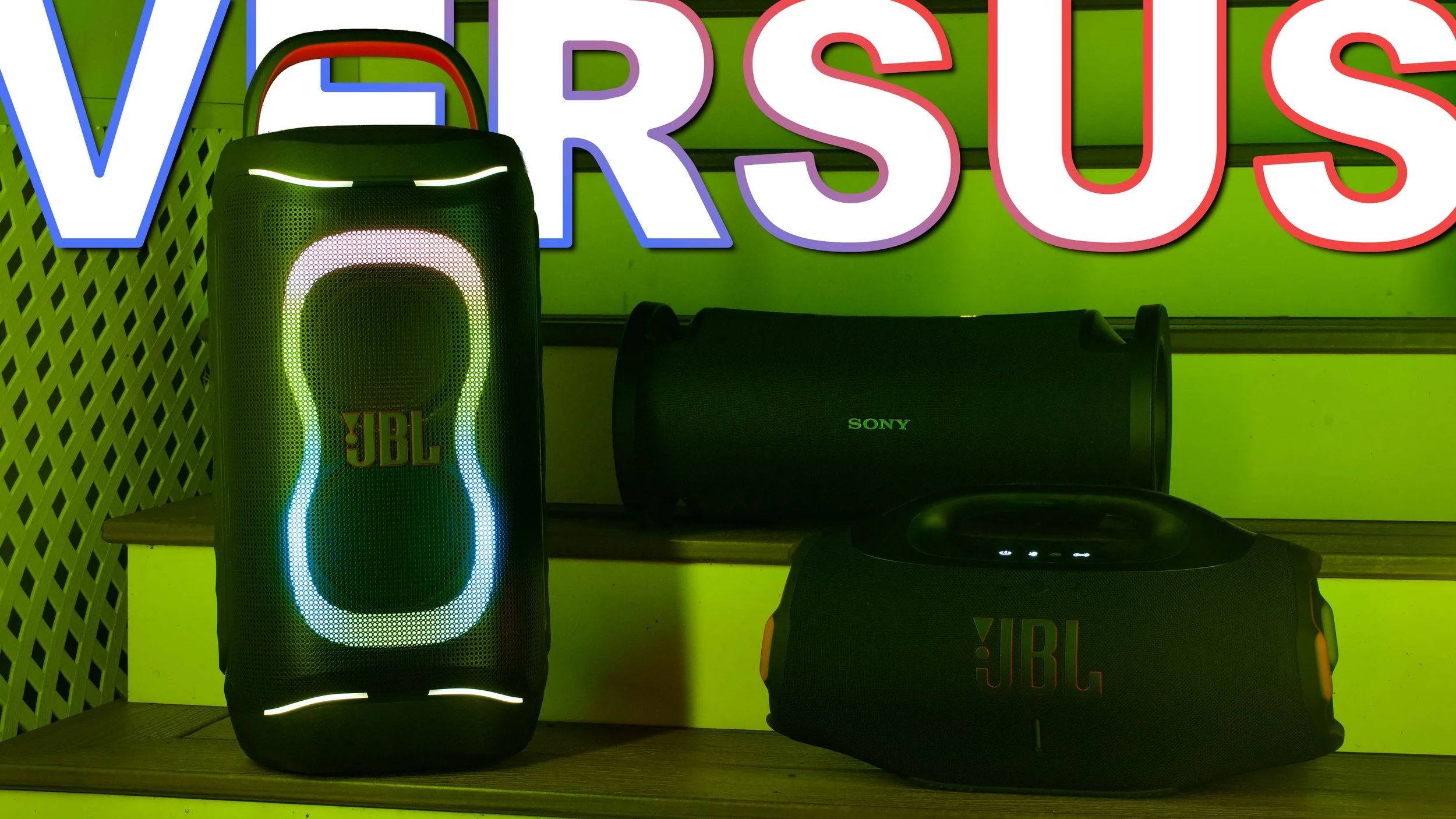
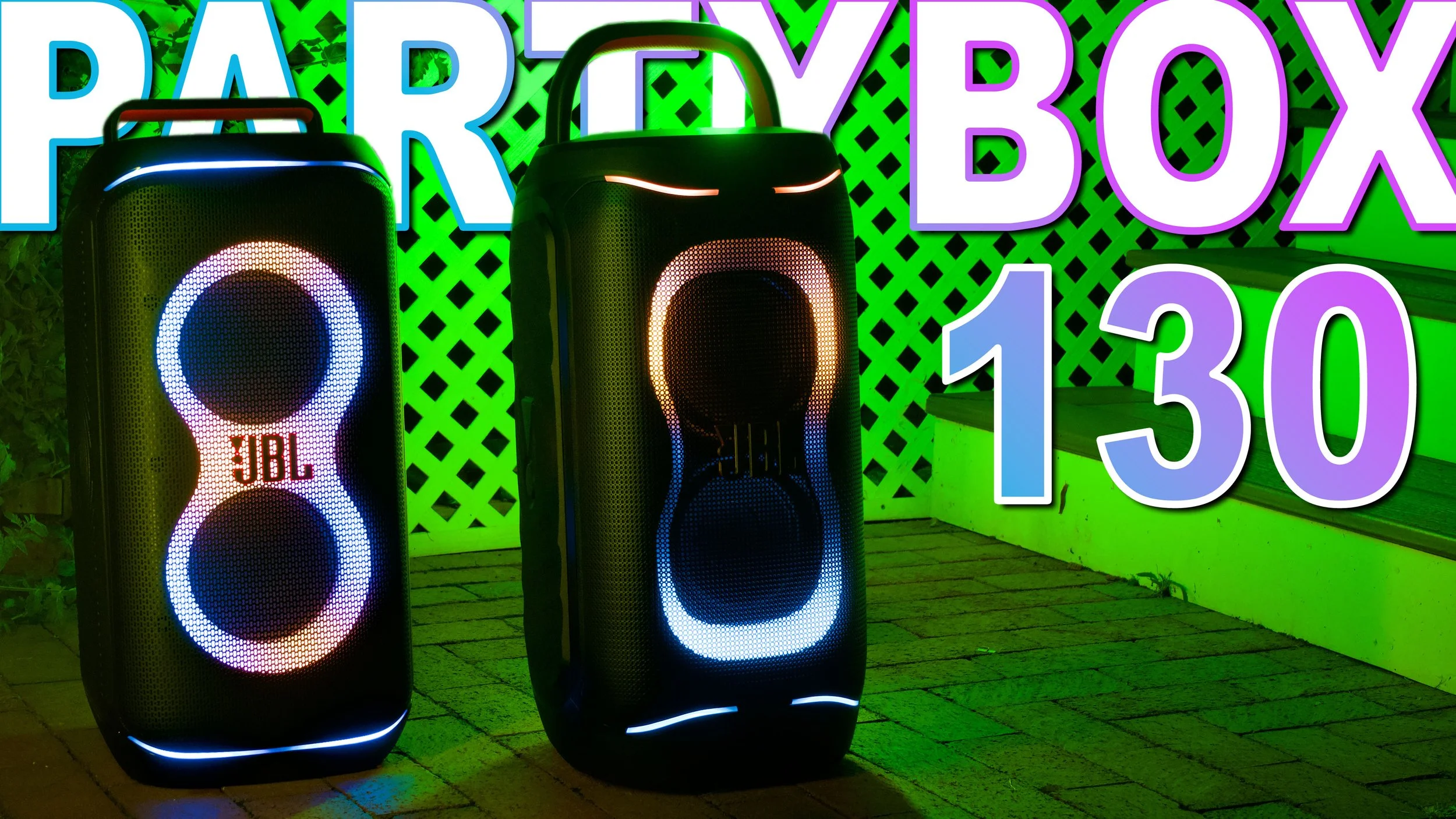
JBL PartyBox 330 vs Sony XV800: Which Party Speaker Rules in 2026?
The JBL PartyBox 330 is easily one of the best portable box speakers on the market right now. However, it introduces a few design shifts that might not please everyone, leaving the older JBL PartyBox 320 as a completely viable option.
But what if you want the absolute biggest bang for your buck? That is where the Sony XV800 steps in. Boasting a more neutral sound signature, the Sony often comes in at a much more aggressive price point.
In this head-to-head JBL PartyBox 330 vs Sony XV800 comparison, we will break down pricing, design, battery life, and ports to help you choose the right speaker for your next event.
Price and Market Value
When it comes to retail pricing, both speakers sit in the premium tier:
JBL PartyBox 330: Retails at $630. As a newer release, it commands a premium, though JBL products frequently see promotional discounts.
Sony XV800: Retails at $650. However, because it is an older model on the market, it regularly goes on sale for significantly less.
If you are looking to stretch your budget, the Sony XV800 is the clear value winner, especially since it may see deeper clearance discounts ahead of a potential replacement model.
Design and Portability: A Clear Winner
While both are large, high-output box speakers, their physical footprints and transport systems are vastly different.
Size & Weight: The Sony XV800 is noticeably taller, narrower, and heavier at 41 pounds. The JBL PartyBox 330 has a wider stance and is slightly lighter at 38 pounds.
The Wheels: The PartyBox 330 features large, wide wheels that roll smoothly over asphalt, grass, and carpet. The XV800 has incredibly small wheels that struggle on rough outdoor surfaces.
The Handles: JBL includes a built-in telescopic luggage handle for easy rolling. The Sony XV800 lacks a rolling handle entirely.
Portability Verdict: The JBL PartyBox 330 wins easily. It is much less exhausting to move from your car to the backyard.
Note on Durability: Both speakers feature soft plastic bodies that scratch easily and thin metal front grilles prone to minor denting. Both feature splash-proof water resistance, meaning they can survive light rain as long as you keep the rear port panels firmly sealed.
Control Panels: Screen vs. Touch Capacitive
Modern speaker design has introduced a few frustrations for fans of classic, tactile controls.
JBL PartyBox 330: Features a digital dial with a built-in screen. While it looks sleek, it makes navigating light modes slower and completely removes the dedicated mic tuning knobs found on the 320, 520, and 720 models. The screen also acts as a potential failure point if dropped or exposed to pooling water.
Sony XV800: Uses touch-capacitive buttons. These flat buttons can be finicky to operate with wet or cold hands, and they lack tactile feedback.
The Bottom Line: Neither control panel is perfect. Physical knobs and buttons remain superior for party environments, though the JBL 330 does get a bonus points for including physical latch points to hold your Easy Sing microphones.
Light Shows: Vibrant vs. Subtle
If visual flair is a priority for your gatherings, the choice is clear:
JBL PartyBox 330: Offers an incredibly dynamic, vibrant, and customizable light show controllable via the JBL app. It supports Bluetooth Auracast, allowing you to wirelessly sync it with JBL Partylight Sticks to expand your lighting footprint.
Sony XV800: The ambient lighting looks completely fine for casual use, but it is noticeably less vibrant and lacks the high-energy dynamism of the JBL ecosystem.
Battery Life and the Killer Feature
On paper, Sony looks like the undisputed stamina king, but real-world testing tells a more nuanced story.
Sony XV800 Battery Performance
Advertised: 25 hours (tested at 30% volume, Mega Bass on, lights off).
Real-World (70% Volume, Mega Bass & Lights ON): A rock-solid 10 hours of playback.
Max Volume: Roughly 3.5 hours.
JBL PartyBox 330 Battery Performance
Advertised: 18 hours (tested at 50% volume, bass boost and lights off).
Real-World (70% Volume, Deep Bass & Lights ON): Around 7 hours of playback.
The Game Changer: Swappable Power
While the Sony XV800 offers better standalone stamina, the JBL PartyBox 330 features a removable, hot-swappable battery.
Using the standard JBL Battery 400 pack (the same pack found in the PartyBox 320, Xtreme 4, and Xtreme 5), you can purchase backups to keep the music playing indefinitely. This design feature also extends the overall lifespan of your investment; when the battery inevitably degrades over the years, you can simply replace the battery cell rather than buying a whole new speaker.
Inputs, Ports, and Versatility
Both speakers charge via standard double-barrel AC ports and include charging cables in the box (a crucial detail, as JBL has begun omitting cables on smaller models in certain regions). Both speakers also receive a noticeable boost in volume and bass depth when plugged into a wall outlet.
However, their rear IO panels cater to different needs:
FeatureJBL PartyBox 330Sony XV800Port PanelIlluminated (Easy to see in the dark)StandardAudio Outputs3.5mm Aux Out (Allows universal daisy-chaining)NoneModern USBUSB-C (For playback and device charging)USB-A (Outdated for modern devices)TV ConnectionOptical Input (Acts as a loud TV soundbar)Optical InputKaraoke/GuitarDual 1/4" Inputs + In-App EQ controlsDual 1/4" Inputs
The addition of a modern USB-C port and an illuminated panel gives the JBL 330 a distinct edge for connectivity.
Final Verdict: Which One Should You Buy?
Choose the JBL PartyBox 330 if you prioritize effortless portability, deep app integration, an explosive light show, and the long-term reliability of a swappable battery ecosystem.
Choose the Sony XV800 if you prefer a more neutral, balanced sound profile, require longer continuous battery life out of a single charge, and want to save cash by hunting for frequent retail discounts.
Like I mentioned in the full review, the JBL Partybox 330 is still one of the best portable box speakers that you can get. However, I do not like some of the changes, and I think the JBL partybox 320 is still perfectly fine in 2026. But if you’re looking to get a big bang for your buck, then you can always look at the Sony XV800, this speaker like to leans more towards a neutral sound signature and sony can be a little more affordable. So today we’re going to compare the JBL PartyBox 330 and the Sony XV800 and lets see which one is right for you.
Regarding pricing, the JBL PartyBox 330 has a retail price of $630, which is a price increase, and this speaker is much newer than the Sony XV800. Where as the Sony XV800 has a retail price of $650, but it likes to go on sale on a regular basis for a lot less, and I wouldn’t be surprised if we start seeing more sales on this speaker cause im willing to bet that its going to get replaced soon. Nonetheless, if you want to pick either of these two speakers up they’ll be linked down below, or you can always press on the YouTube shopping button. And if you want to further support the channel then you can always watch some of the related videos in the description below.
Now first lets talk about the design of these two speakers cause they’re very different from one another. Size wise these are both large portable box speakers but the XV800 is noticeably taller and narrower than the Partybox 330… and its also a little heavier weighing in at 41 pounds where as the Partybox 330 weighs in at 38 pounds. Overall, the Partybox 330 is slightly smaller and lighter than the Sony XV800… but also the Partybox 330 is just easier to transport than the XV800 thanks to its built in wheels. Now the XV800 also has built in wheels, but these wheels are very small so they don't do all that well on asphalt… where as the wheels on the 330 are larger and wider… but also the 330 has a built in telescopic handle so its more comfortable to roll this speaker around… where as the XV800 doesn’t. So portability wise, the Partybox 330 is the clear winner here. But when it comes to durability, both of these speakers have a mostly plastic body which can get scratched up very easily and they both have a thin metal grill on the front which can get dented very easily as well. But both of these speakers are water resistant so a little bit of rain isn’t going to hurt either of these speakers just as long as you keep the ports panel on the back closed.
But then there are the control panels up top. Like I said in the full review, I think the new dial and built in screen on the Partybox 330 is a down grade when compared to the physical knobs that you’ll find on the Partybox 320, 520, 720 or ultimate, cause adjusting your mic audio or switching between your light modes isn’t as easy, and I question the overall durability of this new screen. However, the Sony XV800’s control panel isn’t all that much better cause these are captive buttons, which can also be fragile and they might not work as well if your hands are closed. Honestly, I think designers just need to keep it simple, physical buttons and knobs are just better, and we like tactile stuff. The only good design change on the 330 is that it now has latch points so you can carry around your easy sing mics if you choose to get them.
But finally there’s the light features on these speakers. Now the light feature on the Sony looks fine… but this light feature does not compare to the light feature on the JBL PartyBox 330, its a lot more dynamic and its a lot more vibrant. And from JBL’s app you can choose from a few different lighting modes and if you want you can always build out your light feature with JBL’s Partylight sticks. However I think the light feature on the JBL PartyBox 320 looks better than the light feature found on the JBL PartyBox 330, but regardless, both of JBL’s light features look better than Sony’s. But nonetheless, if you do decide to use these light features, that is going to take its toll on the battery life.
Now when it comes to battery life… the XV800 has an advertised battery life of 25 hours… which sounds amazing, but this advertised battery life of 25 hours is with this speaker playing at 30% volume, which is a decent listening volume… and that’s with the mega bass turned on, which is good but that’s with the light feature turned off.
But real world use with this speaker playing at 70% volume… which I feel is a reasonable volume to use this speaker while you’re with friends… with the mega bass turned on and with the light feature turned on… its good for a solid 10 hours of playback time. And sony claims that if you were to use this speaker at max volume its good for 3 and half hours of playback time.
But then theres the Partybox 330… and this speaker has an advertised battery life of 18 hours… However, this advertised battery life of 18 hours is with this speaker playing at 50 percent volume which is already a decent listening volume, but with the light feature turned off and with the bass boost feature turned off too.
But real world use with the 330 playing at 70% volume, which I feel is a really good volume to use when you're with friends, with the light feature turned on and with the bass boost set to deep… I've found that the 330 is good for about 7 hours which is good… but in general the Partybox 320 does have significantly less real world stamina than the Sony XV800…
However… something that the Partybox 330 has over the Sony XV800 is that you can quickly and easy swap out the batteries, so if you want to can get multiple batteries and keep the party going, or if you get to the point where you battery can no longer hold a charge, instead of having to buy a new speaker, you just need to get a new battery, which is good for the overall life of your investment.
Now the 330 is also using the same 400 battery as the 320, so you can mix and match batteries between these two speakers, or you can also mix and match with the JBL Xtreme 5 or Xtreme 4 cause these speakers are also using the same battery… but keep in mind, even if you're going to use this speaker while its plugged in, the battery does have to be installed.
And when it comes to charging these speakers, they both charge via a double barrel AC port and they both come included with charging cables. Which I know sounds basic but I do have to point this out now cause a lot of JBL’s newer speakers are no longer coming included with charging cables. And with both of these speakers, if you were to use them while they are plugged in, you are going to get a performance boost out of them, they are both going to get louder and they are both going to have more bass.
Now when it comes to ports, these two speakers are a little different. For starters the Partybox 330’s panel is illuminated, which is very nice. Now both of these speakers have an audio jack so you can use them with a wired connection… but the Partybox also has an audio out jack so you can always daisy chain any other speaker to this speaker regardless of size or brand and you can get them to play in sync.
Also, the JBL PartyBox 330 now has a USB C port which you can use as a wired connection and you can also use it to charge your own devices. Where as with the Sony, it has a USB A port which I don’t feel is as useful in 2026. And finally, both of these speaker also have an optical, so if you want you can connect them to your tv and use them as a soundbar. Now I wouldn’t use these speakers are my main home theater setup, but it does help make these speakers more versatile. And sadly, this was a feature that was exclusive to Sony for a long time… but now JBL does it as well.
Now with both of these speakers they also have dual 3 quarter inch inputs so you can plug in two microphones for karaoke, or you can also plug in a guitar. But the with JBL you can also open up the app and adjust the sound of your microphone where as with the Sony you can’t. You can adjust the pitch or your music, but you can’t adjust your mic’s bass or treble, but you can add an echo on both if you want.
Now with both of these speaker you can use them with a wired mic, or you can also use them with a wireless mic, and both JBL and Sony have their own offerings. But also, JBL has their easy sing mics which plug into your partybox via the USB C port, and you’re also going to get an AI vocal removal tool which is great if you’re planning on doing lots of kakroke. The only thing is, if you use these easy sing mics then you won’t be able to turn on aura cast and you can’t turn on the bass boost feature.
But with all of that out of the way lets talk about sound. Regarding speaker set up the Partybox 330 has dual frontward firing woofers with an exhaust port that shoots out the back and dual frontward firing tweeters. Where as with the Sony XV800, this speaker also has dual frontward firing woofers but its exhaust port shoots out the front and it has a total of 5 tweeters. Three on the front and two that shoot out the back. Now when this speaker it standing up right it’ll use these two top tweeters and the 2 on the back… and when its on its side it’ll use these two tweeter and the ones on the back as well. And interestingly enough, it looks like JBL doesn’t even want you to use their speaker laying on its side cause they removed the side feet. But more importantly, with both of these speakers you can always go into their app and adjust their EQ to your liking. But I like using the 330 with its stock eq and with its bass boost set to deep cause I think punchy muddles the rest of your music. And I like using the XV800 with its stock EQ and with its mega bass feature turned on. But now we’re going to jump into the soundtest. Both of these speakers are going to be playing at 75% volume and we’re going to use them while they are plugged in and unplugged.
So when it comes to sound quality, these two speakers are fairly different from one another. With the JBL PartyBox 330, this speaker is leaning more for a dynamic sound signature, as in the mids are more emphasized so vocals are more forward and the bass kicks harder as well. Where as with the Sony, the vocals and the bass aren’t as pronounced, going for a more flat sound signature. But also there’s the bass on these speakers, the bass on the JBL PartyBox 330 is a lot more phaycial, so you feel it more… and since the exhaust port shoots out the back, you can always amplify your bass even more by simply placing it up against a wall. Where as with the Sony, since the exhaust port shoots out the front, the bass is more on the audible side, you can feel it, but it doesn’t kick as hard. Overall the Sony sounds good, but I think the JBL sounds more fun. And then there’s the max volume performance on these speakers, both of these speakers are good for like a 20 person get together and I think that they are good for hosting small events, and with both of these speakers, if you were to use them while they are plugged in, you are going to get a performance boost out of them, they are going to get louder and they are going to have more bass. But the JBL PartyBox 330 does manage to get a little louder than the Sony XV800. But I also want to quickly point out that the JBL PartyBox 320 still manages to get ever so slightly louder than the JBL PartyBox 330 as well.
And finally lets talk about paring these speakers up to other speakers. With both of these speakers, if you have two of the exact same speakers then you can always pair them up and get them to play in left and right stereo mode, so you’re going to have one for your left channel and another for your right channel. However, they have to be 2 of the exact same speakers, you can not stero pair a partybox 330 with a partybox 320, their light features will sync up, but they will not play in stereo mode.
Now with the Sony, its using wireless Party chain, so you can pair it up with other sony speakers that are also using wireless party chain like the Tower 10 or Tower 9, which I think they’re great by the way… or you can also pair your XV800 up to any of Sony’s smaller speakers that are also using wireless party chain like an ULT field 7, Ult field 5 or ULT field 3… the only thing is, you can not pair your XV800 to an ULT 1 cause this speaker is not using wireless party chain.
And like I mentioned before, the 330 is using aura cast, just like with the 320… so you can always pair it up to any other JBL speaker that also using aura cast like lets say a JBL Partybox encore 2, or to a Partybox 120, 130, 320, 330, 520, 720 or to an ultimate and get them to all play in sync… or you can also pair them up to any of JBL’s smaller more portable speakers that are also using aura cast like lets say a JBL Boombox 4, Xtreme 5, Xtreme 4, Charge 6, flip 7, clip 5, a grip or Go 5 and get them to play in sync as well.
But unfortunately, with the Partybox 330, you can not pair it up to any of JBL’s older partybox speakers that are using TWS like lets say a Partybox Encore or the 110, 310 or 710. And you can’t pair it up to any of JBL’s older speakers that are using Partyboost… but like I mentioned earlier, the 330 does have the audio out jack, so you can always daisy chain it up to any other speaker, regardless of size or brand and get them to play in sync.
But with all of that being said, even though the JBL PartyBox 330 does have some changes that I don’t like… this is still the best box speaker that you can get, you can’t go wrong with this speaker. When compared to the Sony XV800, this speaker gets a little louder and the bass kicks harder as well. It also has important features that the sony doesn’t have like a swappable battery, an audio out jack, it has a better looking light feature and it has bigger and more durable wheels. However with the Sony XV800, I think you’ll be able to get a better deal on this speaker over the JBL PartyBox 330.