
JBL Partybox 330: https://geni.us/GC-JBLPartybox330
JBL Partybox 520: https://geni.us/GC-JBLPartybox520
JBL Easy Sing Mics: https://geni.us/GC-JBLEasySingMics
JBL Partybox Mics: https://geni.us/GC-JBLPartyboxMic
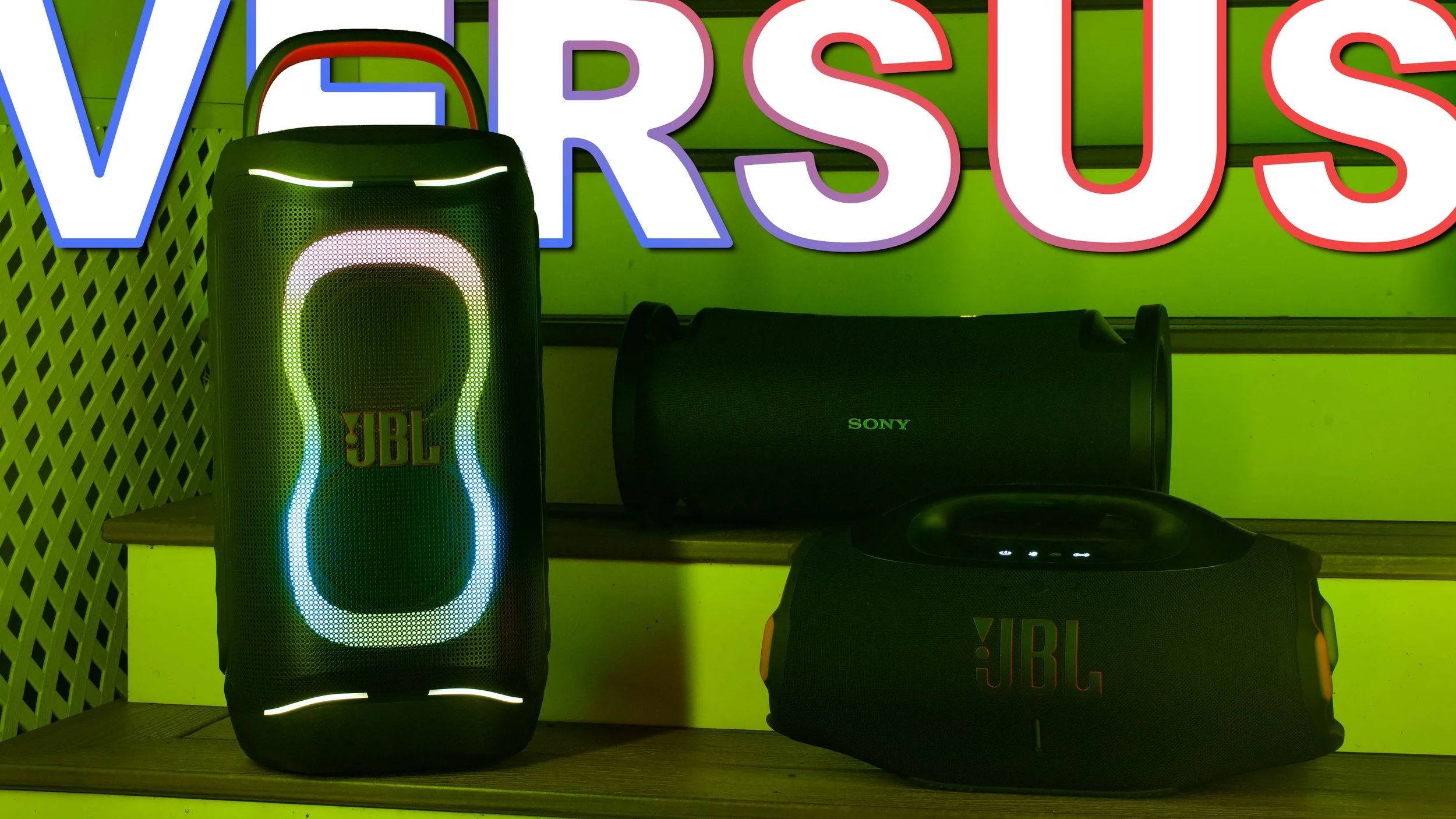
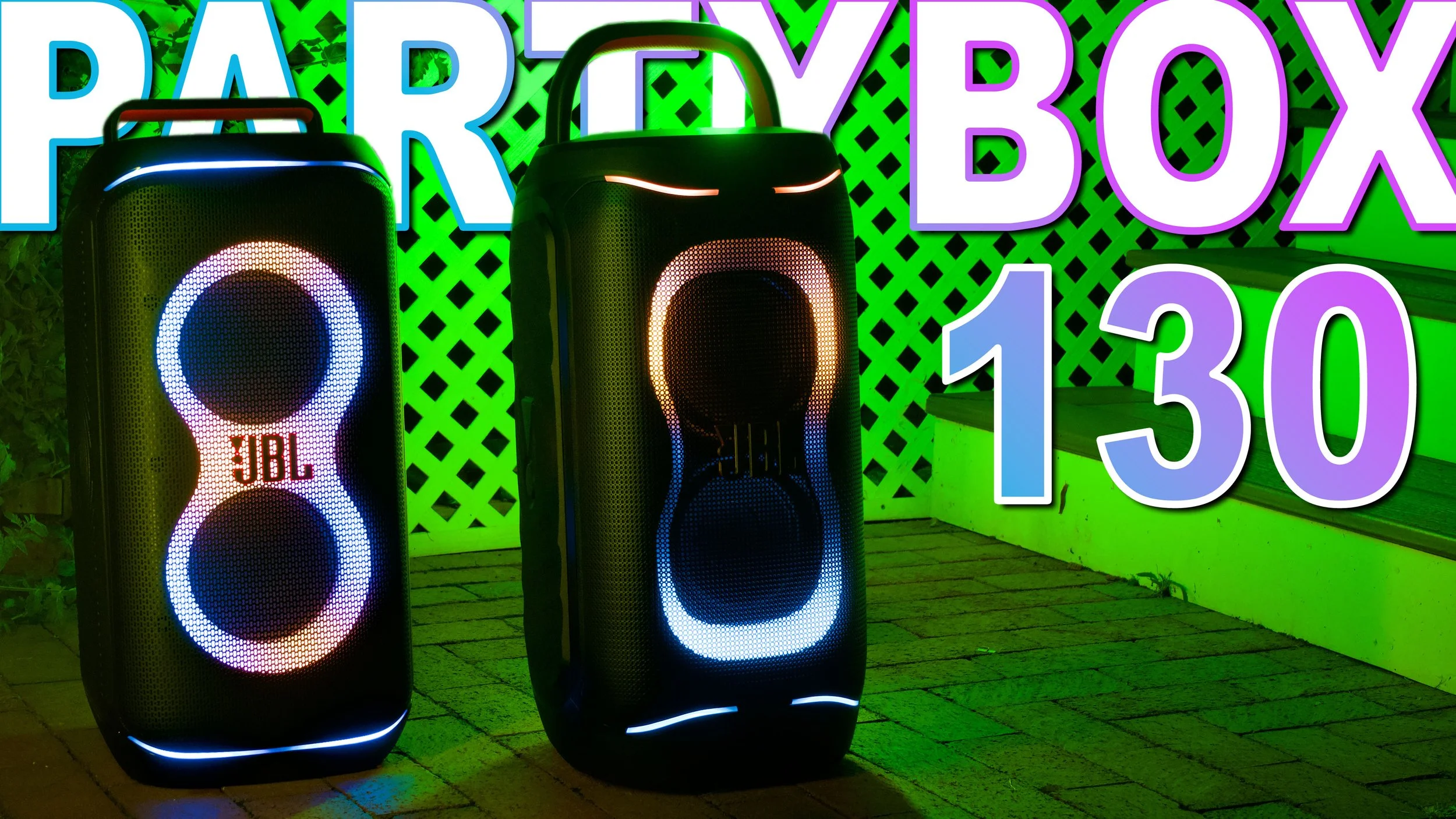
JBL PartyBox 330 vs JBL PartyBox 520: Is Bigger Actually Better?
The JBL PartyBox 330 is easily one of the best portable box speakers on the market right now. However, its new design changes aren't for everyone, and many people still find the older JBL PartyBox 320 perfectly fine in 2026.
But what if you want to super-size your sound? Enter the JBL PartyBox 520.
The PartyBox 520 is a souped-up version of the 320 and 330. It hits the perfect size sweet spot: it gives you massive audio output without making you regret your decisions the next morning. In this deep-dive comparison, we break down the critical differences in price, portability, controls, and features to help you decide which one fits your crew.
Price and Value: The Cost of Going Bigger
JBL PartyBox 330: Retails at $630.
JBL PartyBox 520: Retails at $900.
While the PartyBox 520 is undeniably a heavier hit on your wallet, it offers a distinct psychological advantage: peace of mind. With the 520, you never sit around wondering, "What if I bought a second speaker?" or "What if I had something bigger?" With the PartyBox 330, that temptation to upgrade always lingers.
If you want to pick either of these up, use the links or the shopping button below to check current deals.
Size and Portability: Solo vs. Team Effort
Both of these speakers are large, heavy-duty machines, but the everyday handling experience is night and day.
JBL PartyBox 330: Weighs in at 38 pounds. A single person can easily roll this around, carry it up or down a flight of stairs, and load it into a trunk completely solo.
JBL PartyBox 520: Scales up to a hefty 56 pounds. While a single person can wheel it around on flat ground, you will definitely want a second set of hands when navigating stairs or lifting it into a vehicle. Unless you want to risk denting your car, scuffing your walls, or throwing out your back, the 520 is best treated as a two-person job.
Shared Mobility Features
Fortunately, both models handle rough terrain well. They share heavy-duty telescopic luggage handles and chunky, thick wheels that can glide over sidewalks, thick carpets, and backyard grass.
Durability and Chassis Build
The overall ruggedness of the two boxes is identical:
Body: Soft plastic shells that scratch fairly easily.
Grille: Thin metal front mesh that can dent under heavy impacts.
Waterproofing: Both feature an IPX4 splash-proof rating.
They will easily survive poolside splashes or a sudden drizzle, provided you keep the rear rubber port panels tightly sealed.
Controls: Physical Knobs vs. Digital Screens
This is where the user experience splits dramatically, and older designs clearly win out.
JBL PartyBox 330 (The Digital Route): Features a new top dial with an embedded digital screen. While it looks futuristic, it is clunkier to use. If you want to change light modes or adjust microphone gain, you have to scroll through digital menus. Crucially, the 330 completely removes dedicated knobs for bass, treble, and echo. To adjust those microphone parameters, you have to open the JBL mobile app. The screen also acts as a fragile, unnecessary failure point.
JBL PartyBox 520 (The Tactile Route): Features traditional physical dials and knobs. Tuning your karaoke mic's bass, treble, and echo is fast, intuitive, and done entirely directly on the chassis. It is far more durable and much easier to manipulate in high-energy environments.
Design Bonus for the 330: The PartyBox 330 includes physical latch points on the frame to conveniently carry your Easy Sing wireless microphones—a feature missing on the 520.
Light Shows: Clean vs. Cluttered
JBL makes some of the most dynamic, vibrant light shows on the market, and both speakers allow you to expand your ecosystem using JBL Partylight Sticks. However, the visual aesthetics differ:
JBL PartyBox 520: Features a sleek, clean faceplate pattern that includes built-in star accent lights.
JBL PartyBox 330: Features a revised layout that removes the star accents entirely. Many users consider the 330's light show a step backward. It would have been better if JBL had kept the 520's faceplate style and simply added ground-projecting floor lights (like the premium PartyBox Ultimate) to give it a larger ground presence.
Keep in mind that running these light shows at maximum brightness on either speaker will drain your battery faster.
Real-World Battery Life and Swappable Cells
On paper, the advertised metrics look incredibly solid:
JBL PartyBox 330: Advertised at 18 hours (tested at 50% volume, lights/bass boost off).
JBL PartyBox 520: Advertised at 15 hours (tested at 40% volume, lights/bass boost off).
Real-World Testing
When pushing these speakers in a real party environment—running the PartyBox 520 at 60% volume or the PartyBox 330 at 70% volume with the lights blinking and bass boost cranked up—both speakers deliver roughly 8 hours of continuous playback.
The Swappable Battery Ecosystem
Both speakers feature user-replaceable, hot-swappable batteries. This means you can keep backups on hand to extend your event indefinitely, or simply replace a degraded cell years down the line rather than buying a brand-new speaker.
However, you cannot mix and match batteries between these two models:
The PartyBox 330 uses a smaller cell that is interchangeable with the JBL PartyBox 320, Xtreme 4, and Xtreme 5.
The PartyBox 520 utilizes the massive JBL 600 Battery, which is only interchangeable with the JBL Boombox 4 and PartyBox 720.
Note: Both speakers include their double-barrel AC charging cables in the box. Bypassing the battery by plugging them directly into a wall outlet gives both units a massive performance boost, increasing their maximum loudness and bass depth. The batteries must remain installed even when playing on wall power.
Rear Ports and IO Panel Layout
Both models feature helpful, illuminated rear port panels for easy cable plugging in the dark. Both include standard 3.5mm Aux inputs, modern USB-C ports for playback and device charging, and dedicated Audio Out jacks for universally daisy-chaining multiple speakers in sync.
The core difference lies in their professional application:
Feature JBL PartyBox 330JBL PartyBox 520TV Connection Optical Port (Can act as a backup home theater soundbar) None Pro Audio Inputs Dual 1/4" Mic/Guitar Inputs XLR Combo Jacks (Perfect for plugging directly into DJ mixers or professional boards)
Final Verdict: Which One Should You Buy?
Choose the JBL PartyBox 330 if you manage events entirely by yourself, prioritize easy transport in a standard car, and want the flexibility of an optical port to double your speaker's duty as a TV soundbar.
Choose the JBL PartyBox 520 if you have a budget closer to $1,000, want a truly untamed, room-shaking wall of sound without needing a second speaker, prefer classic physical mic adjustment knobs, and plan to plug into professional DJ mixers using XLR cables.
Like I mentioned in the full review, the JBL Partybox 330 is still one of the best portable box speakers that you can get. However, I do not like some of the changes, and I think the JBL partybox 320 is still perfectly fine in 2026. But then there’s the JBL Partybox 520, which is a super up version on the JBL Partybox 320 and 330 and I think its the perfect size. It gives you a lot of sound, but not so much where you regret your decisions. So today we’re going to compare the JBL partybox 330 to the JBL Partybox 520 and lets see which one is right for you. Cause there are some important differences here.
Regarding pricing, the JBL partybox 330 has a retail price of $630 where as the JBL Partybox 520 has a retail price of $900. Now even though the JBL Partybox 520 is a little more expensive, with this speaker you never wonder, huh what if I go a second speaker or what if I had something bigger. Where as with the Partybox 330, sometimes there might be some temptation to go a little bigger. Nonetheless if you want to pick either of these two speakers up they’ll be linked down below, or you can always press on the YouTube shopping button, and if you want to further support the channel then you can always watch some of the related videos in the description below.
Now first theres the design of this speaker, the JBL Partybox 520 is a little later and a little heavier than the JBL Partybox 320. The Partybox 520 weighs in at 56 pounds where as the JBL Partybox 320 weighs in at 38 pounds. Now with the JBL Partybox 330, I feel that a single person can easily move this speaker around, carry it up and down stairs and load it into a car all by themselves. Where as with the JBL Partybox 520, for the most part I feel that a single guy can move this speaker around by himself… however it is preferred to have help to move it up and down stairs or load it into your car if you don't want to risk damaging the speaker or car or walls in your house. What im saying is, the JBL Partybox 520 is still super portable… but the Partybox 330 is more manageable by yourself.
Now both of these speakers have some key similarities, they both have built in telescopic handles and they both have built in wheels, so you can easily roll them around… and the key detail here is, these wheels are very chunky, so these wheels will work well even on rough surfaces like side walks, carpet and even grass. The durability on these speakers is the same as well, they are both rocking an IPX4 rating so some water will be fine as long as the ports panel on the back is closed. But you still want to be mindful with these speakers cause they both have soft plastic bodies which can get scratched very easily and they both have a thin metal grill on the front which can get dented very easily as well.
But now for the key differences, with the JBL Partybox 330, this speaker now has a new dial up top with an embedded screen. Now this screen looks cool but the control panel on the 330 isn’t as easy to use or as durable as the control panel on the 520. Cause if you want to do things like cycle between your light modes or if you want to adjust the gain of your plugged in kakroke mic, you’re going to have to scroll through menus. Where as with the control panel on the 520, first off everything here is a lot easier to use cause we have physical dials. And more importantly, with the 520 you can adjust the sound of your mic directly on the speaker it self. Where as with the 330, if you want to adjust your bass, treble or echo, you’re going to have to open up the app. And also, with the 330, I feel that this new digital screen is just a new weak point that JBL introduced. Where as with the 520, these knobs are more durable. The only nice thing about the 330 design wise is that if you are planning in getting JBL’s easy sing mics, you can easily attach them to your speaker using the new built in latch points.
But another major design difference between these two speakers is going to be the light feature. Now JBL’s light features are always very impressive and dynamic, they’re some of the best on the market. And with both of these speakers you can always build out their light features with JBL’s Partylight sticks. But personally I think the light feature on the JBL partybox 330 is a bit of a downgrade, I really feel the light feature on the 520 and 320 are just sleeker and I really hate that the 330 removed the stars that you’ll find on the 520. Peronsally i would have preferred if the 330 just kept the same light design as the Partybox 320, but just added some floor lights like on the JBL Partybox Ultimate. But regardless, if you do decide to use the light feature on these speakers, that is going to affect your battery life.
Now when it comes to battery life… the Partybox 330 has an advertised battery life of 18 hours and the Partybox 520 has an advertised battery life of 15 hours. Which is solid for both. However these advertised battery lives of 18 hours and 15 hours is with the 330 playing at 50% and with the 520 playing at 40%… which are already really good listening volumes… but with the light feature turned off and with the bass boost feature turned off. and battery life on these speakers really varies depending on how you use them.
But real world use for me, if you use the Partybox 520 at 60% volume or the Partybox 330 at 70% volume, with the light feature turned on and with the bass boost feature turned on, then both of these speakers are going to be good for like 8 hours of playback time.
But the really cool thing about both of these speakers is that you can quickly and easily swap out the battery, so you can either get multiple batteries and keep the party going, or if you get to the point where your battery can no longer hold a charge, instead of having to get a new speaker, you just need to get a new battery and this is really good just for the overall life of your investment.
However, you can not mix and match batteries here cause the 520’s battery is way bigger than the 330’s battery. However if you were to get a 330 then you’ll be able to mix and match with an Xtreme 4 or the Xtreme 5 cause these speakers use the same battery… or if you were to get a Partybox 520, then you mix and match batteries between the JBL Boombox 4 to the JBL Partybox 720 cause these three speakers are using the same JBL 600 battery.
And to charge these speakers they both charge via a double barrel AC port, and with both of these speakers, if you use them while they are plugged in you are going to get a performance boost out of them, they’re both going to get louder and therye both going to have more bass. And both of these speakers still come included with a charging cable, which I know sounds very basic, but I have to point it out now cause a lot of JBL’s newer speakers are no longer coming with charging cables. And even if you’re going to use these speakers while they are plugged in, the battery has to be installed.
But then there are the ports on these speakers, now both of these ports panels are illuminated, which is a nice touch. And both of these speakers now have a USB C port which you can use to charge your own devices and you can also use it as a wired connection. Both of these speakers also have an audio jack so you can use them with a wired connection that way and both of these speakers have an audio out jack so you can daisy chain them up with any other speaker and get them to play in sync.
But there are two main differences here, for starters with the 330, this speaker has an optical port, which is super useful cause you can now use your speaker as a sound bar with your tv iv you want. Now I wouldn’t use this speaker as my home theater set up, but its a great back up plan. But with the 520, this speaker is using XLR combo jacks, so you can plug it up to a mixer.
Where as with the 330, this speaker is using 3 quarter inch inputs, so if you want to use it with a mixer, then you’re going to have to use the audio jack. But more importantly with both of these speakers you can plug in a pair of wired mics for kakroke or a guitar. But like I mentioned earlier, with the 520 you can more easily adjust the sound of your mic directly from the control panel up top. Where as with the 330, if you want to adjust your bass, table or echo, you’re going to have to open up the app cause JBL removed the knobs in favor for that new dial.
Now with both of these speakers you can also use them with wireless microphones like the JBL Partybox Mic which plug in via your quarter in inputs… or you can also use JBL’s easy sing mics which plug in via your USB C ports. Just keep in mind that with the Partybox mics, your mic audio only comes out of your speaker… so even if you have your speaker paired up with another speaker with aura cast or daisy chain, your mic audio is only going to come out of your main speaker. And with the easy sing mics, you can’t even turn on aura cast, and you can’t even turn on bass boost. However, if you were to daisy chain your speaker to another speaker, then your mic audio will come out of both speakers… and with the easy sing mics, then you are going to have the AI vocal removal toll.
But with all of that out of the way lets talk about sound. When it comes to speaker set up both of these speakers have dual frontward firing woofers with an exhaust port that shoots out the back and they both have dual frontward firing tweeters. Expect on the Partybox 520, its just bigger. And with both of these speakers you can go into their apps and you can adjust their EQ to your liking and they both have their bass boost. Now personally I prefer deep cause you get more kick in your bass, where as with punchy, you get more resonance but I feel that it muddles the rest of you music. But now we’re going to jump into the sound test. Both of these speakers are playing at 75% volume with bass boost set to deep, but were going to use the Partybox 330 while its unplugged and plugged in.
Now when it comes to sound quality, both of these speakers sound very similar to one another, as they should. They both have a lot of kick in their bass, but more importantly they still have good instrument separation and well defined vocals. However the 520 does get louder and it has more bass than the 330. The 520 is a 400 watt speaker where as the 330 is a 250 watt speaker. Basically, with the partybox 330, I feel that this is a great speaker to use with crowds of around 20, maybe 30 people. Where as with the Partybox 520, I feel that this speaker is great for a crowd of like 50 people, and we’re starting to enter commercial territory here. Think small DJ gigs, medium sized restaurants, events at the park. And with both of these speakers if you were to use them while they are plugged in, you’re going to get a performance boost out of them. They’re both going to get louder and they both have more bass. Overall both of these speakers are great but with the partybox 520 you never think to yourself, huh maybe I should get another speaker, like some people will might think with the 330… but with the 520 you also never go, oh man this was overkill like you’ll might say with either the partybox 710, 720 or Partybox ultimate. However I do want to quickly mention that I can’t help but feel that the 320 gets slightly louder than the 330. Now its not a huge difference, but I feel that if you already have the Partybox 320, there’s no need to rush out and upgrade to the 330.
But finally lets talk about pairing these speakers up with other speakers. Now if you have two of the exact same speakers then you can wirelessly pair them up and get them to play in left and right stereo mode, so your music is going to sound more open and its going to get louder. But you have to have 2 of the exact same speakers, you can not stereo pair a Partybox 330 to the Partybox 320, they’ll only play in sync.
But also, since both of these speakers are using aura cast you can pair them up to other speakers that are also using aura cast like lets set the JBL Partybox Encore 2, 120, 130, 320, 330, 520, 720 or ultimate and you can get them all to play in sync… but also you can pair your Partybox 520 or 330 up to any of JBL’s smaller speakers that are also using aura cast like lets say a JBL Boombox 4, and Xtreme 5, Xtreme 4, a charge 6, a flip 7, a grip, a clip 5 or Go 5.
But unfortuanlty, unlike the 520, you can not pair your 330 up to any of JBL’s older party boxes which are using TWS, so if you have a 110, 310, or 710, they won’t wirelessly pair up to your 330. But like I mentioned earlier, both of these speakers do have an audio out jack, so you can always daisy chain them up to any other speaker and get them to play in sync.
But with all of that being said, both the JBL partybox 520 and JBL Partybox 330 are great speakers to consider. But peroenally I do prefer the 520 cause for starters, this speaker is in that goldilocks zone where it is going to get louder than then 330… but you never ask yourself what if I had something bigger or what if I had a second speaker. But it also don’t get so loud where you start to second guess your decisions like you’ll might with either the Partybox 720 or ultimate. But also I prefer the 520 cause I think the light feature looks better, plus it has those more versitale XLR inputs and I prefer the control panel up top cause its easier to use and more durable. However the 330 is still a great speaker that you can’t of wrong with, plus is also has the optical port so you can use it as a soundbar with your tv if you want to.