
JBL Partybox 130: https://geni.us/GC-JBLPartybox130
soundcore Rave 3S: https://geni.us/Rave3S Sony XV500: https://geni.us/GC-SonyXV500
JBL Easy Sing Mics: https://geni.us/GC-JBLEasySingMics
JBL Partybox Mics: https://geni.us/GC-JBLPartyboxMic
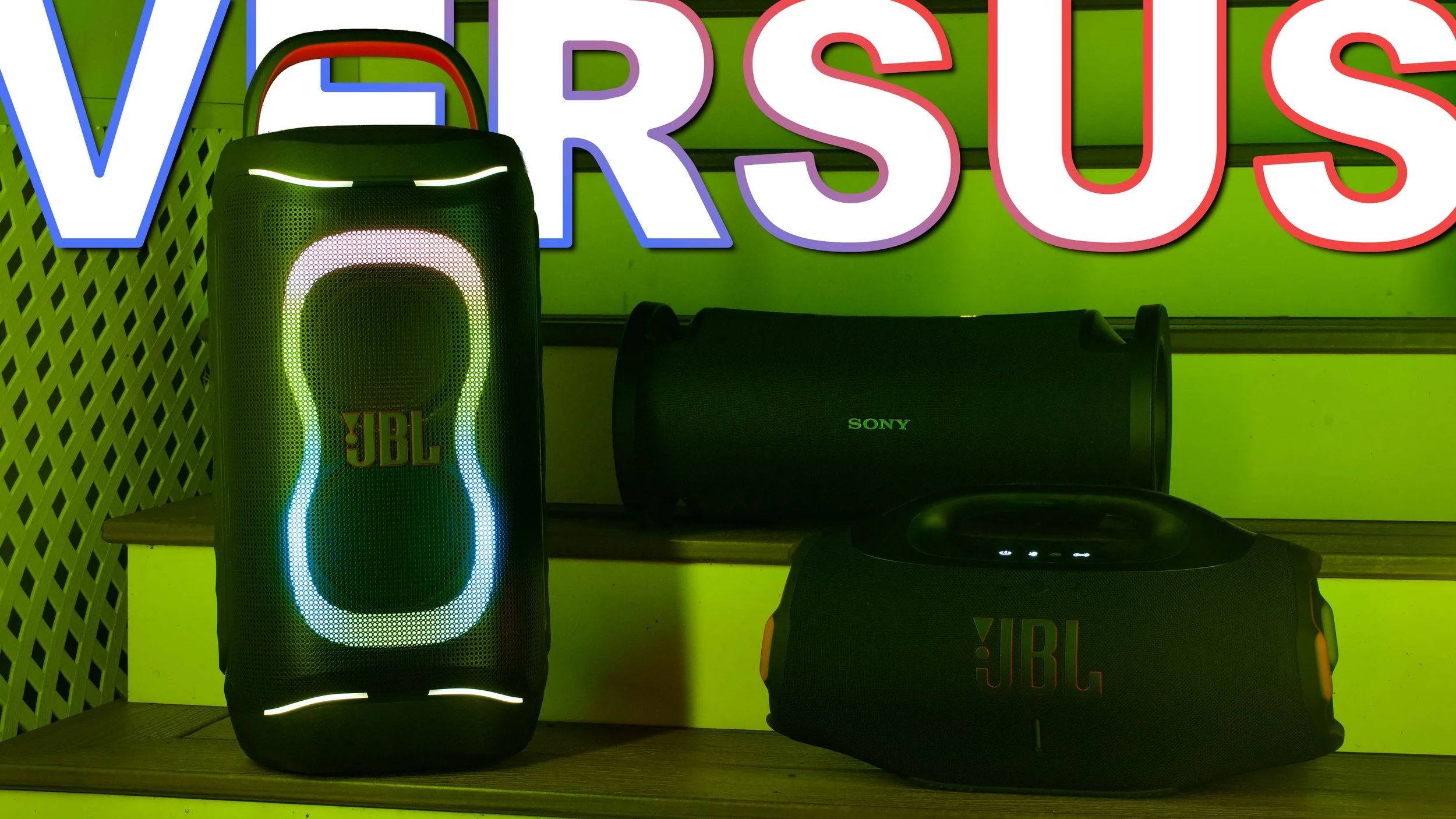
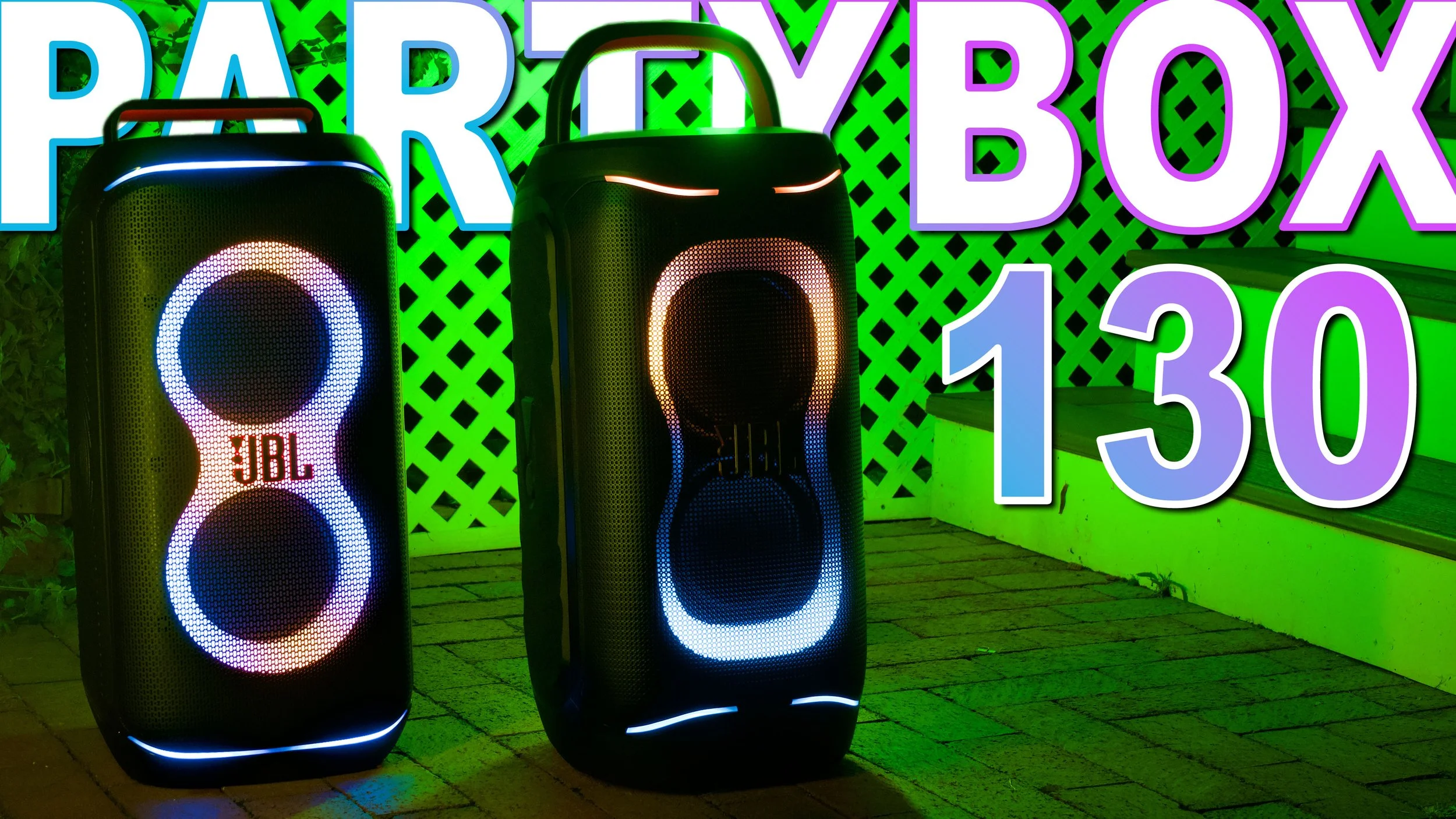
JBL PartyBox 130 vs Soundcore Rave 3S vs Sony XV500: The 2026 Mid-Size Battle
The JBL PartyBox 130 is undeniably one of the top mid-sized box speakers on the market. However, its new 2026 design changes aren't universally loved, leaving the older JBL PartyBox 120 as a perfectly fine alternative.
If you want the absolute biggest bang for your buck, you have options. The legacy Sony XV500 and the feature-packed Soundcore Rave 3S (which throws in two wireless microphones) are fierce competitors.
These mid-sized party machines differ wildly in performance, battery design, and features—especially the Soundcore. In this head-to-head comparison, we will break down which speaker deserves a spot at your next gathering.
Price and Value: Who Offers the Best Deal?
Retail pricing shows a clear separation between value options and premium upgrades:
Soundcore Rave 3S: Retails at $350 and includes two wireless microphones right in the box, making it the undisputed budget champion.
Sony XV500: Retails at $400. As the oldest model here, it frequently sees heavy retail discounts.
JBL PartyBox 130: Retails at a premium $450. It is the newest and most expensive speaker in this tier.
While the upfront sticker prices vary, expect all three units to receive regular promotional sales. If you want to check current pricing, tap the retail links or the shopping button below.
Design and Ruggedness: Form vs. Function
All three of these options occupy the mid-sized category, landing right around the 25-pound mark.
Portability: Each speaker features a built-in handle for quick transport. However, the JBL 130’s bulky, updated top handle looks a bit ridiculous compared to the sleeker alternatives.
Chassis Build: Expect identical shell ruggedness across the board. All three utilize soft plastic frames that scratch easily, paired with thin front metal grilles prone to minor denting.
Weathering: Each speaker carries an IPX4 splash-proof rating. They can handle pool splashes or a light outdoor drizzle as long as you keep the rear rubber port panels firmly sealed.
Stand Mounting: The JBL PartyBox 130 stands out by including a standard pole stand mount on the bottom, allowing you to easily elevate your audio at larger venues.
Light Shows: Vibrant vs. Lackluster
If you want your speaker to dual-purpose as visual decor, performance varies widely:
Sony XV500: Offers a very lackluster, dim light show that feels uninspired compared to the rest.
JBL PartyBox 130: Delivers a vibrant, dynamic show controllable via the JBL app. It supports Auracast to link up with external JBL Partylight Sticks. However, the pattern layout feels like a visual downgrade compared to the premium look of the legacy PartyBox 120.
Soundcore Rave 3S: Takes the crown for the best visual presentation. Its light show is more dynamic and vibrant than the JBL 130.
Battery Life: The Battery-Power Volume Trap
Understanding real-world stamina requires looking past the bold headline numbers on the packaging.
Sony XV500 Battery Metrics
Advertised: 25 hours (measured at a low 36% volume, lights off, Mega Bass on).
The Catch: 36% volume on the Sony outputs roughly the same acoustic pressure as a JBL playing at a quiet 20%.
Real-World Performance: Pushing the Sony to 80% volume drops runtime to roughly 8 hours. Furthermore, the XV500 suffers from a disappointing volume drop and lower audio performance when running purely off its internal battery.
JBL PartyBox 130 Battery Metrics
Advertised: 15 hours (measured at an estimated, ultra-low 15% volume baseline). It uses the exact same JBL 200 Battery as the PartyBox 120, which gets 12 hours at 25% volume.
Real-World Performance: At 65% volume (Lights ON + Bass Boost ON), it delivers 6 to 7 hours of continuous, high-volume performance.
Soundcore Rave 3S Battery Metrics
Advertised: 12 hours (measured at 50% volume, lights and BassUp turned off).
The Design Advantage: The Rave 3S sustains solid battery efficiency because it only drives a single woofer, compared to the dual-woofer setups found inside the JBL and Sony architectures.
The Swappable Game Changer
The JBL PartyBox 130 holds a structural advantage because it features a hot-swappable battery.
You can purchase backup JBL 200 Battery packs to extend your party runtime indefinitely. This design element also extends your overall investment; when the battery inevitably degrades over the years, you only need to replace the cell instead of disposing of the entire speaker. The pack is interchangeable with the PartyBox 120, Encore 2 Premium, and On-The-Go 2.
Charging and Power Delivery Boosts
The choice of charging hardware impacts overall speaker volume and real-world utility:
JBL and Sony (AC Power Boost): Both charge via standard double-barrel AC ports. Bypassing the battery by plugging them into a wall outlet unlocks a major audio performance boost, making both speakers noticeably louder with punchier bass. The Sony only starts performing to its full potential once it is plugged in. Note: Batteries must remain inside both units to play on wall power.
Soundcore Rave 3S (USB-C Simplicity): Charges via a standard USB-C port, which is highly convenient for traveling. However, the Soundcore does not receive an audio performance or loudness boost when plugged into a wall outlet.
Rear Ports and IO Versatility
The back panels reveal significant connectivity gaps for modern devices in 2026:
USB Standards: The JBL 130 and Soundcore Rave 3S both feature modern USB-C ports to charge your phone or play wired source audio. The Sony XV500 relies on an outdated USB-A port.
Universal Daisy Chaining: The JBL PartyBox 130 features an illuminated panel, standard 3.5mm Aux input, and a dedicated Audio Out jack. This allows you to chain any other speaker brand or size in sync using a standard audio cable.
TV Optical Port: The JBL 130 includes a built-in optical port, allowing you to connect it to your television to serve as a high-powered soundbar. Neither the Sony nor the Soundcore offers this level of home versatility.
Final Verdict: Which One Should You Buy?
Choose the Soundcore Rave 3S if you want the absolute highest value for your dollar, a highly vibrant light show, a convenient USB-C charging profile, and dual wireless microphones right in the box for immediate karaoke.
Choose the Sony XV500 if you can find it at a deep retail clearance discount, plan to keep it plugged into a wall outlet for maximum volume output, and want a standard dual-woofer sound signature.
Choose the JBL PartyBox 130 if you manage events solo, want the long-term protection of a hot-swappable battery ecosystem, need an optical input to hook up your speaker to a TV, and require a pole mount for elevating your audio.
Frequently Asked Questions (FAQ)
Can I mix and match batteries between the JBL PartyBox 130 and the PartyBox 330?
No. The PartyBox 130 utilizes the smaller JBL 200 Battery cartridge, which is only cross-compatible with the PartyBox 120, Encore 2 Premium, and On-The-Go 2. The larger PartyBox 330 requires the higher-capacity JBL 400 Battery cartridge.
Does the Sony XV500 get louder when it is plugged into a wall outlet?
Yes. The Sony XV500 suffers from a noticeable performance and volume drop when running purely off its internal battery power. Plugging it into a standard wall outlet via the AC cable unlocks its maximum output volume and delivers significantly deeper bass response.
Can I connect the Soundcore Rave 3S to my television?
You can connect the Soundcore Rave 3S to a TV wirelessly via Bluetooth or through a wired connection using a standard 3.5mm auxiliary audio cable. Unlike the JBL PartyBox 130, the Soundcore Rave 3S does not feature a dedicated optical audio input port.
Do these speakers include the cables needed to daisy chain them or connect them to a TV?
No. While the JBL PartyBox 130 features audio out and optical ports, it does not include auxiliary or optical cables in the retail box. You will need to purchase standard 3.5mm audio patch cables or an optical cable separately.
Why does the Soundcore Rave 3S have solid battery efficiency compared to the others?
The Soundcore Rave 3S utilizes a single-woofer internal design, whereas the JBL PartyBox 130 and Sony XV500 deploy dual-woofer systems. Powering only one woofer places a lower electrical demand on the internal battery, resulting in efficient playback runtime.
Like I mentioned in the full review, the JBL Partybox 130 is still one of the best portable box speakers that you can get. However, I do not like some of the changes, and I think the JBL partybox 130 is still perfectly fine in 2026. But if you’re looking to get a big bang for your buck, then you can always look at the Sony XV500, or the Soundcore Rave 3S which also comes included with two wireless mics. So today we’re going to compare these 3 speakers and lets see which one is right for you, cause these speakers are very different from one another, especially the soundcore.
Regarding pricing, the JBL PartyBox 130 is the newest and most expensive speaker here retailing for $450. Where as the Sony XV500 is the oldest speaker here and it retails for $400. And then there’s the Soundcore Rave 3S which has a retail price of $350, and it comes included with 2 wireless microphones, so you’re already getting the best bang for your buck. But regardless I do expect all of these speakers to go on sale on a regular basis. So if you want to pick any of these speakers up they’ll be linked down below. Or you can always press on the YouTube shopping button, and if you want to further support the channel then you can always watch some of the related videos in the description below.
So first there’s the design of these speakers… all of these speakers a mid size box speakers, they all weigh around 25 pounds and they are all very easy to take on the go with cause they all have built in carrying handles. Granted I do feel the 130’s carrying handle looks redicouls. But durabilitywise, all of these speakers are the same, they all have a mostly soft plastic body which can get scratched fairly easily, they all have a thin metal grill on the front which can get dented fairly easily, and they are all rocking an IPX4 rating so a little bit of water or rain will be fine, but you just want to be carful to keep the port panel on the back closed. However, something the 130 does have that these other two speakers don’t is a top hat mount on the bottom, so you can always place this speaker on a stand if you want or need to.
But then there’s the light feature, now all of these speakers have a light feature, however I think the light feature on the Sony XV500 looks very lack luster, especially when compared to these other two speakers. Cause the light feature on these other two speakers is a lot more dynamic and its a lot more vibrant. And through their apps you can go in and choose from a few different lighting modes… and with JBL’s light feature you can always build it out if you want with JBL’s Partylight sticks. However I actually think the Soundcore Rave 3S”s light feature looks better than the light feature on the JBL PartyBox 130. Now you shouldn’t get a spkeaer simply cause of the light feature, but like I have said multiple times already, I think the new light features on both the partybox 130 and 330 is a downgrade from their predecessors, I think the 120 looks better and more premium than the 130.
But then there’s the battery life on these speakers, and there’s a lot to say here. For starters the Sony XV500 has an advertised battery life of 25 hours… which sounds amazing. But that’s with this speaker playing at 36% volume which is good for like ambiance, with the light feature turned off but with its mega bass feature turned on. And if you were to use this speaker with its light feature turned on, then its going to have an advertised battery life of 12 hours. But 36% on the Sony is like the JBL playing at 20% volume.
And real world use if you were to use the Sony at 80% volume, then its going to be good for about 8 hours of playback time. But keep in mind, you have to use the Sony at a higher volume than you would both the JBL or Soundcore cause the Sony doesn’t get as loud when its running off of its internal battery. Honestly, volume performance on the Sony XV500 is disappointing when its running off of its internal battery.
But then there’s the JBL PartyBox 130 which has an advertised battery life 15 hours, which is an upgrade over the JBL PartyBox 120. But im assuming that’s with this speaker playing at 15 percent volume or something, cause the JBL PartyBox 130 is using the same JBL 200 battery as the JBL PartyBox 120. And with the JBL PartyBox 120, this speaker has an advertised battery life of 12 hours and that’s with it playing at 25% volume which is decent for ambiance and that’s with the light feature turned off and with the bass boost turned off as well.
And real world use with the 130 playing at 65% volume, which is feel is decent for when you’re with friends, with the light feature turned on and with the bass boost feature turned on, its good for about 6 to 7 hours of playback time…
And finally there’s the Soundcore Rave 3S which has an advertised battery life of 12 hours… and that’s with this speaker playing at 50% volume but with the light feature and bass up feature turned off. and the reason why the Soundcore has a longer battery life is cause this speaker only has one woofer to power versus the 2 woofers found on these other speakers.
But the main feature that really makes the JBL PartyBox 130 standout here is that you can quickly and easily take out the battery if you want or need to. So you can either get multiple batteries and keep the party going, or if you get to a point where your battery can no longer hold a charge, instead of having to get a new speaker, you can just get a new battery, which is good for the overall life of your investment.
And like I mentioned earlier, the Partybox 130 is using the same 200 battery as the JBL PartyBox 120, so you can mix and match batteries between these two speakers or with the partybox on the go 2 or with the encore 2. But personally I wish this speaker was using the 400 battery so that you could mix and match with either the 320, 330, or with the JBL Xtreme 5 or Xtreme 4.
Now when it comes to charging these speakers, both the JBL and sony charge via a double barrel AC port, which is pretty common for box speakers like these. And with the JBL and sony, if you were to use them while they are plugged in, you are going to get a performance boost out of them, they are going to get louder and they are going to have more bass. And when the Sony is plugged in, that’s when this speaker starts to perform as you’d expect. Where as with the Soundcore, this speaker charges via a USB C port, which is very conviente and you can use this USB C port to charge your own devices, but with the soundcore you are not going to get a performance boost out of it if you use it while its charged in.
Now when it comes to ports, the JBL PartyBox 130 also now has a USB C port so you can also charge your own devices, which is super useful for a portable speaker like this, and you can also use it as a wired connection. But then there’s the sony which is using a USB A port which isn’t as useful in 2026. But in general, JBL’s ports panel is a lot more comprehensive here cause not only does it have an audio jack like these other two speakers, so you can use them with a wired connection that way… it JBL also has an audio out jack, so you can always daisy chain it up to any other speaker, regardless of size or brand and get them to play in sync.
But also, the JBL has an optical port, so if you want you can connect this speaker to your TV and use it as a soundbar. Now I wouldn’t use this speaker as my home theater set up, but it does help make this speaker more versitial than these other two speakers. The only thing is, the JBL does not come included with an audio cable or an optical cable, you’re going to have to get your own.
Now with all of these speakers you can plug in a wired microphone for karaoke, now the soundcore only has one 3 quarter inch input where as these other two speakers have two. But the Soundcore Rave 3S also comes included with two wireless microphones. Now I will admit that these aren’t the best sounding microphones out there cause they pick up a lot of noise pollution… but they are wireless microphones none the less. Plus with the Soundcore Rave 3S, it has an AI vocal removal tool which works very well.
Now with these two speakers, you can also use them with wireless microphones, but those are sold separately. And if you want to get an Ai vocal removal tool with the JBL PartyBox 130, then you are going to have to get JBL’s Easy sing mics which plug in via your USB C port. Cause with the JBL PartyBox Mic, these don’t have that AI vocal removal tool… but they will work with any speaker out there. Where as the Easy sing sing mics only work with newer JBL speakers.
But with all of that out of the way, lets talk about sound. Regarding speaker set up, the Soundcore Rave 3S has a single frontward firing woofer with an exhaust port that shoots out the back and it has a total of 3 frontward firing drivers. Where as with Sony XV500 has dual frontward firing woofers with an exhaust port that shoots out the front and it has dual frontward firing tweeters. And then theres the JBL Partybox 130 which has dual frontward firing woofers with an exhaust port that shoots out the back and it has dual frontward firing tweeters. But with all of that being said, we’re going to jump into the soundtest. Now all of these speakers are playing at 75% volume while running off of their internal batteries, they are all using their stock EQs, and they are all using their bass boost feature turned on. But we’re also going to use the Sony while its plugged in so that it can keep up.
Sound test
So like you may have just heard, all of these speakers sound very different from one another. With the Soundcore Rave 3S, this speaker has the least instrument seperation and it has the brightest sound signature here cause it has a total of 3 tweeters and only one woofer. So this speaker can sound a little nasally. However the Soundcore does have a decent amount of bass cause it does have at least one woofer and the exhaust port shoots out the back, so you can amplify its bass by just placing it up against a wall. Where as with the Sony, it bass is mostly on the audible side cause its exhaust port shoots out the front. But this speaker sounds a lot more balanced than the soundcore. But in order for the Sony XV500 to keep up with the speakers, you have to use it while its plugged in, which I do feel is a problem. And then there’s the JBL PartyBox 130, which has a more dynamic sound signature. It puts an emphasis on the mids so vocal are well pronounced and this speaker has a lot more kick in its bass than these other two speakers. And when it comes to max volume performance, the JBL PartyBox 130 is the overall loudest speaker here. I feel that this speaker is going to get good for lets say a 15 person party and its going to sound well rounded thanks to is bass, where as these other two speakers are going to get better suited for a 10 person get together. And like I mentioned earlier, with both the JBL and sony, if you were to use these speakers while they are plugged in, they are going to get louder and they are going to have more bass… where as the soundcore doesn’t. So sound quality wise, the JBL PartyBox 130 easily out performs both of these speakers in every aspect.
But finally lets talk about pairing these speakers up with other speakers. Now with all of these speakers, if you have 2 of the same speakers then you can wirelessly pair them up and get them to play in left and right stereo mode. But they have to be 2 of the exact same speakers, you can not get a 130 and a 120 and get them to play in stereo mode, they are only going to play in sync.
Now with the Sony, its using wireless Party chain, so you can pair it up with other sony speakers that are also using wireless party chain like the Tower 10 or Tower 9, which I think they’re great by the way… or you can also pair your XV500 up to any of Sony’s smaller speakers that are also using wireless party chain like an ULT field 7, Ult field 5 or ULT field 3… the only thing is, you can not pair your XV800 to an ULT 1 cause this speaker is not using wireless party chain.
But then there’s these other two speakers that are using Aura cast. Now the idea with aura cast is that you’re going to be able to wirelessly connect multiple aurcast speakers regardless of brand. But as of right now I haven’t been able to connect my Rave 3S to any of my other JBL Aura Cast speakers. So to be on the safe side, if you plan on getting the Soundcore Rave 3S then you’ll might want other Soundcore speakers that are also using aura cast like lets say the Soundcore Boom Go 3i, which is a super versatile speaker. But you can’t pair it up to any of sourdcores other speakers that are using Party Up like the Boom 2 Plus.
But then theres the JBL PartyBox 130 and you can pair it up to other JBL speakers that are also using aura cast like lets set the JBL Partybox on the go 2 or an Encore 2, 120, 130, 320, 330, 520, 720 or ultimate and you can get them all to play in sync… or you can also pair it up to any of JBL’s smaller more portable speakers that are also using aura cast like lets say a JBL Boombox 4, Xtreme 5, Xtreme 4, Charge 6, flip 7, clip 5, a grip or Go 5 and get them to play in sync as well.
But unfortunately, with the Partybox 130, you can not pair it up to any of JBL’s older partybox speakers that are using TWS like lets say a Partybox encore or a 110, 310 or 710. and you can not pair up your 130 up to any of JBL’s older speakers that are using partyboost. but like I mentioned earlier, the 130 still has that audio out jack so you can always daisy chain it up with any other speaker and get them to play in sync if you have a spare audio cable.
But also keep in mind, if you are going to use the Partybox 130 with JBL’s easy sing mics, you won’t be able to use aura cast or turn on bass boost.
But with all of that being said, I like the Soundcore rave 3S, I actually think it looks very good and you get a very big bang for your buck cause this speaker has a built in AI vocal removal tool and it comes included with two wireless mics. Now they arent the best mics… but they’re mics. But the problem with the Soundcore is that it sounds very bright. Now the Sony does sound better, but it is showing its age and for the best performance, you have to use it while its plugged in. Overall, even though I have my critiques, the JBL PartyBox 130 is still the best mid size box speaker here. Its gets the loudest, its sounds more open and it has more bass, and its port panel is on a whole other level cause it has those 3 quarter inch inputs, but it also has a USB C port, an audio out jack and an optical port, making it a lot more versatile. The only thing is, if you want an AI vocal removal tool, you’re going to have to get the JBL Easy Sing mics which are pricy… but not only do you get that AI vocal removal tool, the mics themselves sound and perform better as well.