


Get Them Here
JBL Partybox 720: https://geni.us/GC-JBLPartybox720
JBL Partybox 520: https://geni.us/GC-JBLPartybox520
JBL Partybox Ultimate: https://geni.us/GC-PartyboxUltimate
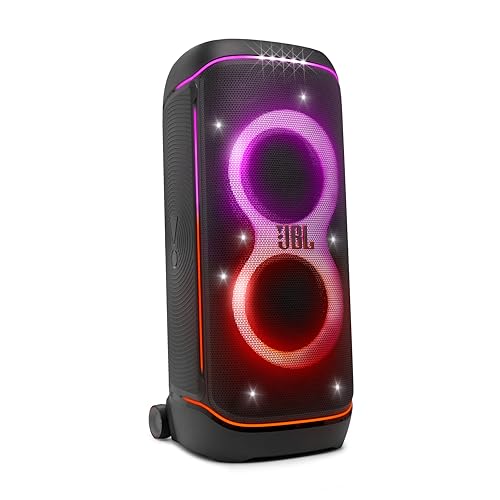





JBL PartyBox 720 vs PartyBox Ultimate: The $1,100+ Monster Speaker Battle
JBL recently put out two absolute bangers in their party lineup. First is the JBL PartyBox 520, which is the perfect non-overwhelming size. It gives you more than enough power where you never ask for more, but you never regret your decision. Then there is the colossal JBL PartyBox 720, which basically says, "Oh, you think the 520 is crazy? Check this out."
The 720 can be a little overwhelming, but it is just as versatile as the 520. However, if you are looking at top-tier power, you have to stack it up against the absolute king of the lineup: the JBL PartyBox Ultimate.
While the PartyBox 720 is an incredible machine, it leaves some users wishing it had just a few more premium features from the massive Ultimate model. In this head-to-head comparison, we will break down the pricing gap, battery versatility, hardware input layout, and physical design to see which monster speaker fits your crew.
Price and Market Positioning
When you cross into the premium four-figure audio tier, your budget becomes a primary deciding factor:
JBL PartyBox 720: Retails at a substantial $1,100. It is a massive speaker that will never leave you wondering if you should have gone bigger.
JBL PartyBox Ultimate: Retails at a jaw-dropping $1,900. This speaker is the definition of absolute overkill.
Both of these heavyweights represent serious financial investments. If you are looking to purchase either unit, use the retail tracking links or hit the shopping button below to secure active sales.
The Portability Divide: Built-in Battery vs. Permanent AC Power
The absolute most important architectural difference between these two giants sits inside the power panel:
JBL PartyBox Ultimate (Pure Wall Power): The Ultimate completely lacks an internal battery chamber. It must be physically tethered to a household AC wall outlet to turn on.
JBL PartyBox 720 (The Wireless Monster): The 720 features a completely integrated wireless power system, giving you total off-the-grid playback freedom.
Real-World Battery Runtime & Hot-Swapping
JBL advertises a 15-hour runtime for the 720, but that metric requires playing at 40% volume with the bass boost and lighting disabled.
In real-world party environments—pushing the PartyBox 720 to 60% volume with the lights flashing and Bass Boost engaged—expect a solid 8 hours of continuous runtime. (Note: Cranking either speaker past 60% indoors will literally require hearing protection).
Like the rest of the 2026 family, the PartyBox 720 features a toolless, quick-release door to swap batteries instantly mid-event. This secures your long-term investment; when the lithium cells eventually degrade, you only replace the battery cartridges rather than buy a whole new speaker frame.
                  [JBL 600 Battery Platform]
               /              │              \
  JBL PartyBox 720     JBL PartyBox 520     JBL Boombox 4
(Requires DUAL packs) (Requires SINGLE pack) (Requires SINGLE pack)
The unique engineering highlight is that the PartyBox 720 runs on dual JBL 600 batteries simultaneously, allowing you to share power cartridges seamlessly with the PartyBox 520 or the rugged Boombox 4.
The Wall Power Performance Boost: Both speakers charge via standard double-barrel AC ports. Bypassing the 720's batteries by plugging it into a live wall outlet activates a high-voltage boost. On AC wall power, the PartyBox 720 becomes noticeably louder with significantly deeper bass response, getting almost as loud as the PartyBox Ultimate.
Physical Footprint and Transport Mobility
Moving enclosures of this physical scale requires heavy mechanical assistance, and their weights differ drastically:
JBL PartyBox 720: Tips the scales at a heavy 69 pounds. It is noticeably smaller and more manageable than the flag ship model.
JBL PartyBox Ultimate: Weighs an absolute crushing 87 pounds.
Both models feature heavy-duty, built-in handle arrangements paired with ultra-chunky, thick wheels. These rolling systems allow both speakers to glide easily through rugged terrain like cracked parking lots, sidewalks, outdoor grass, or thick carpets. However, due to their sheer physical scale, you will absolutely need a helper to load either model into a vehicle or carry them up stairs safely.
Durability and Weather Protection Standards
Chassis material ruggedness is completely identical across both lines:
The Frame: Both deploy rigid plastic body shells that scratch fairly easily, paired with a thin metal front screen grille prone to denting if bumped hard.
The Protection Rating: Both carry an official IPX4 splash-proof rating. Poolside splashes or light outdoor rain will not cause damage, provided you keep the rear rubber port flaps completely covered and sealed.
Light Shows: Front Rings vs. Ambient Floor Glow
Both models project industry-leading dynamic lighting arrays controllable via the JBL mobile app, but the physical hardware design splits them:
JBL PartyBox 720: Features high-visibility, incredibly vibrant front-facing light rings tracking the beat of your music.
JBL PartyBox Ultimate: Takes visuals to the next level. It adds a premium 3D depth effect to the main lighting rings and integrates dedicated ambient floor lights. The floor lighting projects a wide area-of-effect color wash across the ground, granting the Ultimate a massive physical presence at night.
Shared Ecosystem: Because both speakers support Bluetooth Auracast, you can wirelessly link them directly to external JBL Partylight Sticks and Beams to expand your synchronized visual show across an entire yard.
Rear Input Panels and Professional DJ Mapping
The back connectivity panels feature a helpful illuminated design for dark venues, but their physical hardware targets completely separate users:
Professional DJ XLR Inputs: The JBL PartyBox 720 upgrades to professional XLR combo jacks, allowing you to plug directly into balanced DJ mixers or professional boards. The PartyBox Ultimate relies on legacy 1/4" inputs. While you can connect a DJ board to the Ultimate wirelessly via Bluetooth, it introduces technical risks, whereas the 720's physical XLR connection is completely bulletproof.
Modern Device USB: The PartyBox 720 features a modern USB-C port to charge your smartphone, feed wired audio, or juice up wireless microphone receiver modules. The PartyBox Ultimate relies on an outdated, less convenient USB-A port.
Universal Daisy Chaining: Both units retain standard 3.5mm auxiliary input jacks and dedicated Audio Out patch jacks, allowing you to universally daisy-chain any other speaker size or brand together in perfect wired playback sync.
Karaoke and Wireless Microphone Performance
Both systems function as world-class mobile karaoke hubs, allowing you to plug in a guitar or dual microphones with an active on-board vocal echo filter to smooth out off-key singing. You can manually adjust mic bass and treble adjustments directly on the top control boards of both speakers without opening your phone.
Using official wireless PartyBox microphones is highly recommended over cheap wired lines. They sound cleaner, reject handling noise, and focus purely on vocals.
The PartyBox 720 lets you use its modern USB-C port to recharge your wireless mic receiver capsule right on the frame.
The wireless mic capsules provide 20 hours of runtime, but the JBL receiver module caps out at 12 hours.
Wireless Network Bluetooth and Wi-Fi Codecs
Wireless connectivity presents a significant technological divide depending on your home ecosystem:
JBL PartyBox 720: Focuses strictly on standard Bluetooth protocols, supporting universal SBC and AAC audio codecs with dual-device multi-point pairing to let you and a friend alternate tracks seamlessly. Latency is non-existent when watching videos on your phone.
JBL PartyBox Ultimate: Includes standard dual-device Bluetooth multipoint (SBC/AAC) but introduces built-in Wi-Fi network connectivity.
If you are an Apple user, the Ultimate's Wi-Fi chip unlocks AirPlay 2 streaming, allowing you to play high-fidelity tracks wirelessly and sync the Ultimate with the rest of your home smart speaker ecosystem. If you primarily stream music at outdoor events via Bluetooth, the lack of Wi-Fi on the 720 is not a major loss.
Acoustic Architecture and Real-World Sound Quality
The internal driver configurations shape how these massive enclosures move air:
JBL PartyBox 720: Large-format dual front-firing woofers paired with a massive rear-oriented acoustic bass exhaust port, and dual front-firing tweeters.
JBL PartyBox Ultimate: Massive dual front-firing woofers paired with a rear-oriented bass exhaust port, multi-driver configurations, and expanded high-frequency delivery.
The Sonic Comparison
When tested side-by-side using optimized EQ presets (such as selecting the "Deep" bass boost mode to ensure a clean, heavy sub-bass kick instead of the muddy resonance caused by the "Punchy" setting), their performance profiles align surprisingly well:
The Loudness Envelope: When running off its internal batteries, the PartyBox 720 is exceptionally loud, but it cannot catch the absolute raw wall-shaking sound pressure of the Ultimate. However, plugging the PartyBox 720 into an AC wall outlet unlocks its full power, allowing it to get almost as loud as the PartyBox Ultimate, easily commanding large outdoor gatherings.
Bass Impact: The PartyBox Ultimate moves slightly more air, resulting in an unyielding, chest-thumping sub-bass extension that can shake building foundations. The PartyBox 720 holds its ground remarkably well, providing a rich, warm, traditional party box low-end punch that satisfies deep bass enthusiasts.
Final Verdict: Which High-Power Speaker Is Right for You?
Choose the JBL PartyBox 720 if you prioritize true off-the-grid wireless portability, want a hot-swappable dual battery platform that shares cells with the Boombox 4, require professional XLR combo jacks to wire directly into physical DJ mixers, want a modern USB-C port for device charging, and want to save $800 while achieving near-Ultimate volume levels when plugged into a wall.
Choose the JBL PartyBox Ultimate if your budget allows for a $1,900 investment, and you intend to keep your speaker permanently plugged into an indoor AC wall outlet, want premium 360-degree ambient floor projection lights, and require Wi-Fi connectivity for AirPlay 2 smart home integration.
Frequently Asked Questions (FAQ)
Can I run the JBL PartyBox 720 on only a single battery cartridge?
Yes. The internal amplifier of the JBL PartyBox 720 is engineered to draw power from dual battery cartridges simultaneously to maximize its wireless volume and bass performance thresholds. However, the speaker can operate on a single pack. Keep in mind that running only one cell will reduce your maximum wireless volume ceiling and cut your continuous battery runtime in half.
Does the JBL PartyBox Ultimate have a battery backup option?
No. The high-voltage, high-wattage internal amplifier of the JBL PartyBox Ultimate is engineered strictly to draw raw power from a standard household AC electrical outlet. There is no internal battery compartment, nor is there a hardware expansion slot to connect external battery packs. It is a permanent, wall-powered sound machine.
Are the battery packs inside the PartyBox 520 and 720 interchangeable?
Yes. Both the PartyBox 520 and the PartyBox 720 utilize the exact same JBL 600 Battery platform, which is also shared by the rugged JBL Boombox 4. The only operational difference is that the PartyBox 520 utilizes a single battery cartridge to fill its chamber, whereas the larger PartyBox 720 deploys two cartridges simultaneously.
Why are XLR combo jacks on the PartyBox 720 an advantage over the Ultimate?
The inclusion of professional XLR combo jacks on the rear panel of the PartyBox 720 allows mobile DJs and audio performers to run balanced, low-noise physical audio lines directly from hardware mixing boards into the speaker. The PartyBox Ultimate relies on standard 1/4" input lines. While you can bridge a DJ board to the Ultimate wirelessly via Bluetooth, a physical wired connection eliminates any technical wireless interference or dropouts.
Can I stream music to the JBL PartyBox 720 using Apple AirPlay 2?
No. The JBL PartyBox 720 focuses exclusively on wireless Bluetooth connectivity and does not include an internal Wi-Fi network card. If you require native Apple AirPlay 2 support or smart home network speaker syncing, you will need to step up to the flagship JBL PartyBox Ultimate.