
⚡️🔋 Anker Prime Base: https://geni.us/GC-AnkerPrimeBase
JBL Partybox 130: https://geni.us/GC-JBLPartybox130
JBL Boombox 4: https://geni.us/GC-JBLBoombox4
Sony ULT Field 7: https://geni.us/GC-SonyULTField7
JBL Easy Sing Mics: https://geni.us/GC-JBLEasySingMics
JBL Partybox Mics: https://geni.us/GC-JBLPartyboxMic
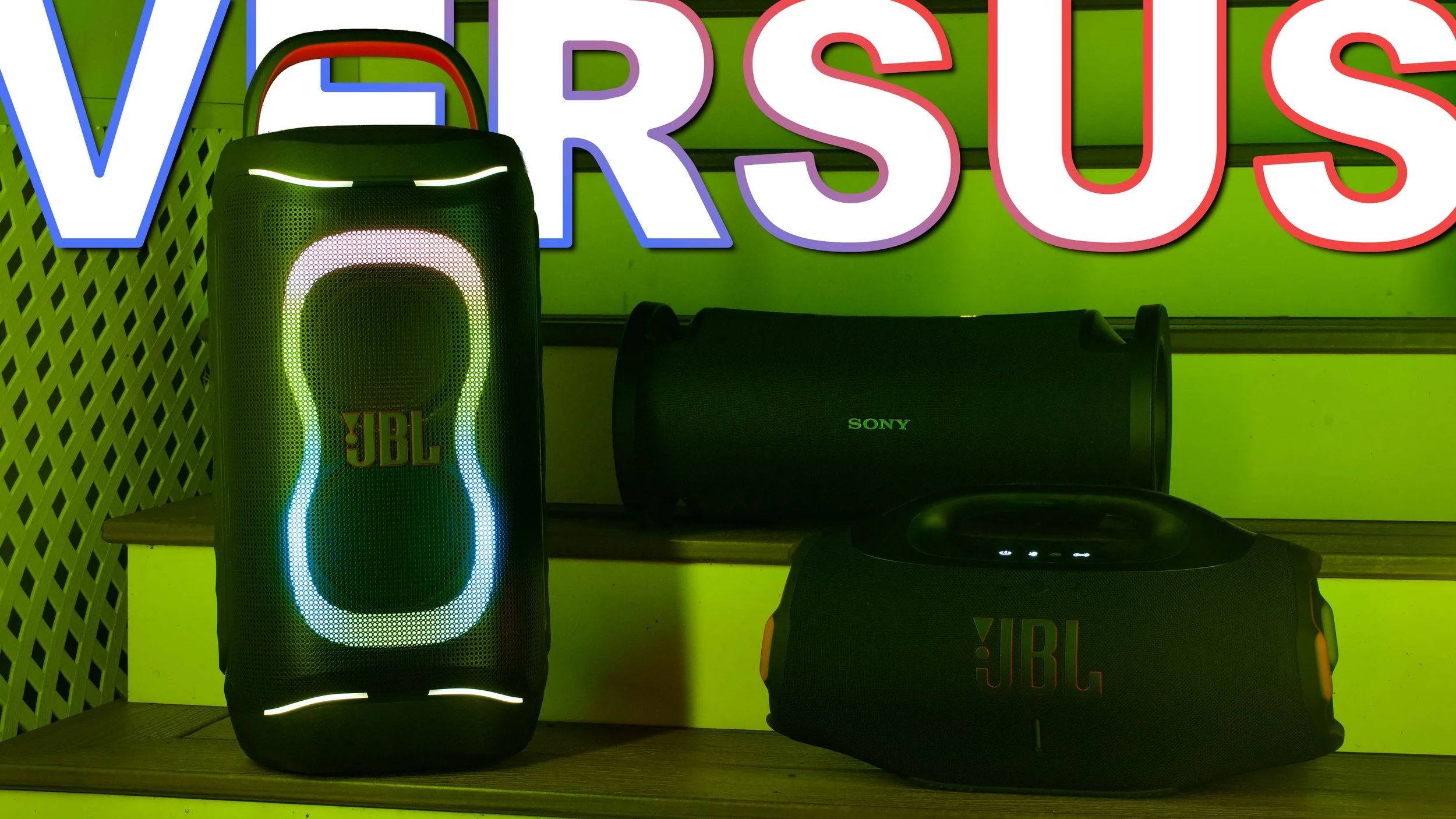
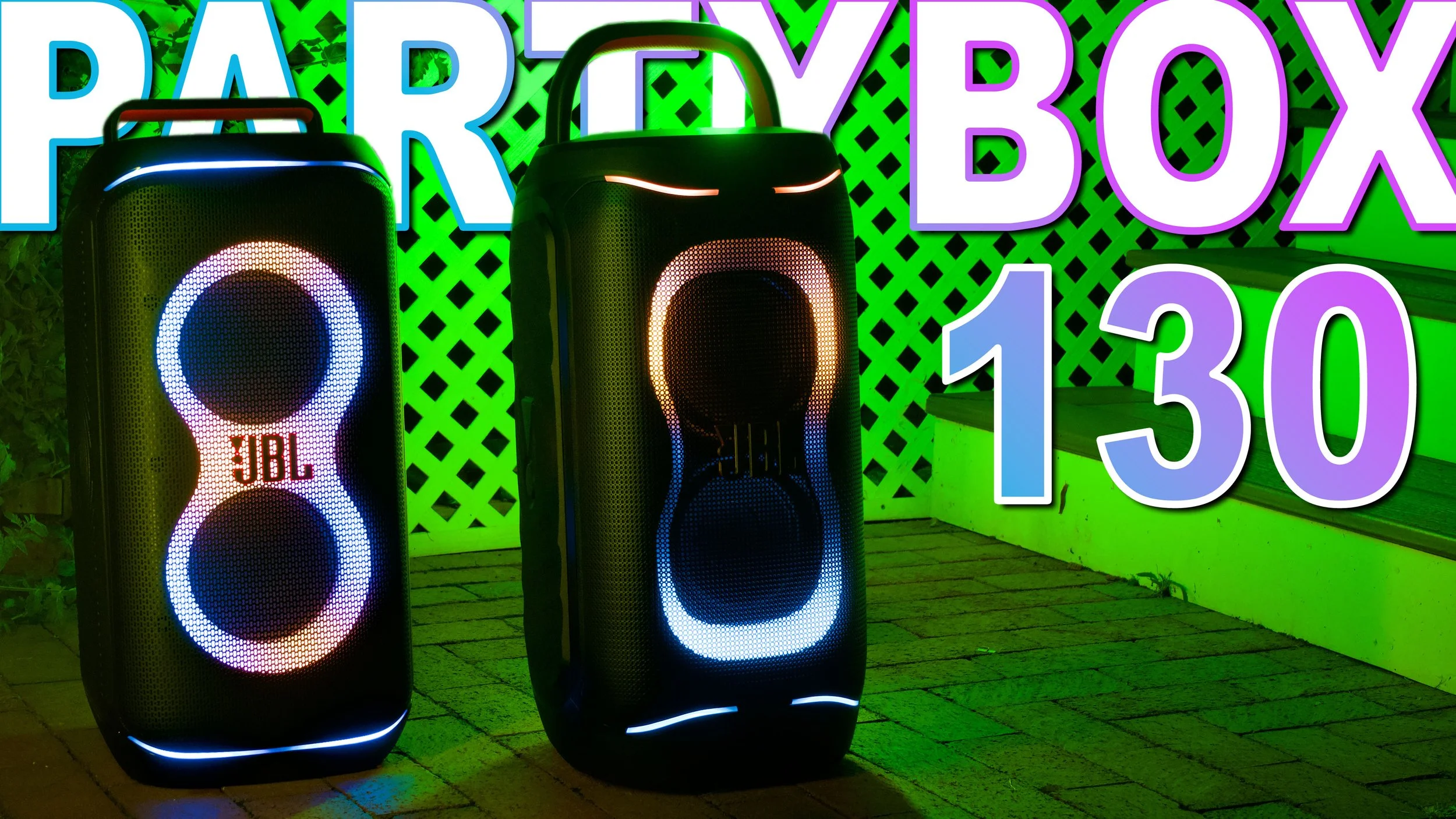
Don’t Make This $550 Mistake! JBL PartyBox 130 vs. JBL Boombox 4 vs. Sony ULT Field 7
If you are shopping for a powerful, high-output Bluetooth speaker in 2026, you are likely looking at three heavy hitters: the JBL PartyBox 130 ($450), the JBL Boombox 4 ($550), and the Sony ULT Field 7 ($500).
While the Boombox 4 and ULT Field 7 command a premium price tag, the more affordable PartyBox 130 might actually be the superior choice depending on your setup. In this breakdown, we compare build quality, port selection, battery tech, sound performance, and karaoke capabilities so you can make the right buying decision.
Quick Specs & Pricing Overview
JBL PartyBox 130 ($450): The newest and most affordable option here. It delivers the deepest low-end bass, the widest port selection, an optical TV connection, dynamic party lights, and dual microphone inputs.
JBL Boombox 4 ($550): The most expensive speaker of the trio. It offers rugged IP68 waterproofing, lightweight boombox portability, swappable battery support, and Auracast broadcasting.
Sony ULT Field 7 ($500): Sony's durable powerhouse featuring dual ULT bass profiles, solid mid-range clarity, multi-color side lights, and a dedicated 1/4-inch microphone input.
1. Design, Durability, and Portability
The reason you pay a premium for the JBL Boombox 4 and Sony ULT Field 7 comes down to rugged engineering and compact design.
Size and Weight: Both the Boombox 4 and Sony ULT Field 7 are significantly more compact and weigh roughly half as much as the JBL PartyBox 130, which weighs in at a hefty 25 pounds.
Durability: The Boombox 4 and ULT Field 7 are wrapped in durable fabric mesh capable of taking direct hits and heavy outdoor abuse. Both feature fully waterproof designs capable of being submerged in a pool without issue.
PartyBox 130 Build: The PartyBox 130 uses a soft-touch plastic frame and a thin front metal grille that can be prone to dents and scuffs over time. It has an IPX4 splashproof rating—fine for light splashes, but not meant for heavy rain or water submersion.
Light Show Quality
If visual entertainment matters, the PartyBox 130 easily wins. It sports a dynamic front panel light show that can sync with JBL PartyLight Sticks. In comparison, the Boombox 4 and ULT Field 7 feature subtle ambient lighting tucked inside their side passive radiators, making them much less visible outdoors or in bright rooms.
2. Battery Systems & Swappable Power
Battery life on all three models depends heavily on volume levels and lighting effects, but their power designs vary significantly:
JBL PartyBox 130: Features a tool-free, quick-swap battery latch that runs on the JBL 200 battery pack (compatible with the JBL PartyBox 120 and Encore 2).
JBL Boombox 4: Uses the larger JBL 600 swappable battery (compatible with the JBL PartyBox 520 and 720). However, swapping it requires an Allen wrench to preserve its IP68 waterproof seal.
Sony ULT Field 7: Uses an integrated, non-removable battery pack.
Power Boost Tip: Plugging any of these three speakers into AC wall power unlocks a dedicated performance boost, resulting in louder peak volume and deeper low-end response.
3. Ports, Connectivity, and Karaoke
Port versatility is where the PartyBox 130 stands in a class of its own:
JBL PartyBox 130: Includes a USB-C port, a 3.5mm Aux In, an Aux Out (for latency-free daisy chaining to any external speaker), an Optical In port (allowing it to double as a TV soundbar), and dual 1/4-inch inputs for microphones or guitars.
Sony ULT Field 7: Features a legacy USB-A port for device charging, a 3.5mm Aux In, and a single 1/4-inch microphone/guitar input with gain adjustment.
JBL Boombox 4: Stripped down to a single USB-C port for device charging and wired audio input, omitting analog aux and standard 1/4-inch inputs completely.
The Karaoke Verdict
PartyBox 130: The ultimate karaoke machine. It supports budget-friendly wired mics, JBL wireless mics, and USB-C digital mics simultaneously (supporting up to 6 microphones at once).
Sony ULT Field 7: Supports one wired or wireless mic receiver, making it great for casual singing.
Boombox 4: Only works with proprietary USB-C wireless mic systems like JBL Easy Sing.
4. Sound Quality & Speaker Layout
JBL PartyBox 130: Dual forward-firing woofers, dual tweeters, and a rear bass exhaust port. It delivers the most balanced frequency response, expansive soundstage, and deepest bass slam of the three.
Sony ULT Field 7: Dual woofers, dual tweeters, and dual side passive radiators. It delivers punchy, well-rounded audio with clearer highs and a better-balanced mid-range than the Boombox 4.
JBL Boombox 4: Dual woofers, dual tweeters, side radiators, and a unique rear passive radiator designed to bounce bass off walls. While loud, its high frequencies can sound slightly hollow compared to the full acoustic profile of the PartyBox 130.
5. Multi-Speaker Pairing Ecosystems
JBL Auracast: The PartyBox 130 and Boombox 4 can broadcast wirelessly to modern Auracast JBL speakers, including the Xtreme 4, Charge 6, Flip 7, Clip 5, Go 5, and larger PartyBox models (120, 320, 520, 720, Ultimate). True Wireless Stereo (L/R) still requires two identical models.
Sony Wireless Party Chain: The ULT Field 7 can sync with other Party Chain models, such as the ULT Tower 9, ULT Tower 10, ULT Field 5, and SRS-XV800.
Wired Daisy Chain: The PartyBox 130 can physically connect via its Aux Out port to any speaker on the market regardless of brand.
Which Speaker Should You Buy?
Get the JBL PartyBox 130 ($450) if you want maximum sound quality, deep bass, complete karaoke support, versatile inputs (Aux, Optical, Dual Mic), and party lights at the best value.
Get the Sony ULT Field 7 ($500) if you want a rugged, fully waterproof outdoor speaker with balanced tuning and a dedicated wired microphone input.
Get the JBL Boombox 4 ($550) if you prioritize IP68 water submersion, lightweight grab-and-go portability, and swappable battery tech over analog inputs and maximum bass output.
Frequently Asked Questions (FAQ)
Can you stereo pair a JBL PartyBox 130 with a JBL PartyBox 120?
No. You can sync their audio and light shows together using Auracast, but true left/right channel stereo pairing requires two identical models (such as two PartyBox 130 units).
Is the JBL PartyBox 130 waterproof?
No. The PartyBox 130 is rated IPX4 splashproof, which protects against light rain and splashes. If you need a speaker that can be fully submerged in water, choose the JBL Boombox 4 (IP68) or the Sony ULT Field 7.
Does the JBL Boombox 4 have a standard 3.5mm headphone/aux jack?
No. The JBL Boombox 4 has removed the 3.5mm aux input, relying exclusively on Bluetooth or its USB-C port for audio playback.
Can you use wired microphones with the JBL Boombox 4?
No. The Boombox 4 does not feature standard 1/4-inch analog inputs. Karaoke requires compatible digital USB-C wireless microphone systems like the JBL Easy Sing mics.
Do these speakers get louder when plugged into a wall outlet?
Yes. When connected to AC power, all three speakers receive an internal performance boost, delivering higher peak volume and deeper bass response compared to running on battery power alone.
Like I mentioned in the full review, the JBL Partybox 130 is still one of the best portable box speakers that you can get. However, I do not like some of the changes, and I think the JBL partybox 120 is still perfectly fine in 2026. But if you’re looking for a super portable bluetooth speaker, then the partybox 130 is also a great option, however this speaker isn’t as portable or as durable as either the JBL Boombox 4 or the Sony ULT Field 7. And the 130 is actually a little more affordable than these other two speakers. So today we’re going to compare the JBL PartyBox 130 to the JBL Boombox 4 and lets see which one is right for you.
Regarding pricing, we’ve got a spectrum here. The JBL PartyBox 130 is the newest speaker here and its the most affordable cause it retails for $450. But then there’s the JBL boombox 4 which is the most expensive speaker here and it retails for $550. And finally there’s the Sony ULT field 7 which is the oldest speaker here and it retails for $500. Nonetheless I do expect all of these speakers to go on sale so if you want to pick either of these two speakers up they’ll be linked down below or you can always press on the YouTube shopping button. And if you want to further support the channel then you can always watch some of the related videos in the description down below.
So first theres the design of these speakers, one of the main reason why you’re paying a premium for both the JBL Boombox 4 and Sony ULT field 7 is cause these speakers are smaller and more durable than the JBL PartyBox 130. Both the JBL Boombox 4 and the Sony are noticeably smaller and weigh half as much as the JBL PartyBox 130 which clocks in at 25 pounds. Both the Boombox 4 and sony are more durable cause they have a mostly fabric wrapped body which can take a beating and both of these speakers are more water resistant than the Partybox 130. Cause with the Partybox, this speaker has a mostly soft plastic body which can get scratched very easily, it has a thin metal grill on the front which can get dented very easily as well, and this speaker only has an IPX4 rating, so a little bit of water will be okay, but you still want to be carful with this speaker.
But something the JBL PartyBox 130 does have over both of these speakers is a light feature that is worth using. Now I will admit that I think that this light feature is a down grade from the 120… however this light feature is still a lot more dynamic and impressive than the light feature found on both the JBL Boombox 4 and sony ULT Field 7. Cause if you didn’t notice, these two speakers also have light features… but they are hidden in the passive radiators, so they are hard to see. And the light feature on the Boombox 4 doesn’t change color… now the light feature on the Sony does change color… but this light feature is even harder to see than the Boombox 4. Now, both the Boombox 4 and Partybox 130 are using aurcast, but you can only pair the Partybox 130 with JBL’s light sticks and get them to sync with your light feature. Now you can use the Partylight sticks with any speakers out there… but the light sticks with not sync with the light feature on the Boombox 4 even though both of these products are using aura cast.
Now when it comes to battery life, it really depends on how you use these speakers. If you use them at a higher volume, that’s going to affect your battery life, or if you use them with their light feature turned on, that’s also going to affect your battery life. But if you need something with more stamina then you do want to go with either the Boombox 4 or the Sony, but if you want something with more bass, you want to go with the Partybox 130.
But more importantly, with both the partybox 130 and boombox 4, you can remove the battery if you want or need to. However with the Partybox 130, its very easy to take out and swap out your battery, where as with the Boombox 4, you have to use some Alan keys, so taking your batteries out isn’t as easy, however the Boombox 4 is using these screws so that it can have its IP68 rating which means its more water resistant than the Partybox 130. And then there’s the sony, you can’t take out the battery.
Now the JBL PartyBox 130 is using the JBL 200 battery so you can mix and match batteries with either the 120, partybox on the go 2 or with the Encore 2… where as the JBL boombox 4 is using the JBL 600 battery so you can mix and match batteries with either the JBL PartyBox 520 or JBL PartyBox 720.
And to charge all of these speakers they charge via a double barrel AC, and when you use these speakers while they are plugged in you are going to get a performance boost out of them, they are going to get louder and they are going to have more bass. However with both the JBL PartyBox 130 and JBL Boombox 4, the battery does have to be installed even if you’re going to use them while they’re plugged in.
But then there are the ports on these speakers, and the ports on the JBL boombox 4 is very underwhelming cause all you have is a USB C port. Now you can use this USB C port to charge your own device and you can also use it as a wired connection, but I think the Boombox 4 should have had an audio jack. Now the Partybox 130 also has a USB C port which is good, but the Sony ULT field 7 has a USB A port which I don’t feel is as useful in 2026. But the Sony does have an audio jack so you can use it with a wire connection. And the JBL PartyBox 130 also has an audio jack.
But the Partybox 130 has two things these other two speakers don’t have, for starters it has an audio out jack so if you want you can daisy chain this speaker up with any other speaker, regardless of size or brand and you can get them to play in sync… and it also now has an optical port so if you want you can connect it up to your tv and use it as a soundbar. Now I wouldn’t use this as my main home theater set up, however the Partybox 130 is a lot more versatile than these other two speaker.
And then there are the 3 quarter inch inputs, so if you want you can plug in a mcirpyhone for a karaoke or you can plug in a guitar. Now with the Partybox it has 2 inputs where as the Sony, it has 1, but its still one more than the JBL Boombox 4.
Now you can use the JBL Boombox 4 with a wired microphone, however you have to use JBL’s Easy Sing mics, which sound and perform great, they’re wireless, they plug in via your USB C port and they also give you an AI Vocal removal tool… but they are expensive. Where as with the JBL PartyBox 130 and Sony ULT Field 7, both of these speakers give you the option to use them with affordable wired mics… but if you want you can use them with wireless mics. Where as with the Boombox 4, your only option are the easy sing mics. But for this wondering, yes you can use the Partybox with the easy sing mics and you can also use the easy sing mics, wired mics and partybox mics all at the same time.
But with all of that being said, lets talk about sound. When it comes to speaker set up, the JBL PartyBox 130 has dual frontward firing woofers with an exhaust port that shoots out the back and they all have dual frontward firing tweeters. Now there’s nothing wrong with this speaker set up, but I was really hoping that JBL would start to introduce at least one mid driver so that we could have better instrument separation in the mids like with the JBL Ultimate. Cause with the JBL Boombox 4, JBL did things a little differently, cause this speaker has dual fronted firing woofers, dual frontward firing tweeters and dual passive radiators that shoot out the sides, but the Boombox 4 also has a new passive radiator that shoots out the back. And then there’s the Sony which has a more stand set up of dual fronted firing woofers, dual frontward firing tweeters and dual passive radiators that shoot out the sides and that’s it. But now we’re going to jump in to the sound test, all of these speakers are playing at 75% volume while unplugged.
Sound test
So when it comes to sound quality, as expected the JBL PartyBox 130 is going to sound more balanced and its going to have a lot more kick in its bass, meaning that its going to sound fuller than both the JBL Boombox 4 and the Sony ULT Field 7. However I do feel that the Sony ULT field 7 still sounds better than the JBL Boombox 4 cause with the highs on the boombox, they sound a little hollow. Where as the sony sounds more balanced, but obviously its not going to have the same bass as the Partybox. But when it comes to max volume performance, both the Boombox 4 and Sony do a really good job of keeping up with the Partybox 130, which is very imrepssive. Now I think all of that speakers are going to be good for a 15 person party… but the 130 is going to be better cause it again it has more bass. And like I mentioned earlier, with all od these speakers if you were to use them while they are plugged in you are going to get a performance boost out of them, they are going to get louder and they are going to have more bass. But overall, if you want more balanced sound and more bass, you still want to of with the JBL PartyBox 130.
And finally lets talk about paring these speakers up to other speakers. With all of these speakers, if you have two of the exact same speakers then you can always pair them up and get them to play in left and right stereo mode, so you’re going to have one for your left channel and another for your right channel. However, they have to be 2 of the exact same speakers, you can not stero pair a partybox 130 with a partybox 120, their light features will sync up, but they will not play in stereo mode.
Now with the Sony, its using wireless Party chain, so you can pair it up with other sony speakers that are also using wireless party chain like the Tower 10 or Tower 9, which I think they’re great by the way… or you can also pair your XV800 up to any of Sony’s smaller speakers that are also using wireless party chain like an ULT field 7, Ult field 5 or ULT field 3… the only thing is, you can not pair your XV800 to an ULT 1 cause this speaker is not using wireless party chain.
And like I mentioned earlier, both of these JBL speakers are using aura cast, so you can pair them up with other JBL speakers that are also using aura cast like a JBL speaker that also using aura cast like lets say a JBL Partybox encore 2, or to a Partybox 120, 130, 320, 330, 520, 720 or to an ultimate and get them to all play in sync… or you can also pair them up to any of JBL’s smaller more portable speakers that are also using aura cast like lets say a JBL Boombox 4, Xtreme 5, Xtreme 4, Charge 6, flip 7, clip 5, a grip or Go 5 and get them to play in sync as well.
But unfortunately, you can not pair either of these two speakers up any of JBL’s older partybox speakers that are using TWS and you can not pair them up to any of JBL’s older speakers that are using party boost. But like I mentioned earlier, the JBL PartyBox 130 does have that audio out jack, so if you want you can always daisy chain it up to any other speaker, regardless of size or brand and you can get them to play in sync.
But with all of that being said, if you are trying to choose between any of these speakers, with both the JBL Boombox 4 and Sony ULT field 7 you are paying a premium cause these speakers are more durable and they are more durable. However with the JBL PartyBox 130, this speaker is also very portable, but its a little bigger and a little heavier. But more importantly this speaker sounds a lot better cause it sound more balanced and it has more kick in its bass. Its also more versatile cause it has more ports like an audio out jack, an optical port and you can plug in a wired mic if you want, and only if you want to upgrade do you have to spring for JBL’s more expensive easy sing mics. Where as with the Boombox 4, if you want to use this speaker for karaoke you have to use the easy sings mics.