
⚡️🔋 Anker Prime Base: https://geni.us/GC-AnkerPrimeBase
Sony ULT Tower 7: https://geni.us/GC-SonyULTTower7
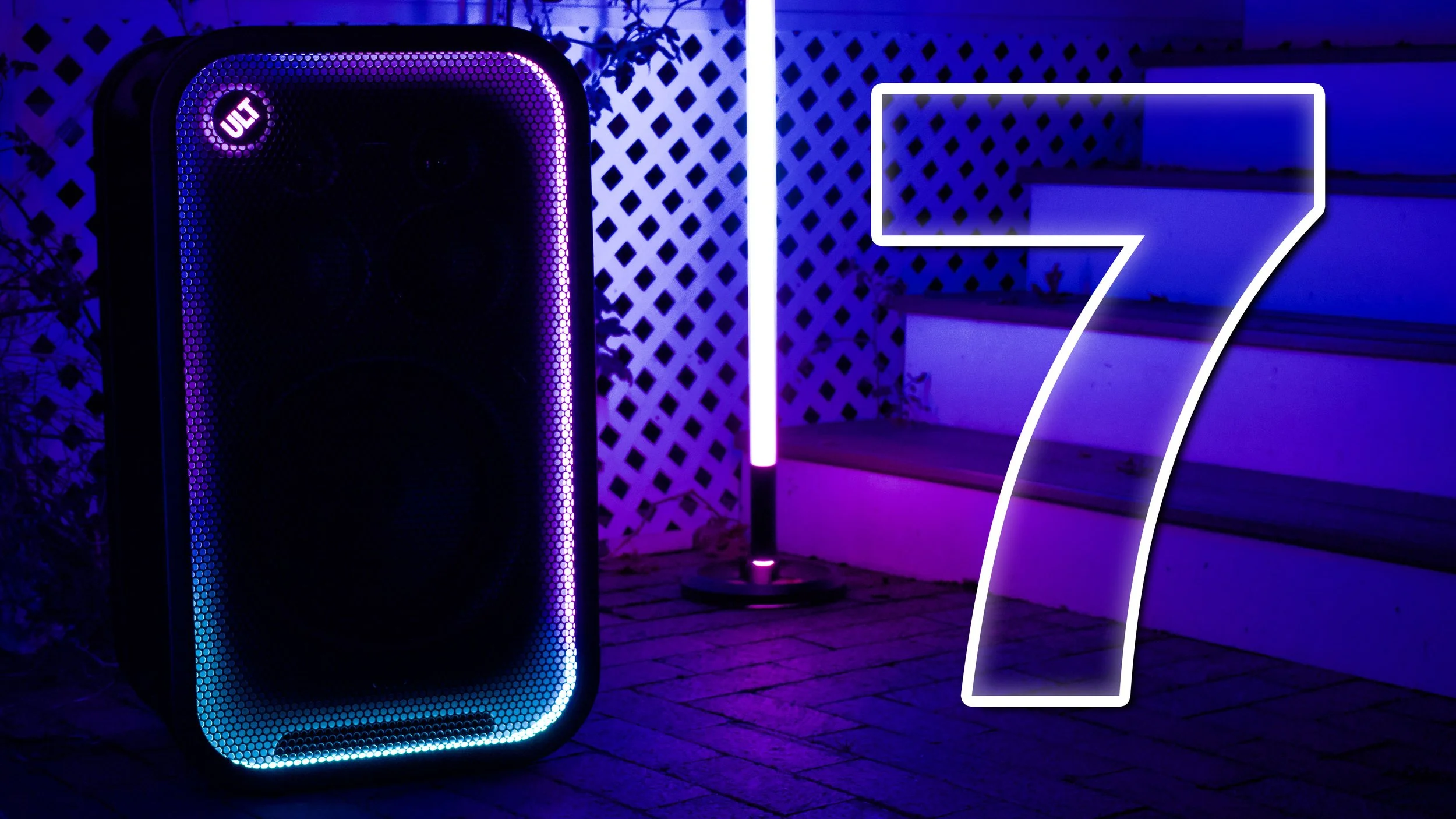
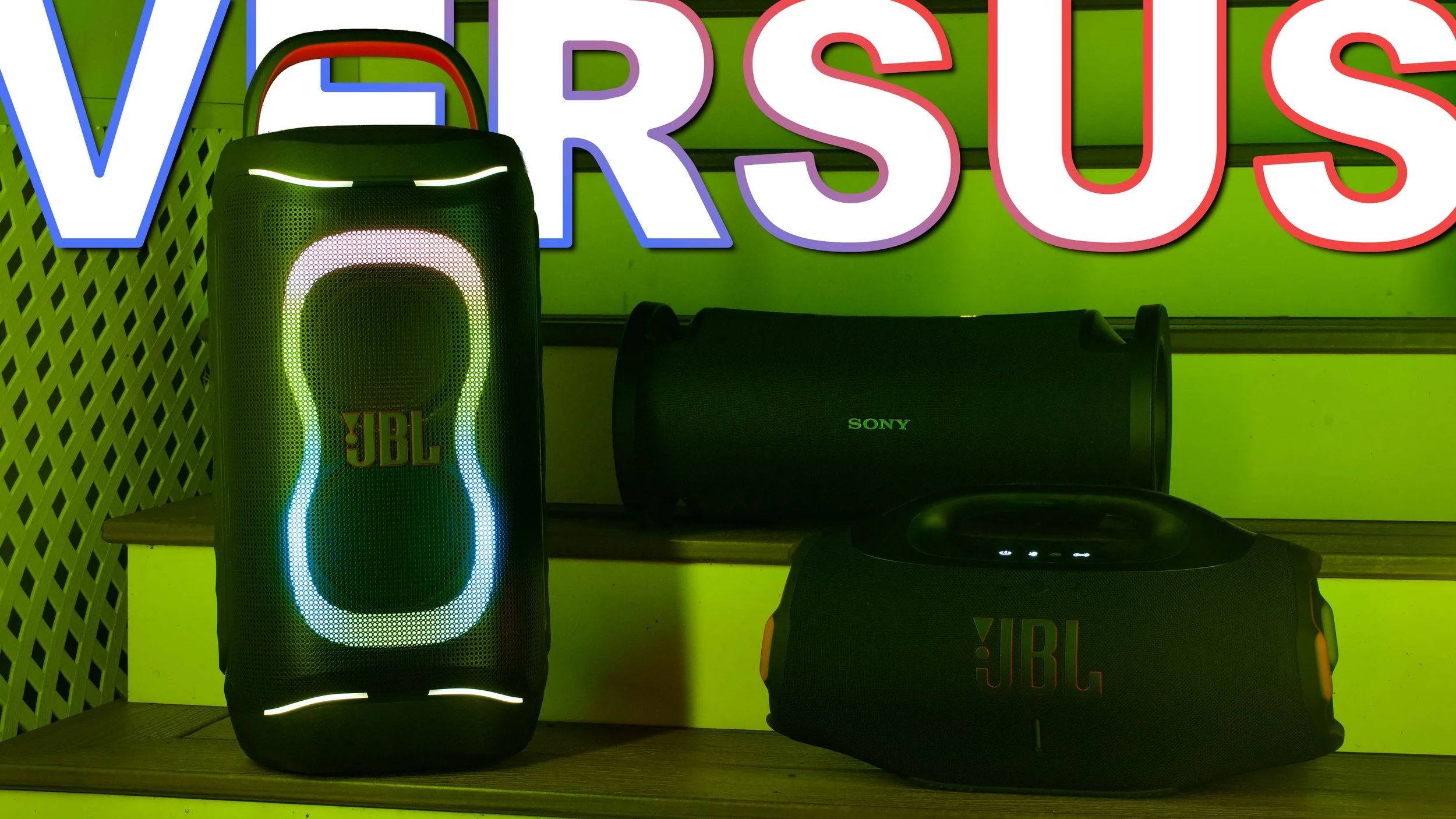
Sony ULT Tower 7 Review: The Ultimate Portable Party Speaker Showdown
When you invest in a portable party speaker, massive volume and heavy bass are expected, but true instrument separation is often sacrificed. While a lot of people have been sleeping on the massive Sony ULT Tower 10 and Tower 9, dedicated audio architecture takes casual listening and DJ gigs to a completely different level.
The all-new Sony ULT Tower 7 acts as a mini Tower 9, entering the heavyweight ring as a replacement for its predecessor, the Sony XV800, and taking aim at direct competitors like the JBL Partybox 330 and 320.
However, hardware architecture, I/O connectivity, and portability quirks make a big difference in everyday use. Below is a complete breakdown to help you decide if the ULT Tower 7 is the right sound system for your next event.
Design and Build Quality: Portability vs. Everyday Practicality
Occupying a massive 50-pound footprint at a $650 retail price, the Tower 7's design philosophy prioritizes ruggedness over effortless transport:
Sony ULT Tower 7: Larger, bulkier, and heavier than the XV800 and competing JBL models. While it features built-in wheels, it completely lacks a telescopic handle, making it awkward and uncomfortable for taller people to roll. It uses a denser plastic body, a thicker metal front grille, and an IPX4 water-resistance rating. Crucially, it brings back tactile, analog buttons (power, ULT, source, and rear controls) for reliable operation even with wet hands.
Sony XV800 / Tower 9 (Previous Gen): Relied heavily on capacitive touch buttons that lacked tactile feedback and frequently struggled to register inputs in damp conditions.
Connectivity & Ecosystem Integration: Why Professional I/O Matters
The Professional Connectivity Advantage
The Tower 7 shows its professional DJ ambitions by adding RCA and balanced XLR IN/OUT ports, making it extremely easy to plug into an external DJ mixer or daisy-chain to other PA systems. It also includes Bluetooth multipoint for dual-device pairing, LDAC support for high-res Android streaming, and a USB-C port for playback and device charging.
The Downgraded Ports
Sony made a few baffling cuts to the I/O panel. They removed the optical port entirely, meaning TV connections rely on Bluetooth or a 3.5mm jack (which can introduce latency). Furthermore, the 1/4-inch inputs were downgraded from two on the XV800 to just one on the Tower 7. Because the XLR ports lack bus power, you cannot plug a microphone directly into the XLR input without an external mixer. For dual microphones, you are forced to buy a wireless receiver system.
Battery Architecture and Power
Sony advertises up to 30 hours of battery life at 50% volume (with ULT on and lights off). Turning the LED lights on drops playback to about 15 hours, and running it at maximum volume yields roughly 3 hours.
One of the best new features is the user-replaceable battery compartment. Unlike the proprietary packs used by JBL, the Tower 7 uses standard, unbranded batteries that are much cheaper to replace (though you will need a screwdriver to access them). Sony did change the power cable from the standard double-barrel AC cord, so keep a close eye on it. When plugged into AC power, the speaker receives a massive performance boost in both overall volume and bass output.
Driver Layout and Hardware Architecture
A look under the metal grille reveals the raw acoustic hardware that separates the Tower 7 from older models:
Sony ULT Tower 7: Powered by a single front-firing woofer with a downward-shooting exhaust port, dual midrange drivers, and four tweeters (two on the front, two on the back).
Sound Test Results: Punchy Bass and Clear Mids
Sound quality is the definitive reason to upgrade to the Tower 7. Because the exhaust port shoots downward, you get incredibly punchy, physical bass that stays completely clean without muddling the rest of the track. The addition of dual midrange drivers gives the Tower 7 an open, airy sound with far better instrument separation than the XV800. Vocals and mids remain crystal clear even when the bass is thumping.
The speaker features two ULT modes: ULT 1 provides deep, resonating bass, while ULT 2 pushes maximum sound pressure and punch. It gets noticeably louder than the XV800, making a single Tower 7 more than capable of handling a DJ gig for 20 to 30 people.
Final Recommendation
Choose the Sony ULT Tower 7 if you are an audio purist or a gigging DJ who wants the best-sounding, distortion-free bass in this price bracket and plans to utilize the XLR/RCA connections with an external mixer.
Look for older models or alternatives if you strictly need two built-in 1/4-inch microphone inputs for out-of-the-box karaoke, an optical port for TV integration, or a telescopic handle for easy transport.
Despite the annoying port downgrades and the awkward rolling experience, the massive clarity, instrument separation, and heavy bass profile make the Tower 7 a standout, top-tier choice for Gymcaddy readers.
Frequently Asked Questions
Can I replace the battery in the Sony ULT Tower 7?
Yes, the battery in the Sony ULT Tower 7 is user-replaceable. You will need a screwdriver to access the compartment, but the speaker uses standard, easy-to-find batteries that are very affordable to replace compared to proprietary batteries.
Does the Sony ULT Tower 7 have an optical port?
No, Sony removed the optical port on the Tower 7. If you want to connect it to a TV, you will need to use a 3.5mm audio cable or connect via Bluetooth.
Can I connect two microphones to the Sony ULT Tower 7?
The Tower 7 only has one 1/4-inch microphone input. If you want to use two microphones simultaneously for karaoke or announcements, you will need to use a dual wireless microphone receiver or plug an external audio mixer into the speaker's RCA or XLR inputs.
Does Auracast work with non-Sony speakers?
While the Sony ULT Tower 7 uses Auracast and can pair instantly with other Sony Tower 7, Tower 5, and Tower Max speakers, it currently does not pair with Auracast-enabled speakers from other brands like JBL or Soundcore due to software restrictions.
SEO Keywords
Sony ULT Tower 7 review, Sony ULT Tower 7 vs XV800, Sony ULT Tower 7 sound test, best portable party speaker 2026, Sony speaker with XLR input, Sony ULT Tower 7 battery replacement, best Bluetooth speaker for DJs, Gymcaddy audio reviews, Sony Auracast speakers, JBL Partybox 320 alternative, loud Bluetooth speaker with bass, portable speaker with replaceable battery
Does the Sony ULT Tower 7 have an optical port?
No, Sony removed the optical port on the Tower 7. If you want to connect it to a TV, you will need to use a 3.5mm audio cable or connect via Bluetooth.
Can I connect two microphones to the Sony ULT Tower 7?
The Tower 7 only has one 1/4-inch microphone input. If you want to use two microphones simultaneously for karaoke or announcements, you will need to use a dual wireless microphone receiver or plug an external audio mixer into the speaker's RCA or XLR inputs.
Does Auracast work with non-Sony speakers?
While the Sony ULT Tower 7 uses Auracast and can pair instantly with other Sony Tower 7, Tower 5, and Tower Max speakers, it currently does not pair with Auracast-enabled speakers from other brands like JBL or Soundcore due to software restrictions.
Like I’ve been saying for a very long time now, I really like both the Sony ULT Tower 10 and the Sony ULT Tower 9. I think a lot of people have been sleeping on these speakers, but these are very good sounding speakers thanks to their mess of tweeters and mid range drivers that really give these speakers great instrument separation. But now, we have the all new Sony ULT Tower 7 which is like a Mini tower 9. And I think Sony did a lot of things right here… however there is still room for improvement. But regardless, I really like the Sony ULT Tower 7 so lets check it out and lets see if its right for you cause this is actually a really good speaker to consider for casual use and even professional use.
Regarding pricing, the Sony ULT Tower 7 has a retail price of $650, but just knowing sony, I do expect this speaker to go on sale on a regular basis. Nonetheless if you want to pick this speaker up it’ll be linked down below, or you can always press on the YouTube shopping button. And if you want to further support the channel then you can always watch some of the related videos in the description down below.
So first there’s the design of this speaker, cause there are some things that I like and some other things that I don’t like. Now for starters, the Sony Tower 7 is pretty big and it is pretty dense. For comparison sake, the Sony Tower 7 is larger and bulkier than the Sony XV800 that its replacing and its larger than its direct competitor, the JBL Partybox 330 and Partybox 320. This speaker is also on the heavier side weighing in at 50 pounds. Now the tower 7 does have built in wheels so you can roll this speaker around… but the issue here is that the tower 7 doesn’t have a telescopic handle. So rolling this speaker around is very awkward and uncomfortable. Now the Tower 7 does have a lot of grab handles so you and your buddy can carry this speaker around… But Sony really needs to add a telescopic handle to this speaker if you want to make the wheels worth using. Cause if you’re a taller dude, like 6 feet and up, you can’t roll this speaker around properly. And I feel that since this speaker is so large and so heavy, I feel that if you’re going to carry this speaker up and down stairs or load it into your truck, you’re better off asking for help.
Now when it comes to durability, the tower 7 has a mostly plastic body with a metal grill on the front. However something that I noticed is that the Tower 7 is using a denser plastic and a thicker grill than what you would find on the Sony XV800. Which I think helps make the tower 7 more durable. Now like with more tother speakers like this, the Tower 7 is rocking an IPX4 rating so some water isn’t going to be an issue just as long as you have the port panels on the back closed. But when it comes to the controls on this speakers, I actually really like that the Tower 7 has gone back to analog buttons all around. Your power button up top is analog, your ULT button which acts as your volume and ULT selector is analog, all of the buttons on the back are analog and you also have your source selector which is also analog. And to me this is a big deal cause with the Sony XV800, and the tower 9 or Tower 10, these speakers have capacitive buttons. Now these capacitive buttons look nice and they light up… but they aren’t the best if your fingers are wet and you don’t get the active feedback that you would like with analog buttons.
But then there’s the light feature on this speaker… now granted this still isn’t the most impressive looking light feature out there… however I do think the light fearer on the Tower 7 looks better and its more dynamic than the light feature found on the Sony XV800. Now you do have a few different lighting modes to choose from and you can go in a cosutmize the color of your light feature. Now like I said, its not the best looking light feature out there, but it does look better… and besides, where this speaker really shines is sound quality. The only thing that I really wish the Tower 7 had were floor lights like with the Sony Tower 9, floor lights would have just really elevated the design of this speaker and it would have given the presence that this speaker deserves, cause seriously, the Tower 7 sound very impressive.
Now when it comes to battery life, the Sony ULT Tower 7 has an advertised battery life of 30 hours, and that’s with this speaker playing at 50 percent volume and with the ULT feature turned on but with the light feature turned off. and with the light feature turned on its good for about 15 hours, which is still very good, plus 50% volume on this speaker is already a very good listening volume cause this speaker gets very loud.
And at max volume, with the light feature turned on and with the ULT theater turned on, Sony says that the a Tower 7 is good for about 3 hours… now I can’t confirm this cause max volume on the Tower 7 will summon the cops expiditioulys.
But something that is new for the Sony ULT Tower 7 is that you can replace the battery if you want or need to. Now in order to swap out this battery you do need to use a screw driver, so getting to this battery isn’t super easy, but it can be done. And most importantly, Sony’s Tower 5 and Tower 7 are just using standard batteries that you can easily find online, and since they aren’t branded like lets say JBL, they’re not going to cost you 5 times as much.
Now I think its great that you can swap out the battery if you need to, however something that I don’t like is that the Tower 7 is now using a new power cable, now this isn’t a propiatry charging cable… however its not the super common double barrel AC cable like you’ll find on most other Sony products. So with the Tower 7, you do want to be mindful of where you store this cable. But with this speaker if you were to use it while its plugged in you are going to get a performance boost out of it. Its going to get louder and its going to have more bass.
But now lets talk about connectivity, cause there’s a lot going on here, some good and some things that I still don’t like. For starters, the Sony ULT Tower 7 can be connected to 2 devices at the same time so you and a friend can both be DJ. Latency is not an issue for this speaker so you can use it to watch movies with on your phone. And it has LDAC support, but it can only be used with an Android device cause iPhones top out at AAC and LDAC does take an additional toll on the battery life.
Now the Tower 7 still has a audio jack so you can use it with a wired connection that way… but unfortunately the tower 7 still doesn’t have an Audio out jack so you can’t daisy chain it up with any other speaker. And the thing that I really think is sad is that Sony removed the optical port on this tower 7, but its not a huge deal cause you can still use this speaker with your TV via the audio jack or you can also connect this speaker to your tv via bluetooth. But the optical port was better for latency. I think Sony should have kept that optical port cause now JBL is copying what Sony had before.
But something that I do like is that sony finally added a USB C port to this speaker, so you can use it as a Wired connection with your phone and you can also use it to charge your own devices. And the crazy thing is, Sony actually kept the USB A port if you want to use a flash drive. But personally I would rather have an optical port over a USB A port.
Now something that is new and big for the Tower 7 is that this speaker now has RCA port and an XLR in and out port. So with either the RCA port or XLR port you can plug this speaker into a mixer, and if you’re using that XLR input, you can also daisy chain other speakers to this speaker using the XLR line out. So these RCA and XLR ports help make the Tower 7 a compelling option to someone that might want to also use these speakers for DJ gigs. But for those that are curious, these XLR ports don’t have bus power, so you can’t plug in a microphone and you also can’t daisy chain a tower 7 to a tower 5 via the line out if there is no Mixer plugged in in the Line in.
However you can plug in a wired mic via the 3 quarter inch input… but unfortunately the Tower 7 only has one three quarter inch input where as the Sony XV800 has 2 inputs and the majority of other speaker also have 2 inputs… so I think Sony downgrading to 1 mic input is a set back.
So now, if you want to use more than only mic with Sony’s speakers, you’re going to have to get a pair of wireless speakers. Or you can always get a mixer as well. Now through Sony’s app you can adjust the pitch of your music, you can mic it sound brighter or warmer… now personally I’m not a big fan of this specific feature… but its there if you want it. But more importantly you can go in an add an echo which can help hide how off key you are. But still you can’t adjust the sound of your microphone like you can with other speakers out there.
But something that is also new for this speaker is that it now has a vocal removal tool. Now you do have two levels to this vocal removal tool… now its not the best vocal removal tool, but its there and it gets the job done. So if you’re planing on doing lots of kakroke… the Sony ULT Tower 7 is an okay option cause it does come included with a Vocal removal tool… but I do think that its a shame that now if you want to use more than one microphone with this speaker you’re either going to have to get a wireless microphone system or you’re going to have to get a mixer. The Sony ULT Tower 7 is a consumer speaker… but it kind of looks like Sony is leaning more towards professionals that are more likely to use these speakers with a mixer.
But with all of that out of the way, lets talk about sound cause that’s where the Sony ULT Tower 7 shines. When it comes to speaker set ups, the Tower 7 has a single frontward firing woofer with an exhaust port that shoots downwards, so this speaker both has a lot of kick in its bass but it still very clean. It also has dual mid range drivers which is a rarity for portable speakers like these and it has a total of 4 tweeters, two that shoot out the front and 2 that shoot out the back. Cause for comparison sake, the sony XV800 has dual frontward firing woofers with an exhaust port that shoots out the front, and it has a total of 5 tweeters, three on the front and two that shoot out the back. Now the Tower 7 also has its ULT Button, ULT 1 is going to give you more bass where as ULT 2 is going to give you more bass and more sound pressure. For the best performance I like to use ULT 2… and if you’re going to use this speaker while indoors and you just want more bass, ULT 1 is the way to go. But now we’re going to jump into the sound test, we’re going to be using these speakers at 75% volume and we’re going to be cycling between the ULT modes.
Sound Test
So when it comes to sound quality, I think sony knocked it out of the park. Sony has been on a mission the last couple of years to give you the most balanced and more open sounding speakers out there. With the Sony ULT Tower 7, thanks to the mid range drivers, the tower 7 sound more open and has better instrument separation than the Sony XV800. The Sony XV800 was already a very balanced sounding speaker… but when compared to the Tower 7, it doesn’t sound as open. But another major upgrade on the Tower 7 is that its exhaust port now shoots out the bottom, so you’re still going to get a lot of physically in your bass… but its not going to muddle the rest of your music. With the sony Tower 7, this speaker has a lot of bass but the mids and vocals as still very clear. Like I said before, I always really liked the Sony ULT Tower 9 cause of the mid range drivers, but it was a little to big… but now you have the Tower 7. And when it comes to max volume performance, the Sony ULT Tower 7 gets noticeably louder than the Sony XV800 and if your were to use this speaker while its plugged in you’re going to get a performance boost out of it, its going to get louder and its going to have more bass. And thanks to the Tower 7’s max volume performance, it does get decently loud if you want to use it for a DJ gig. Now a single speaker is going to be good enough for a small gig of like 20 to 30 people, but if you’re targeting a more commercial set up like lets say a restaurant, you are going to want at least 2 Tower 7’s. But overall, the Sony ULT Tower 7 is the speaker to get if you want something portable that prioritizes sound quality.
But finally lets talk about pairing this speaker up with other speakers. Now for starters, the Tower 7 is now using aura cast… and this speaker pairs up with other speakers surprisingly fast. Now if you have two of the exact same speakers that you can wirelessly pair them up and get them to play in left and right stero mode, but they have to be two of the exact same speakers.
Now with the tower 7, you can also pair it up with either the Tower 5 or the Tower Max cause all of these speakers are now using aura cast… now sony claims that they are using an open source version of aura cast, so their speakers should be able to pair up to any other speaker that’s using aruacast, but as long as these other brands out there are choosing to wall garden their speakers, they won’t connect. Cause even though my Soundcore and JBL speakers are also using aura cast, these sony speakers won’t connect to these JBL speakers.
Also sony claims that that the Tower Max, 7 and 5 should all be able to connect to Sony’s older speakers that are using wireless party chain… but I haven’t been able to get them to pair up. And everything is running the latest firmware update. So maybe there’s going to be a firmware update in the future so you can pair your tower 7 with lets say your ULT Field 5 or ULT field 7… but right now I can’t get them to pair up, but maybe thats cause these speakers are brand new.
But regardless, the Tower Max, 7 and 5 are a brand new generation of speaker form sony, and the important thing is the Max, 7 and 5 all pair up to one another and the connection is established very fast and interface isn’t an issue with other speakers out there that also use AuraCast.
But with all of that being said, the Sony ULT Tower 7 does have its issues. This speaker is big and its heavy. Since the Tower 7 doesn’t have a telescopic handle, the wheels on this speaker aren’t super useful if you’re above average height. I also don’t like that this speaker now only has one 3 quarter inch input, I think it was a mistake to remove the optical port, and I still wish that this speaker had an audio out jack. But still, I really like the Sony ULT Tower 7 and I think that this is the speaker to get if you’re really concerned about sound quality and or if you want to use it as a DJ. Thanks to the new mid range drivers this speaker has amazing clarity and instrument seperation, and thanks to the downward firing exhaust port, the Tower 7 has a lot of kick in its bass but it doesn’t interfere with your sound quality. The Tower 7 also gets impressively loud and the tower 7 has an impressive battery life even at higher volumes. But then there’s the port panel on this speaker, the Tower 7 does lean towards DJ’s and performers and you can also daisy chain this speaker up to other speakers if you’re actually using a mixer. Yes, the Sony ULT Tower 7 still has some room for improvement when it comes to its design… but sound quality wise, this is the speaker to get.