


Get Them Here:
JBL Partybox 120: https://geni.us/GC-JBLPartybox120
JBL Partybox Encore 2: https://geni.us/GC-JBLPartyboxEncore2
JBL Boombox 4: https://geni.us/GC-JBLBoombox4






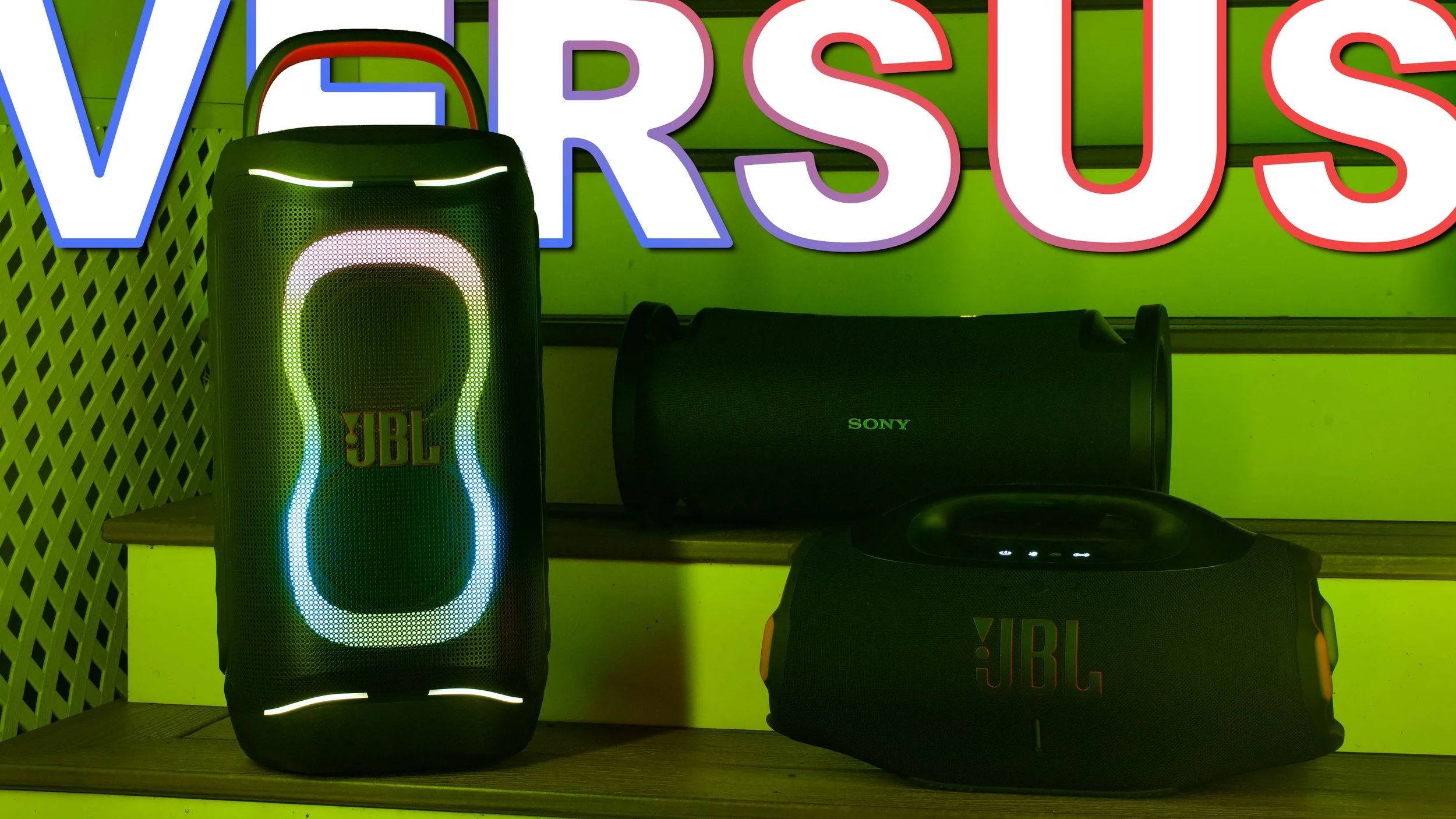
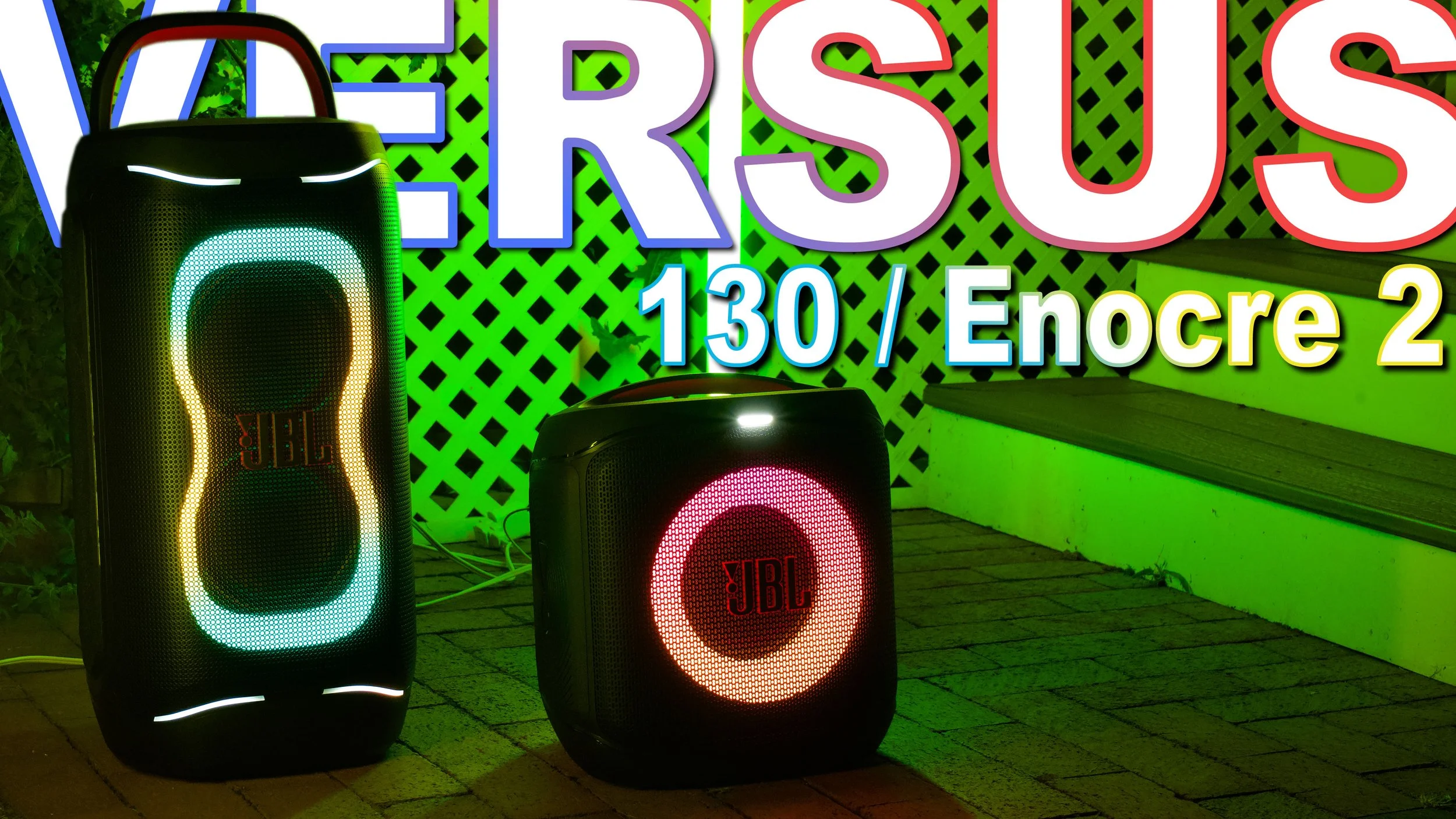
JBL Boombox 4 vs PartyBox 120 vs Encore Essential 2: The Ultimate Portable Battle
The JBL Boombox 4 brings a massive acoustic upgrade, delivering an impossibly loud performance and serious low-end presence for its travel-friendly size. In fact, the absolute maximum volume limits on the Boombox 4 can confidently stand toe-to-toe with dedicated party box architectures like the JBL PartyBox 120 and the JBL PartyBox Encore Essential 2.
However, when you look past raw volume thresholds, the physical bass rumble, hardware inputs, and durability metrics tell a completely different story. These three systems are engineered for completely different environments.
In this comprehensive head-to-head comparison, we will break down the pricing tiers, real-world battery runtimes, port capabilities, and audio performance to see which JBL speaker fits your lifestyle.
Price and Market Positioning
This matchup spans a wide financial spectrum, forcing buyers to choose between compact value, traditional party features, or rugged outdoor performance:
JBL PartyBox Encore Essential 2: Retails at an accessible $330 (Note: A premium variant bundled with two wireless microphones retails at $430, but it remains incredibly rare and difficult to find in retail stock).
JBL PartyBox 120: Retails at $450, serving as the classic mid-sized event tower.
JBL Boombox 4: Commands a premium $550 retail sticker price, matching the cost of the larger PartyBox 320.
With the Boombox 4, you are paying a massive premium for an indestructible, waterproof frame rather than specialized karaoke inputs. To look up current promotional deals, check the retail links or the shopping button below.
Design and Extreme Durability Standards
The underlying physical shapes separate standard consumer party gear from tactical outdoor speakers:
JBL Boombox 4 (The Outdoor Tank): This is the undisputed champion of durability. It features a rugged, drop-resistant cylinder frame wrapped in heavy-duty fabric. It is entirely waterproof and built to survive severe impacts on the go.
JBL PartyBoxes (The Event Towers): Both the 120 and Encore 2 are highly portable, but they rely on soft plastic bodies that scratch easily and thin front metal grilles prone to denting.
Durability Verdict: Unless you plan to be completely reckless and toss your speaker directly into a deep swimming pool, light rain or minor splashes are fine across all three models. However, the fully sealed design of the Boombox 4 handles extreme environments effortlessly, while the PartyBoxes demand a bit more care.
The Passive Radiator Light Show Fumble
If you enjoy synchronized party lights, the boombox layout introduces a noticeable downgrade:
The PartyBoxes: Both the 120 and Encore 2 feature large, dynamic, high-visibility light rings on their front faceplates that pulse in perfect sync with your tracks.
JBL Boombox 4: JBL attempted to add a built-in light show to the Boombox 4, but it only flashes basic white or orange pulses depending on your chosen bass boost mode. Because the LEDs are tucked deeply inside the side passive radiators, the light show is almost impossible to see. Adding it feels like a pointless design gimmick.
Real-World Battery Performance and the Swappable Ecosystem
Pushing these amplifiers to a high 75% volume threshold with their respective bass boosts engaged reveals significant gaps in battery efficiency:
JBL PartyBox 120: Drains its cell quickest, yielding roughly 6 hours of continuous playtime due to its dual-woofer internal architecture and active light rings.
JBL PartyBox Encore Essential 2: Pushes slightly further, delivering 8 hours of high-volume playback because it only drives a single internal woofer.
JBL Boombox 4: Dominates the stamina metrics, providing a rock-solid 10 hours of continuous outdoor runtime.
The Swappable Battery Breakdown
All three speakers feature user-replaceable batteries to protect your financial investment over time, but their accessibility and platforms vary dramatically:
Toolless Access: The PartyBox 120 features an instant, tool-free battery latch door on the back.
Screw Restraints: Replacing the battery inside the Boombox 4 or the Encore Essential 2 requires a screwdriver. The Boombox 4 also requires unseating a thick internal rubber weather-grommet to access the cell chamber.
AC Power Boost and Rear Input Limitations
Every speaker in this lineup charges via a convenient double-barrel AC port, eliminating the need to haul around a heavy external power brick. Bypassing the battery by plugging any of these units into a standard wall outlet activates a high-voltage AC power boost, instantly unlocking louder maximum volume levels and noticeably deeper bass extension.
(Note: The batteries must remain physically installed inside the chambers for the speakers to power on, even when running on wall current).
The rear connectivity options reveal distinct layout decisions:
Modern USB-C: The Boombox 4 and Encore Essential 2 both feature modern USB-C ports that support wired source audio playback and device charging. The older PartyBox 120 relies on an outdated USB-A port.
Legacy Auxiliary & Chaining: Both PartyBoxes retain standard 3.5mm auxiliary input jacks for simple wired audio connections. The PartyBox 120 also features a dedicated Audio Out daisy-chain jack, letting you link multiple speaker brands or sizes together in perfect sync using a standard audio patch cable. The Boombox 4 completely removes the 3.5mm auxiliary jack.
The Karaoke Omission: Both PartyBoxes serve as excellent karaoke systems. The Encore Essential 2 includes a single 1/4" microphone input, while the PartyBox 120 features dual 1/4" inputs for duets or mic/guitar combinations. Shockingly, the Boombox 4 completely removes all 1/4" mic inputs. It is an expensive, high-volume speaker that cannot do karaoke unless you buy an expensive, proprietary wireless microphone bundle, which is a major disappointment.
Bluetooth Standards and Codecs
Wireless connectivity is highly consistent across the board. All three models feature dual-device Bluetooth multi-point pairing, allowing you and a friend to stay connected simultaneously to trade off DJ duties. Audio latency is non-existent, making all three perfectly safe for watching videos on your smartphone. They support standard SBC and AAC audio codecs, and none of them feature Wi-Fi connectivity.
Acoustic Engineering and Audio Quality
The physical cabinet designs dictate how these speakers project sound into a yard:
JBL PartyBox Encore Essential 2: A single front-firing woofer, dual front tweeters, and a rear-firing acoustic bass exhaust port.
JBL PartyBox 120: Dual front-firing woofers, dual front tweeters, and a rear-firing acoustic bass exhaust port.
JBL Boombox 4: Dual front-firing woofers, dual front tweeters, dual side-firing passive radiators, and a brand-new rear-firing passive radiator designed to artificially capture deeper low-end frequencies.
Real-World Sound Character (75% Volume Testing)
When evaluating these units outdoors with their bass boosts set to "Deep" (which adds a punchy kick without the muddy resonance caused by the "Punchy" preset), the audio characteristics split:
Absolute Volume Limits: The Boombox 4 gets impressively loud for its cylindrical shape, easily out-voluming the compact Encore Essential 2. It tracks remarkably close to the maximum loudness cap of the larger PartyBox 120 because its high-frequency treble lines are incredibly crisp and pronounced.
The Bass Separation: Thanks to the implementation of the new rear-firing passive radiator, the Boombox 4 outputs an impressive amount of bass. However, it cannot match the physical, chest-thumping sub-bass rumble generated by the PartyBox 120's larger dual-woofer layout.
Sonic Fullness: Because the PartyBox 120 moves significantly more air through its cabinet, it maintains a fuller, richer soundstage at maximum volume tiers, whereas the Boombox 4 begins to lean out into a brighter, treble-forward sound profile at its limit.
Final Verdict: Which One Should You Buy?
Choose the JBL PartyBox Encore Essential 2 if you are shopping on a strict $330 budget, want a compact square footprint for easy storage, and only require a single 1/4" input for casual, solo karaoke.
Choose the JBL PartyBox 120 if your priorities require maximum chest-thumping sub-bass depth, dual microphone inputs for hosting karaoke duets, high-visibility front light shows, and universal wired daisy-chain linking.
Choose the JBL Boombox 4 if you have a $550 budget and require an indestructible, fully waterproof speaker that delivers a class-leading 10-hour battery life at high volumes, charges devices over modern USB-C, and shares power packs with the PartyBox 520 or 720.
Frequently Asked Questions (FAQ)
Can I plug a standard wired karaoke microphone into the JBL Boombox 4?
No. The JBL Boombox 4 completely removes all traditional 1/4" microphone and instrument input jacks from its rear connectivity panel. If you want to perform karaoke with the Boombox 4, you cannot connect a universal wired mic directly to the chassis. You must purchase separate, proprietary wireless microphone accessories that interface digitally with the speaker.
Does the JBL Boombox 4 get louder when plugged into a wall outlet?
Yes. All three speakers in this comparison utilize an advanced AC power delivery boost mode. When the Boombox 4 is plugged directly into a standard wall outlet via its AC power cord, the internal amplifier safety thresholds are raised, resulting in a noticeable jump in maximum output volume and significantly punchier, deeper bass hits.
Can I share battery cells between the JBL Boombox 4 and the PartyBox 120?
No. The two speaker lines run on entirely separate battery platforms. The JBL Boombox 4 utilizes the heavy-duty JBL 600 Battery platform, which is only cross-compatible with the larger PartyBox 520 and PartyBox 720. The PartyBox 120 and Encore Essential 2 run on the smaller JBL 200 Battery platform.
Why does the Boombox 4 feature an extra passive radiator on the back?
JBL engineered a brand-new rear-firing passive radiator into the chassis of the Boombox 4 to maximize its low-end bass extension without expanding the speaker's physical weight footprint. This passive radiator moves in tandem with the front drivers to help the speaker deliver deep bass notes that approach the depth of a traditional wood cabinet party box.
Do I need to keep the battery inside the speaker if it is running on wall power?
Yes. For all three models, the internal battery cartridge must remain physically installed inside the battery compartment for the speaker to turn on and operate, even if the unit is plugged directly into a live AC wall outlet. Bypassing an empty battery chamber via wall power is not supported by the hardware's internal power management chip.