
Try Walmart Plus And Save On Gas!
Walmart Plus FREE Trial: https://geni.us/GC-WalmartFreeTrial
Get Them Here:
JBL Boombox 4: https://geni.us/GC-JBLBoombox4
Sony ULT Field 7: https://geni.us/GC-SonyULTField7





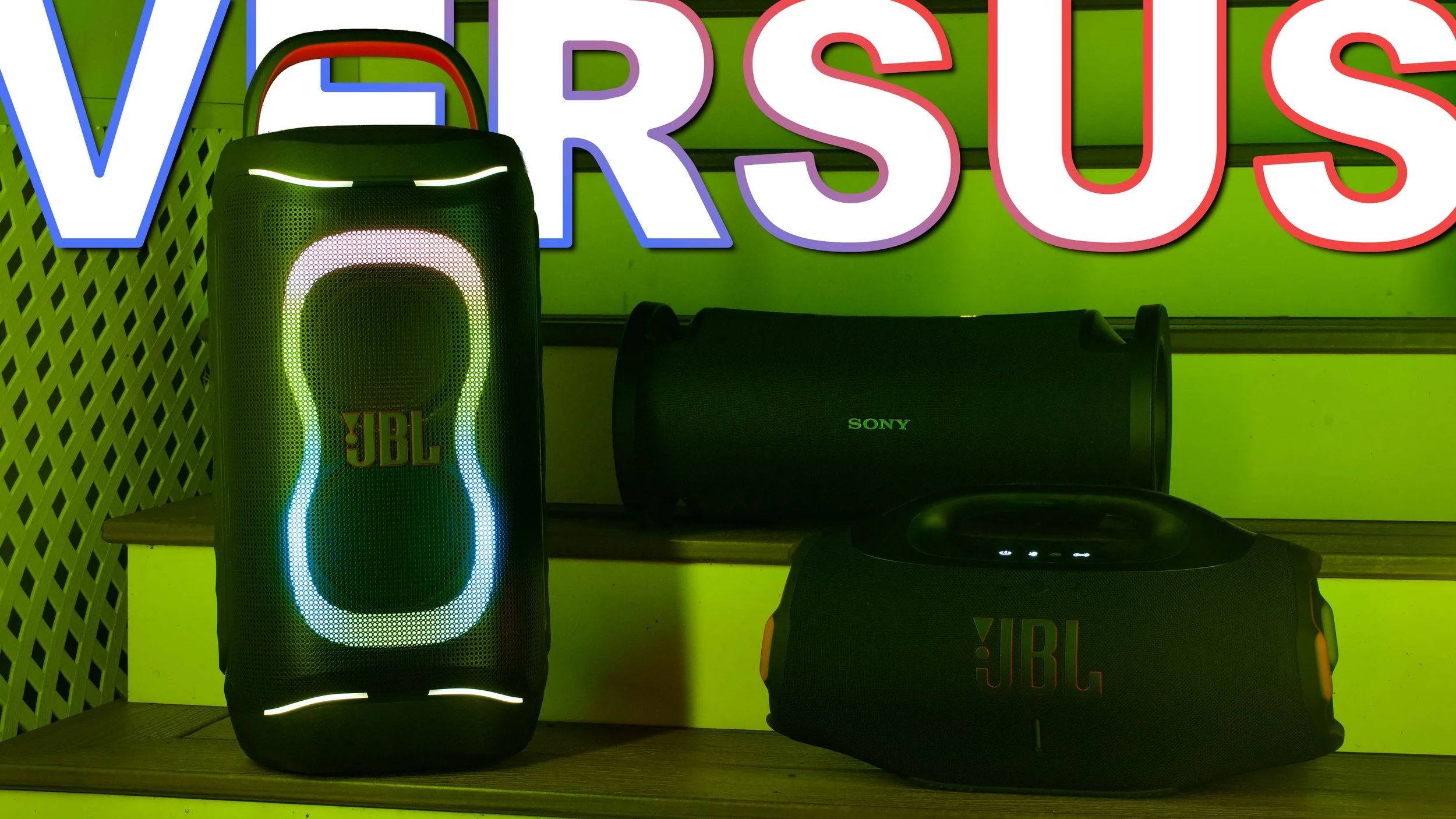
JBL Boombox 4 vs Sony ULT Field 7: Has the King of Bass Been Dethroned?
For the last few years, the Sony ULT Field 7 has been a massive sleeper hit. It delivers pristine instrument separation and heavy bass hit accuracy that historically outpaced the legendary JBL Boombox 3 line. Yet, many audio consumers routinely overlook it.
Now, the newly released JBL Boombox 4 is on the scene, packing massive volume updates and an overhauled acoustic structure. Is JBL back on top of the portable audio world, or are you still sleeping on Sony's sleeper hit?
If you are trying to decide which premium, high-output outdoor speaker deserves your hard-earned dollar, this direct comparison breaks down their pricing differences, real-world battery limits, port limitations, and sound engineering traits.
Price and Market Positioning
Both models command a premium price tag, but their real-world street values differ drastically:
JBL Boombox 4: Retails at a massive $550. To put that in perspective, it shares the exact same price threshold as the much larger, high-power JBL PartyBox 320.
Sony ULT Field 7: Retails at a standard $500, but it regularly drops to $400 on promotional retail sales.
Value Verdict: The Sony ULT Field 7 is much friendlier on your wallet. If you want to grab either of these systems, check the shopping buttons or retail tracking links below to scout current discounts.
Design, Durability, and Disappointing Omissions
Both manufacturers engineered these models to function as rugged, travel-ready audio cylinders.
Weight & Protection: Both units weigh right around 13 pounds and feature durable, woven fabric-wrapped enclosures built to survive heavy scrapes, scuffs, and impacts.
Waterproofing: Both are fully waterproof and splash-resistant, making them completely safe for beach trips, poolside parties, or sudden downpours.
The Accessory Fumble: Shockingly, despite their premium prices, neither speaker includes a shoulder strap in the box. If you want a hands-free carry option, you must purchase a third-party strap separately. This is highly frustrating considering their smaller siblings—the JBL Xtreme 4 and Sony ULT Field 5—both package shoulder straps as standard equipment.
Uninspired Light Shows
Both cylinders feature integrated light rings embedded within their passive radiators, but neither is particularly impressive:
The JBL Boombox 4 only flashes basic orange or white pulses depending on your bass setting. While it tracks to the rhythm of the track, it completely lacks color-changing capabilities.
The Sony ULT Field 7 supports full RGB color-changing patterns. However, because the LEDs are tucked deeply into the side passive radiator cavities, the effect is barely visible.
Pro Tip: To maximize battery runtime on either speaker, it is best to simply use their mobile apps to turn the lighting features completely off.
Battery Testing and the IP68 Swappable Ecosystem
The battery performance specifications present a confusing array of marketing metrics, but real-world testing cuts through the noise:
Sony Advertised Runtime: Claims 24 hours at 50% volume with the lights disabled and the core ULT bass profile active.
JBL Advertised Runtime: Claims a massive 34 hours, but that requires turning on a restrictive "Stamina Mode" that severely limits internal amplifier output and guts your low-end bass presentation. Disabling Stamina Mode drops the standard advertised metric to 28 hours.
Real-World High-Volume Test (75% Volume + Bass Boost/ULT 2 Active): Both speakers finish neck-and-neck, delivering roughly 10 hours of continuous playback.
Volume Note: Pushing both units to a 75% baseline reveals that the JBL Boombox 4 is noticeably louder than the Sony ULT Field 7 at the exact same percentage.
The IP68 Swappable Game Changer
The defining structural win for the JBL Boombox 4 is its removable, user-replaceable battery design.
To maintain a strict IP68 dust-proof and waterproof rating, JBL forces you to use an Allen key to undo safety screws and pull away a thick internal rubber weather-grommet to access the cell chamber. It isn't an instant swap like a PartyBox, but it protects your financial investment. When the lithium battery inevitably degrades over the years, you can buy a replacement battery rather than an entire new speaker. It runs on the standard JBL 600 Battery, allowing you to share power cells across the PartyBox 520 and 720 ecosystems.
Charging Setup and a Surprising Input Swap
Both systems charge via standard double-barrel AC ports on the back panel, completely removing the hassle of traveling with a heavy external power brick. Both amplifiers receive a noticeable performance boost with higher volume limits and deeper bass response when plugged into a wall outlet. (Note: The Boombox 4 battery must remain physically installed for the unit to turn on, even on wall power).
However, their rear connectivity layouts show a dramatic hardware split:
FeatureJBL Boombox 4Sony ULT Field 7Karaoke / GuitarNone (Completely omitted)1x 1/4" Input (Supports universal wired microphones or guitars with manual hardware gain control)Modern USBUSB-C Port (Supports bi-directional phone charging and wired audio connections)NoneLegacy USBNoneUSB-A Port (Outdated for modern 2026 devices)Auxiliary InputNone (Completely removed)3.5mm Audio Jack (For simple wired legacy audio connections)
The Karaoke Disadvantage
The complete omission of a 1/4" input jack on the JBL Boombox 4 is a massive disappointment. It is a highly expensive, incredibly loud outdoor speaker that completely shuts down karaoke capabilities unless you purchase proprietary wireless microphone dongles.
Conversely, the Sony ULT Field 7 is a fully functional mobile karaoke machine. You can plug in a standard wired mic, or adapt Sony's wireless microphone kit to run two vocals simultaneously over your backing track.
Wireless Bluetooth Codecs and Standards
Wireless reliability is exceptional on both systems. Both support dual-device Bluetooth multi-point pairing, letting you and a friend simultaneously sync your smartphones to alternate tracks. Latency is non-existent, making both models completely safe for streaming video on your phone.
JBL Codec Support: Top out at standard SBC and AAC wireless streams.
Sony Codec Support: Features SBC, AAC, and Sony's proprietary LDAC High-Res audio codec.
If you are an Android device owner, utilizing the high-bandwidth LDAC stream unlocks far cleaner audio file data transmission. iPhone users will automatically drop down to standard AAC parameters, but the Sony internal architecture still sounds excellent over AAC. Neither device supports Wi-Fi network streaming.
Acoustic Engineering and Real-World Sound Quality
Each brand addresses physical speaker direction through entirely separate hardware layouts:
Sony ULT Field 7: Traditional dual front-firing woofers, dual front-firing tweeters, and dual side-firing passive radiators.
JBL Boombox 4: Dual front-firing woofers, dual front-firing tweeters, dual side passive radiators, and a brand-new rear-firing passive radiator designed to artificially pull lower bass notes out of the cabinet.
Tuning & EQ Profiles
Both systems offer physical bass tuning triggers. The Boombox 4 features a PartyBox-style bass boost button with two modes: "Deep" (preferred for a clean, structural kick) and "Punchy" (which introduces an unpleasant, ringing resonance that muddies up track clarity).
The Sony features its signature ULT button: "ULT 1" optimizes a deep, clean low-end sweep for indoor listening rooms, while "ULT 2" scales up sound pressure thresholds and low-end impact for outdoor environments.
Real-World Sound Character (75% Volume Unplugged Test)
When tested side-by-side (JBL on "Deep Bass" and Sony on "ULT 2"), the sonic signatures separate immediately:
Maximum Loudness: The JBL Boombox 4 wins on raw volume output limits. Its amplifier pushes further than the Sony, making it better suited to project audio across long distances outside.
Instrument Separation & Balance: The Sony ULT Field 7 dominates on absolute sound quality, warmth, and soundstage openness. It delivers pristine, crisp instrument separation across the mid-range.
Tuning Artifacts: Because the JBL Boombox 4 places a massive emphasis on its high frequencies and mid-range treble response to maximize its outdoor loudness metrics, it can begin to sound unpleasantly narrow and nasallyduring complex arrangements. The Sony ULT Field 7 maintains a beautifully open, rich, and highly balanced acoustic delivery that outperforms the JBL at high volumes.
Final Verdict: Which One Should You Buy?
Choose the JBL Boombox 4 if you have a $550 budget and require maximum outdoor volume projection, prefer a modern USB-C charging pipeline for your personal mobile devices, and want the long-term investment safety of a user-replaceable JBL 600 Battery cell ecosystem.
Choose the Sony ULT Field 7 if you want to save up to $150 by hunting for regular $400 retail sales, require a built-in 1/4" input jack to host mobile karaoke or plug in an electric guitar, use an Android device to stream High-Res LDAC audio, and prioritize pristine, open instrument separation with a balanced sound profile.
Frequently Asked Questions (FAQ)
Can I plug an acoustic guitar or a karaoke microphone into the JBL Boombox 4?
No. The JBL Boombox 4 does not feature traditional 1/4" instrument or microphone input jacks on its rear port layout. If you intend to use your speaker for hosting karaoke or performing with a guitar, you cannot connect universal wired equipment to the frame. The Sony ULT Field 7 includes a dedicated 1/4" input with a hardware gain dial specifically for this purpose.
Does the Sony ULT Field 7 support high-resolution audio streaming?
Yes. The Sony ULT Field 7 includes native support for Sony's proprietary LDAC high-resolution audio codec. When paired with a compatible Android smartphone or high-res audio player, it can stream up to three times more data than standard Bluetooth protocols. Keep in mind that Apple iPhones do not support LDAC and will automatically stream via the standard AAC codec format.
Why is replacing the battery inside the JBL Boombox 4 more difficult than a PartyBox?
JBL designed the Boombox 4 with a strict IP68 dust-proof and waterproof environmental protection rating. To prevent water from breaching the battery chamber if the speaker is submerged, the access panel is locked behind internal safety screws that require an Allen key to remove, paired with a heavy-duty rubber compression weather-grommet. Traditional PartyBox models use simple, toolless plastic doors because they only carry light IPX4 splash ratings.
What is the mechanical difference between the "Deep" and "Punchy" bass boost modes on the JBL Boombox 4?
The "Deep" bass boost mode optimizes lower sub-bass frequencies to provide a structural kick that fills out the underlying track layout without bleeding into the mid-range vocals. The "Punchy" mode aggressively targets higher bass frequencies, which can introduce artificial cabinet resonance and create a cluttered, boomy sound signature that muddies up complex instrumentation.
Can I share power cells between the JBL Boombox 4 and smaller JBL speakers?
No. The JBL Boombox 4 utilizes the large-format JBL 600 Battery platform, which is only interchangeable with large-scale units like the JBL PartyBox 520 and PartyBox 720. Smaller portable speakers run on entirely separate electrical platforms; the JBL PartyBox 320 and Xtreme 4 run on the mid-sized JBL 400 Battery, while the PartyBox 120 and 130 series run on the compact JBL 200 Battery.