




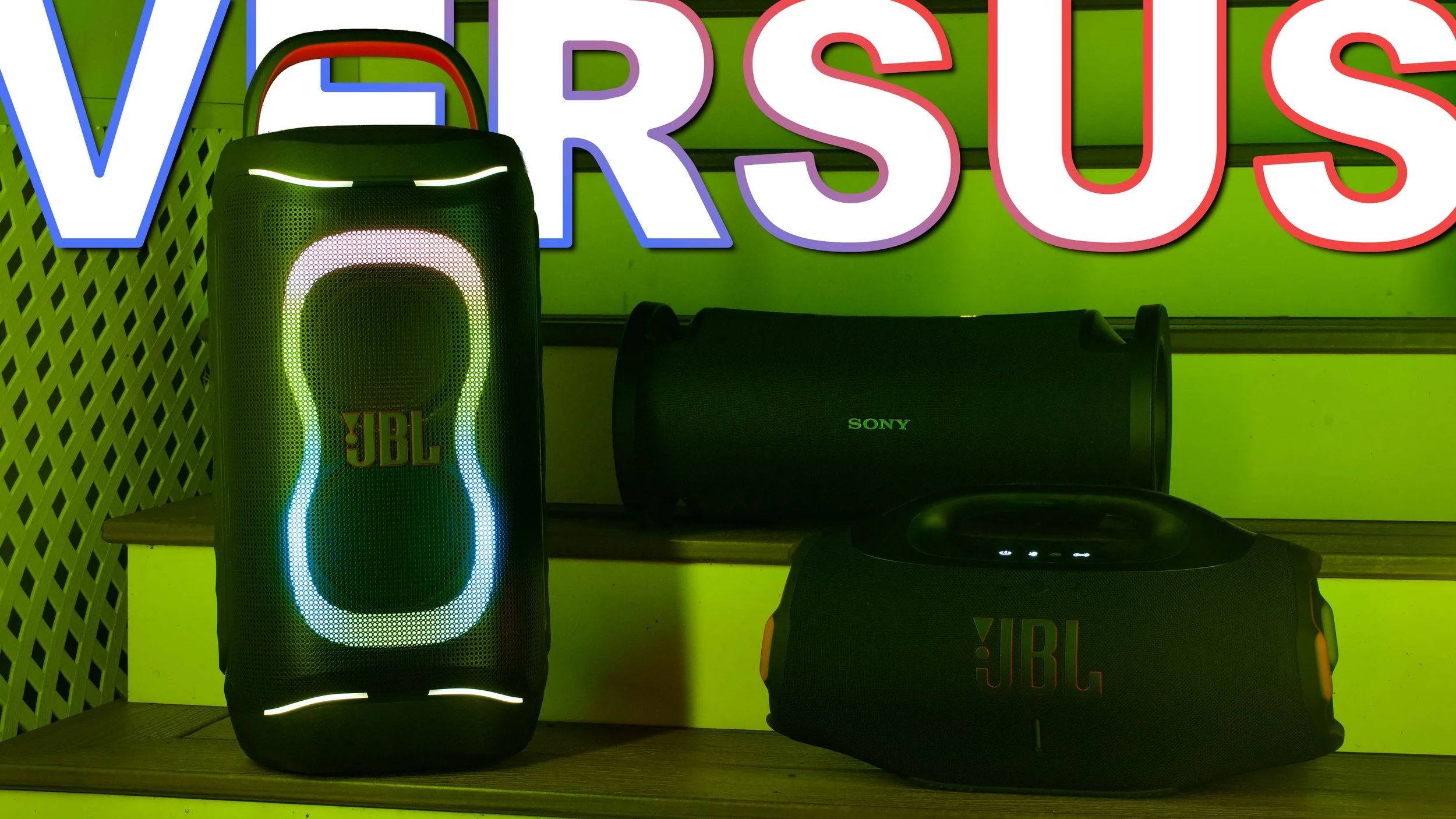
JBL PartyBox 720 vs Sony ULT Tower 10: The $1,100+ High-Power Showdown
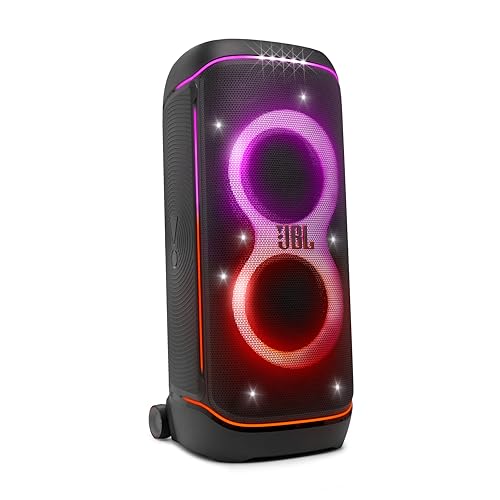
JBL has launched two incredible additions to the PartyBox lineup. First is the JBL PartyBox 520, which hits the sweet spot for a solo operator—delivering massive power without overwhelming you. Then there is the colossal JBL PartyBox 720, a system that pushes boundaries to the absolute limit.
But if you are shopping at this extreme performance level, you have to look at the Sony ULT Tower 10, a massive floor-standing monolith that often drops to prices that give you more raw bang for your buck.
These two audio towers target completely different party scenarios. One is a highly versatile, battery-driven portable machine, while the other is an absolute, wall-powered permanent fixture. In this comprehensive head-to-head comparison, we will break down the structural designs, port variations, and hidden features to help you pick the right heavyweight.
Price and Street Value Comparison
When you enter the four-figure audio tier, the price separation between these two brands narrows significantly:
JBL PartyBox 720: Retails for almost $1,100. As a premium JBL release, it holds its value tenaciously.
Sony ULT Tower 10: Retails at a standard MSRP of $1,200.
The Value Catch: While the Sony starts $100 higher on paper, it regularly receives aggressive retail promotional discounts that drop its price below the JBL baseline. If you are looking to secure either of these systems, tap the links or use the shopping button below to see active, real-time pricing.
The Ultimate Portable Split: Dual Batteries vs. Pure Wall Power
The single most defining architectural difference between these two speakers sits inside their power delivery systems.
Sony ULT Tower 10 (Wall Power Only): The Sony completely lacks an internal battery chamber. It cannot turn on or play music unless it is physically tethered to a standard household AC outlet.
JBL PartyBox 720 (The Dual Battery System): The JBL features a fully integrated battery system, providing complete freedom to play music anywhere off the grid.
JBL Real-World Stamina & Swappable Power
JBL claims a 15-hour advertised battery window for the 720. However, that figure is heavily padded, measured at 40% volume with all lighting effects and bass boosts disabled.
In real-world party scenarios—pushing the PartyBox 720 to 60% volume with the lights flashing and Bass Boost engaged—it provides a rock-solid 8 hours of continuous wireless playback. Pushing either speaker past 60% volume indoors will literally require hearing protection.
Like the rest of the 2026 lineup, the PartyBox 720 features a quick-release, hot-swappable battery compartment. This ensures your massive investment is protected; when the lithium cells eventually degrade over years of heavy use, you only need to purchase replacement packs rather than discarding the entire speaker.
The unique engineering trait here is that the PartyBox 720 runs on dual JBL 600 batteries simultaneously. Because it shares this cell platform, you can seamlessly mix and match batteries across the PartyBox 520 and the Boombox 4.
The AC Wall Boost: Both models feature internal transformers that plug directly into the wall via double-barrel AC cords. When you plug the PartyBox 720 into live wall power, the internal amplifier safety limits open up, delivering a massive volume and bass performance boost that allows it to approach the raw, earth-shaking loudness of the Sony ULT Tower 10 and the massive JBL PartyBox Ultimate.
Design and Mobility: Heavyweight Handling
Moving cabinets of this physical scale requires mechanical assistance, and the two transport systems are night and day:
Footprint & Weight: The Sony ULT Tower 10 is a massive, towering monolith. The JBL PartyBox 720 is noticeably shorter, narrower, and weighs a substantial 69 pounds.
The Wheels: The PartyBox 720 features heavy-duty, ultra-chunky wheels that easily glide across rugged parking lots, cracked sidewalks, backyard grass, or thick carpets. The Sony ULT Tower 10 features tiny, low-clearance wheels that are really only useful on smooth, flat indoor hardwood floors.
Mobility Verdict: The PartyBox 720 is significantly more versatile and easier to maneuver solo. However, due to their sheer physical scale, you will absolutely need a second set of hands to load either of these towers into a trunk or transport them up a flight of stairs safely.
Poolside Protection and Durability
Both towers are constructed out of thick, rigid plastic body shells prone to surface scratching, paired with thin metal front mesh screens that can dent if bumped hard. However, their weather safety profiles diverge:
JBL PartyBox 720: Features a verified IPX4 splash-proof rating backed by thick rubber port seals. It also features a fully physical control panel on the top lid, meaning you can manipulate buttons and dials perfectly even if your hands are completely wet from swimming. It is highly recommended for poolside usage.
Sony ULT Tower 10: Carries no official water resistance rating because its rear power input panel lacks protective shielding. Its top panel uses a flat touch-capacitive pad that looks modern but can become completely unresponsive if wet or splashed. Keep the Sony far away from water.
Light Shows: Vibrant Pulsing vs. Floor Projection
Both brands deliver industry-leading visual arrays, but they project ambient energy through different patterns:
Sony ULT Tower 10: Features integrated 360-degree ambient floor lights that project a wide perimeter glow across the ground. It gives the speaker a massive visual presence in dark environments.
JBL PartyBox 720: Features a significantly more vibrant, intricate, and high-visibility front-facing dynamic light ring show. Because it supports Bluetooth Auracast, you can wirelessly sync the 720 to external JBL Partylight Sticks to expand your synchronized lighting array across an entire room or yard.
Back Inputs and Professional DJ IO Panel
The rear input panels reveal a massive hardware advantage for creators and mobile performers:
Professional DJ Linking: The JBL PartyBox 720 features professional XLR combo jacks, allowing you to plug it directly into balanced DJ mixers or production boards. The Sony ULT Tower 10 completely lacks XLR inputs, forcing you to interface with mixers via casual 3.5mm auxiliary lines or lossy Bluetooth streams.
Wired Device Connectivity: The JBL features a modern, versatile USB-C port that charges your devices, handles direct wired phone audio, and powers wireless mic receivers. The Sony relies on an outdated USB-A port.
Universal Daisy Chaining: The PartyBox 120 features a dedicated 3.5mm Audio Out jack. This lets you link multiple speaker brands or sizes together in perfect sync using a standard audio patch cable. The Sony does not feature a wired link out option.
Karaoke and Microphone Implementation
Both towers handle vocal mixing beautifully, allowing you to plug in a guitar or microphones with an active echo filter to smooth out off-key singing. However, the exact hardware execution differs:
Wired Capacity: The JBL natively accepts dual wired 1/4" microphones. The Sony only features a single wired 1/4" input port.
The Sony Bundle Win: To compensate for the single wired port, the Sony ULT Tower 10 ships with an official wireless microphone included right in the retail box, easily allowing dual-vocal duets out of the box.
Audio Tuning: The JBL mobile app allows full hardware EQ control over your microphone, letting you manually adjust bass and treble lines. The Sony app does not support manual mic tone equalization.
Wireless Battery Disparities: If you choose to add external wireless mic kits, JBL's microphones offer 20 hours of runtime, but their receiver capsule caps out at 12 hours. Sony's wireless microphone system delivers a perfectly matched 20 hours of battery life on both the mic and the receiver.
Final Verdict: Which High-Power Tower Is Right for You?
Choose the JBL PartyBox 720 if you prioritize off-the-grid wireless portability, require heavy-duty chunky wheels for grass or gravel transport, need an IPX4 splash rating for pool parties, plan to connect directly to DJ mixers via professional XLR combo jacks, and want the security of a hot-swappable dual battery platform.
Choose the Sony ULT Tower 10 if you can track it down on deep retail clearance sales under $1,000, intend to keep it permanently stationed indoors near a wall AC outlet, love the ambient footprint of integrated 360-degree floor projection lights, and want a premium wireless microphone included right in the box.
Frequently Asked Questions (FAQ)
Can I run the JBL PartyBox 720 on just a single battery cartridge?
Yes. While the high-power amplifier inside the JBL PartyBox 720 is engineered to draw power from dual batteries simultaneously to maximize its wireless volume performance, the speaker can operate on a single cartridge. However, running a single cell will reduce your maximum volume ceiling and cut your continuous battery runtime in half.
Does the Sony ULT Tower 10 include an optical port for connecting to a TV?
Yes. The Sony ULT Tower 10 features a built-in digital optical input port on its rear panel. This allows you to hook the high-power tower directly to your home television to function as an incredibly loud, theater-grade soundbar for movies, sports, or gaming events.
Are the batteries inside the JBL PartyBox 520 and 720 completely identical?
Yes. Both the PartyBox 520 and the PartyBox 720 utilize the exact same JBL 600 Battery cell architecture, which is also shared by the rugged JBL Boombox 4. The only operational difference is that the PartyBox 520 requires a single pack to fill its chamber, whereas the larger PartyBox 720 deploys two packs simultaneously.
Why doesn't the touch panel on the Sony ULT Tower 10 work when it gets wet?
The Sony ULT Tower 10 utilizes a touch-capacitive control surface on its top lid. Touch-capacitive technology relies on the electrical conductivity of your skin to register button presses. When water pools on the surface or your fingers are wet from a swimming pool, the water disrupts the electrical field across the pad, causing the speaker to misregister or completely ignore your inputs.
Can I daisy chain the Sony ULT Tower 10 to a different brand of party speaker using an audio cable?
No. The Sony ULT Tower 10 does not include a dedicated 3.5mm line-level audio output jack on its input panel. Because it lacks a hardware audio out pass-through, you cannot run a physical auxiliary cable from the Sony into another brand's speaker to play them in synchronized wired link mode.